





News
2023: Lawyers drag INEC to court, seek disqualification of Atiku, Tinubu, Obi






Survivor
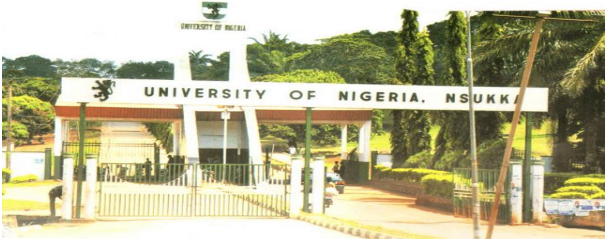
The use of a generator in a poorly ventilated environment is being suspected as a possible cause of the tragic death of four students of the University of Nigeria, Nsukka (UNN), following an off-campus party in Nsukka, Enugu State.
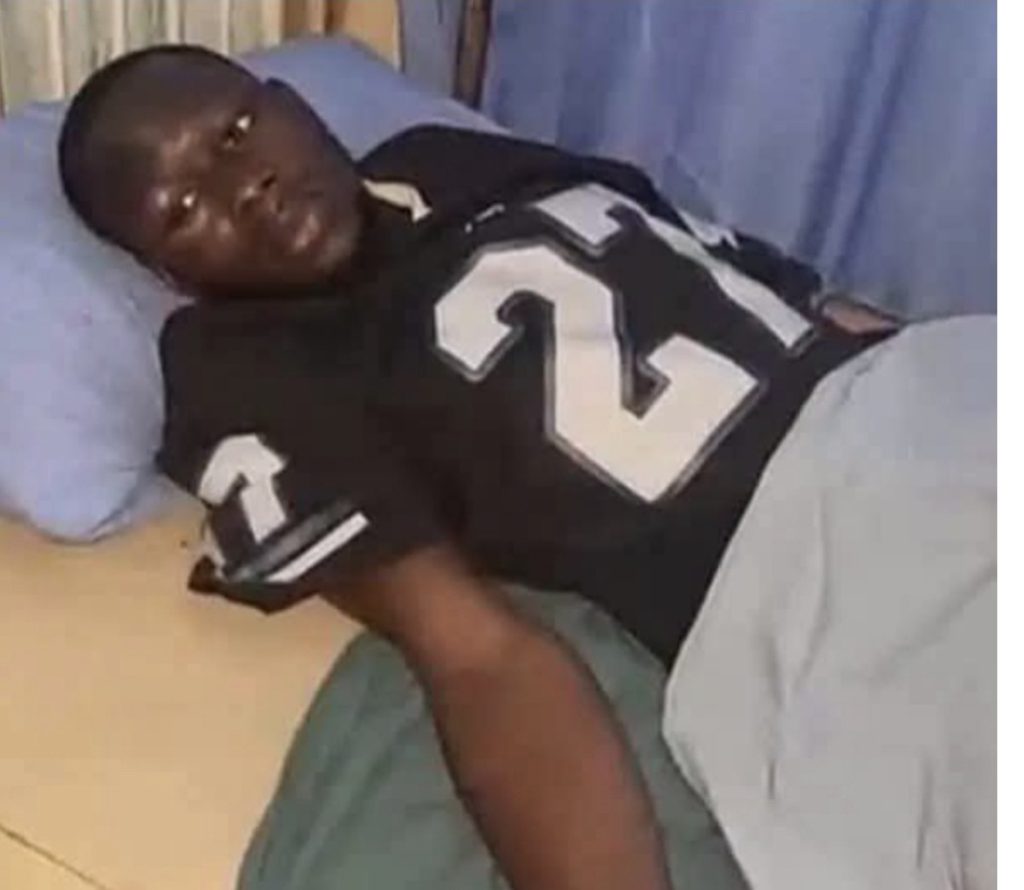
The suspicion emerged after a survivor of the incident disclosed that a generator was operating outside the corridor of the apartment where the students gathered, while the doors and windows remained shut.
According to the 24-year-old survivor, an Art Education student, about 10 people attended the party organised by his friend, David, to celebrate the completion of his final examinations.
The gathering reportedly started around 11:30 a.m. at the host’s residence in the Hilltop area of Nsukka, with participants sharing alcoholic drinks and playing Truth or Dare.
Recounting his experience, the survivor said he suddenly lost consciousness after helping one of the participants who had vomited and returning to clean the floor.
He disclosed that his legs had become stiff and he could no longer walk before eventually passing out.
The student said he regained consciousness at about 9 p.m., only to discover that his friends were lying motionless on the floor.
“When I regained consciousness at about 9 p.m., I heard someone saying that a ghost was shaking. I woke up and managed to look into the parlour, where I saw the host and other participants lying on the floor,” he recounted.
He said he subsequently contacted friends for assistance, before one of them eventually helped convey the affected students to Bishop Shanahan Hospital and other medical facilities in Nsukka.
The survivor further explained that the apartment was poorly ventilated, with the doors and windows shut, while a generator was running outside in the corridor. A fan was also operating inside the room.
His account has raised the possibility of carbon monoxide poisoning, a potentially fatal condition associated with inhaling fumes from generators and other fuel-burning equipment, particularly in enclosed or poorly ventilated spaces.
Carbon monoxide is an odourless and colourless poisonous gas that can cause headaches, dizziness, weakness, confusion, unconsciousness and death when inhaled in dangerous concentrations
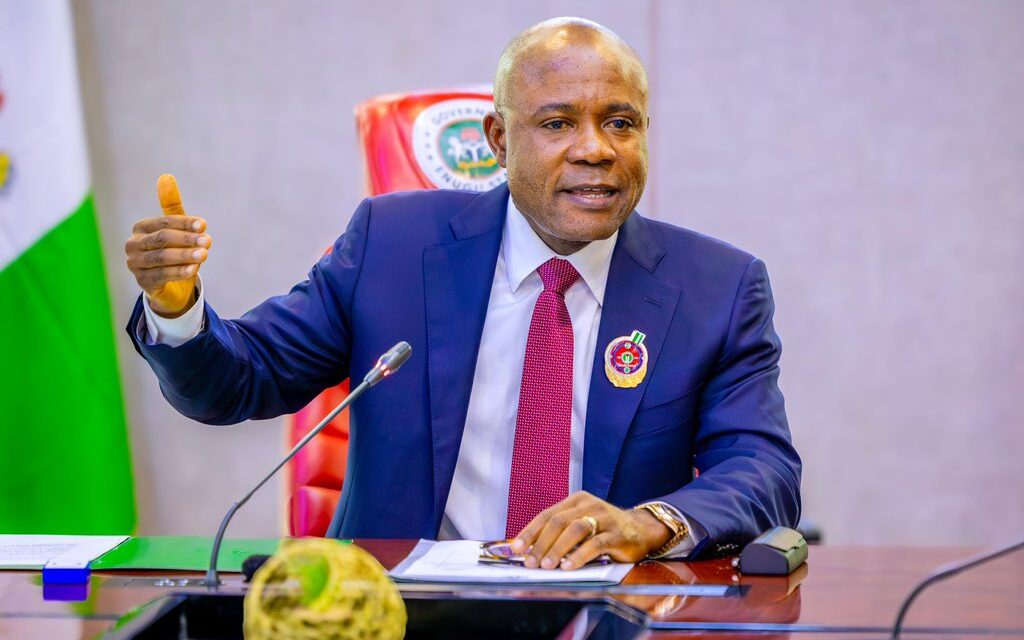
Enugu State Governor, Dr Peter Mbah, has suspended his scheduled town hall meeting with the University of Nigeria, Nsukka (UNN) community following the deaths of four students at an off-campus party.
The governor also ordered a thorough investigation into the incident and announced plans to work with authorities of tertiary institutions to enforce a ban on sign-out parties and other excessive celebrations across the state.
The incident reportedly left four students dead and six others hospitalised, throwing the university community into mourning.
Mbah expressed deep sorrow over the tragedy, describing the deaths as a heartbreaking loss to the affected families, the university and Enugu State.
His position was contained in a statement issued on Thursday, November 12, 2026, by his media aide, Mazi Uche Anichukwu.
In the statement, the governor lamented that the students had lost their lives in their prime, cutting short promising futures. He also extended his condolences to their parents, friends and the entire UNN community.
“I received with rude shock and deep sense of loss the news of the off-campus sign-out party leading to the death of four students of the University of Nigeria, Nsukka, and hospitalisation of six others.
“This is a grievous loss not only to the immediate families of the deceased and the university, but also to us as a state. Losing them in their prime and along with their promising future cuts as deeply as a sharp knife.
“We, therefore, share in this grief and pray God to grant their families, friends and the UNN community the equanimity to bear the heartbreaking loss.
“Our hearts go out to their parents in particular, who sacrificed personal comforts to sponsor their children through the university, only to face this sad turn of events,” he said.
The governor said the state government had ordered a comprehensive investigation into the circumstances surrounding the deaths.
He added that the government would collaborate with the university authorities and security agencies to establish the cause of the incident and prevent a recurrence.
“In the meantime, I have suspended my scheduled town hall meeting with the UNN community on Friday, November 13, 2026, as we join the university in mourning the dead.
“Going forward, we will work with the authorities of tertiary institutions to enforce a full ban on sign-out parties and other excessive celebrations, a trend that has cost more lives and brought more sorrows than joy to families and higher institutions of learning,” Mbah stated.
The governor also called on relevant government agencies and tertiary institutions to intensify public enlightenment campaigns on the dangers and consequences of drug use and abuse.
He prayed for the peaceful repose of the souls of the deceased and asked God to grant their families, friends and the university community the strength to bear the loss.

The Canadian government has announced plans to grant permanent residency to up to 100,000 foreign workers already living in the country and their eligible family members under a new time-limited immigration measure.
The initiative, announced by Immigration, Refugees and Citizenship Canada on Tuesday, is part of a broader strategy to clear application backlogs, fulfil existing immigration commitments and provide greater certainty for migrants awaiting permanent residence decisions.
Under the measure, up to 45,000 spouses, common-law partners and dependent children of Canadian citizens or permanent residents living in Canada are also expected to obtain permanent residency.
Additionally, about 12,600 people who have already been found eligible for permanent residence on humanitarian and compassionate grounds are expected to benefit.
The government said the initiative would provide additional admission spaces in 2027 to speed up the processing of applications from people already established in Canada.

According to a background document published by Immigration, Refugees and Citizenship Canada, the workers’ category covers applicants under selected federal immigration programmes, including the Atlantic Immigration Program, Start-up Visa Program, Self-Employed Persons Program, Agri-Food Pilot and Home Care Worker programmes.
Provincial and territorial governments will also be allowed to nominate workers who meet their regional labour requirements through increased allocations under the Provincial Nominee Program.
The government said the initiative was designed to support people who had already established themselves in Canadian communities but were still waiting for permanent residence decisions.
In a statement accompanying the announcement, Canada’s Immigration Minister, Lena Metlege Diab, said the measure would help the country honour its existing commitments while restoring sustainability to its immigration system.
She said the initiative would accelerate the processing of applications from people from Hong Kong and Ukraine, giving them greater certainty as they continue to build their lives in Canada.
Hong Kong, Ukraine Applications
The announcement also provides for the processing of outstanding permanent residence applications from Hong Kong residents and Ukrainians under previously established immigration pathways.
The Canadian government said it intends to process all remaining applications under the Hong Kong permanent residence pathways, which closed to new applicants on August 31, 2026.
The outstanding applications are expected to result in up to 32,000 permanent resident admissions.
Similarly, the government plans to process all remaining applications under the Ukraine Family Reunification Pathway, which stopped accepting new applications on October 22, 2024.
The applications are expected to result in up to 18,800 admissions.
Together, the two pathways account for a potential 50,800 permanent resident admissions.
Jean Yip, Member of Parliament for Scarborough—Agincourt, welcomed the announcement, describing it as a significant step towards providing a future for individuals and families who have chosen to make Canada their home.
She said the decision followed five years of advocacy alongside the Hong Kong community.
Another lawmaker, Michael Ma, representing Markham—Unionville, said the measure would provide relief to applicants who had endured lengthy waits for permanent residence decisions.
He expressed optimism that completing the outstanding applications by the end of 2027 would demonstrate Canada’s commitment to affected families.
Yvan Baker, Member of Parliament for Etobicoke Centre, said the initiative would also benefit Canadian businesses and the wider economy by ensuring employers could retain workers already contributing to the country’s workforce.
He added that providing migrants with greater certainty would enable them to pursue professional training and qualifications, further strengthening their contributions to Canada.
Ukraine, Hong Kong Communities Welcome Decision
The National President of the Ukrainian Canadian Congress, Alexandra Chyczij, welcomed the announcement, particularly the government’s commitment to clear the backlog of applications under the Ukraine Family Reunification Pathway by the end of 2027.
She said the Ukrainian community appreciated the government’s willingness to consider its concerns, including calls for permanent residence pathways for Ukrainians living in Canada under the CUAET visa programme.
Similarly, physician and Hong Kong community representative, Dr Henry Pang, described the decision as a source of renewed hope for Hong Kong residents awaiting permanent residence.
He said clearing the backlog would enable Canada to retain valuable healthcare professionals already contributing to its economy and public services.
The Canadian government, however, clarified that the initiative would not establish new immigration programmes or reopen pathways that had already closed to fresh applications.
It added that eligible applicants would not be required to submit additional applications or contact Immigration, Refugees and Citizenship Canada to be considered under the additional admission spaces.
The government also noted that the beneficiaries were already living and working in Canada, meaning the measure would not result in additional new arrivals.
The initiative forms part of Canada’s 2027–2029 Immigration Levels Plan, which is aimed at bringing immigration to sustainable levels, improving application processing times and providing greater certainty for people seeking permanent residence.

President Bola Tinubu has written to the House of Representatives, seeking approval to implement the N10.79tn external borrowing component of the 2026 Appropriation Act to finance part of the Federal Government’s budget deficit.
In a letter addressed to the Speaker of the House, Tajudeen Abbas, and read during Wednesday’s plenary, the President requested authorisation to raise $7.71bn at the budget exchange rate of N1,400 to a dollar.
Tinubu said the request was in compliance with Sections 21(1) and 27(1) of the Debt Management Office (DMO) Establishment Act, 2003, which require the terms and conditions of external loans to be presented to and approved by the National Assembly.
He explained that the proposed borrowing was already captured in the 2026 Appropriation Act as part of the N29.22tn approved new borrowing to finance the Federal Government’s budget deficit.
According to him, the approved borrowing comprises N18.28tn in domestic loans and N10.79tn in external borrowing.
“I write to request the permission of the House of Representatives to implement the new external borrowing plan contained in the 2026 Appropriation Act in the sum of N10,790,366,835,481, which is equivalent to $7,707,404,882.49 at the budget exchange rate of $1 to N1,400, for the part financing of the budget deficit,” he stated.
The President said the government would explore different borrowing options simultaneously, taking into account the cost of borrowing and the time required to access the funds.
However, he indicated that greater emphasis would be placed on Eurobond issuance, which he described as a faster means of raising substantial funds at relatively lower costs.
“All options will be pursued simultaneously, considering the cost-benefit to the country as well as the time required to access the funds. In view of this, emphasis will be on the issuance of Eurobonds, which is typically faster to conclude,” Tinubu said.
He added that the final terms and conditions of the Eurobond issuance would be determined by prevailing market conditions at the time of pricing.
Tinubu assured the lawmakers that the Federal Ministry of Finance and the DMO would work to secure the most favourable borrowing terms available in the international market.
He further explained that the external loans would finance projects and programmes contained in the 2026 budget, particularly in critical sectors such as defence and security, transportation, agriculture, power, education and health.
The President also argued that the proceeds would help strengthen Nigeria’s external reserves and support the naira, noting that the funds would be received by the Central Bank of Nigeria on behalf of the Federal Government.
In the resolution sought from the House, Tinubu requested authorisation for the government to raise the funds through multilateral and bilateral institutions, conventional and commercial lending windows, the International Monetary Fund, bridge financing facilities and Eurobond issuance.
He also sought approval for the Minister of Finance and Coordinating Minister of the Economy, in collaboration with the DMO, to take all necessary steps to implement the proposed borrowing arrangement.
Responding to the request, Abbas clarified that the President was not seeking approval for a fresh borrowing plan, stressing that the N10.79tn external borrowing had already been approved by the National Assembly and provided for in the 2026 Appropriation Act.
He explained that the request was intended to fulfil the statutory requirement for parliamentary approval of the terms and conditions governing external loans before the government could proceed with implementation.
Abbas said Section 21(1) of the DMO Act required the terms and conditions of external borrowing to be presented to the National Assembly for approval by resolution, while Section 27(1) provided for parliamentary approval of standard terms and conditions for negotiating and accepting external loans.
The Speaker further distinguished the request from the President’s separate proposal for additional borrowing, noting that both matters were independent and would be considered on their individual merits.
“For the avoidance of doubt, this request is distinct from the President’s more borrowing request. It neither supersedes nor withdraws that request, which remains subject to consideration on its own merit,” Abbas said.
He added that the current request concerned only the statutory authorisation required to implement external borrowing already provided for in the 2026 Appropriation Act.
The clarification comes amid concerns over the Federal Government’s growing reliance on borrowing to finance budget deficits and its implications for debt sustainability and public finances.
Nigeria’s 2026 budget provides for a deficit of N31.55tn, with new borrowing of N29.22tn identified as a major financing component.
The latest request, therefore, does not introduce a new borrowing figure into the 2026 budget but seeks the legislative resolution required to access the external component of the borrowing already approved.
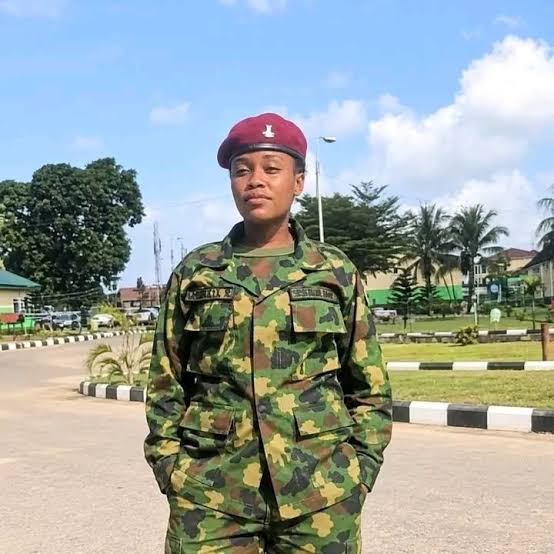
The Federal High Court in Kaduna has convicted former Nigerian soldier, Ruth Ogunleye, over defamatory TikTok publications against the Commandant of the Nigerian Defence Academy (NDA), Major General Oluyemi Thomas Olatoye, sentencing her to two years’ imprisonment and a fine of ₦500,000.
However, the court suspended the custodial sentence for three years under a plea bargain agreement, subject to Ogunleye’s compliance with several conditions, including publishing a public apology, deleting the offending publications and undertaking not to make further statements about the senior military officer.
The judgment was delivered by Justice Rilwanu Aikawa of Court One, Federal High Court, Kaduna Judicial Division, following an agreement reached between the prosecution and the defendant under Section 270 of the Administration of Criminal Justice Act (ACJA) 2015, according to security reporter Zagazola Makama.
Ogunleye was initially arraigned on a five-count charge instituted by the Inspector-General of Police, Olatunji Rilwan Disu, over allegedly defamatory videos circulated through her TikTok account, @ogunleyeruthsavage, on or about August 14, 2026.
The prosecution accused her of deliberately publishing videos containing allegations against Olatoye, which it claimed she knew to be false and intended to cause annoyance, insult, injury, hatred, ill will and damage to his reputation.
One of the charges concerned a TikTok video captioned, “Maj General Yemi Olatoye is responsible for my death”, in which she allegedly displayed the senior military officer’s photograph.
Another count involved a publication captioned, “I go post your oga own too, your oga own dey my phone”, in which she allegedly referred to the NDA commandant and made statements concerning him.
The five-count charge also contained allegations that Ogunleye claimed to possess intimate photographs of the senior military officer and threatened to publish materials concerning him.
The offences were brought under Section 24(1)(b) of the Cybercrimes (Prohibition, Prevention, etc.) Act 2015, as amended by the Cybercrimes Amendment Act 2024, and punishable under Section 24(2) of the Act.
However, following negotiations between the prosecution and the defence, Ogunleye pleaded guilty to Counts One and Two, while the prosecution agreed to withdraw Counts Three, Four and Five.
Under the plea bargain agreement filed before the court, she was fined ₦250,000 on each of the two counts, bringing the total to ₦500,000 payable to the Federal Republic of Nigeria.
She was also sentenced to one year in prison on each count, with the sentences ordered to run concurrently.
The court, however, suspended the custodial sentence for three years, subject to her compliance with the conditions contained in the agreement.
Among the conditions, Ogunleye is required to demonstrate remorse and undertake not to engage in similar conduct again.
She is also required to publish a public apology in two national daily newspapers within 14 days of sentencing, in a form approved by counsel to the nominal complainant.
Another major condition prohibits her from making further statements, publications or communications concerning Olatoye, whether through spoken words, text messages, social media platforms or any other means.
The restriction also extends to communications made through another person or under any other name or account.
The agreement further prohibits her from contacting the senior military officer, either directly or indirectly.
She is also required to delete, within 48 hours of her release from custody, all posts and videos concerning Olatoye from her TikTok accounts and any other accounts under her control.
She is equally prohibited from republishing or sharing the materials with anyone.
Paragraph Six of the agreement provides that any breach of the conditions contained in paragraphs Four and Five during the three-year suspension period could result in Ogunleye being brought back before the court to serve the suspended prison sentence in full, once the court is satisfied that a breach has occurred.
The agreement also provides that her undertaking not to make further publications about or contact the nominal complainant will remain binding for life.
During the proceedings, Justice Aikawa asked Ogunleye whether she understood and accepted the terms of the plea bargain. She consented to the agreement and the issuance of a restraining order under Section 24 of the Cybercrimes Act, which is to remain in force until further order of the court.
Her defence counsel, I.S. Yahaya, subsequently endorsed the plea bargain terms.
Speaking after the proceedings, Mohammed Sani Katu, a Senior Advocate of Nigeria (SAN), who represented the nominal complainant, said the case was resolved through a plea bargain after the defendant’s lawyer approached the prosecution to negotiate an agreement.
Katu said the case initially involved five counts filed by the Inspector-General of Police following Ogunleye’s arrest.
“It is a matter between the Federal Police and Ruth Ogunleye. The matter has been trending on social media, as you can confirm,” he said.
According to him, the defence lawyer proposed an arrangement that would bring the proceedings to an end without the parties having to go through a full trial.
He said the negotiations resulted in a formal plea bargain under which the prosecution agreed to withdraw three counts in exchange for Ogunleye’s guilty plea to the remaining two.
“She pleaded guilty last week, and the matter was adjourned until today for parties to file what we call the plea bargain terms,” he said.
Explaining the sentence, Katu said the court imposed one year of imprisonment on each of the two counts and a fine of ₦250,000 per count.
“Having pleaded guilty, she was sentenced to serve the prison time of one year each on the two counts and then to pay a fine of N250,000 on each count, cumulatively N500,000.
“Now, the sentence is suspended for three years so that we can put her under observation to see whether she will be remorseful. If within these three years she violates these terms, she will be brought back to serve the sentence,” he said.
Katu stressed that the suspension did not cancel the custodial sentence, adding that Ogunleye remained bound by the conditions throughout the three-year period.
He also explained that the restrictions were intended to prevent a recurrence of the conduct that led to her prosecution.
“After these three years again, in order that she will just go scot-free, the whole terms of the plea bargain will now also come into place that she should not do anything that has to do with the nominal complainant,” he said.
The lawyer further argued that Ogunleye’s guilty plea meant she had admitted that the claims contained in the two TikTok publications were untrue.
“Don’t forget the charge, how it looks like. She said she has his pictures, she did whatever and so on and so forth.
“Now, for her to have pleaded guilty means that all that she said in that TikTok is not true. And on that basis, she was convicted and judgment was delivered,” he said.
He maintained that any violation of the court-approved conditions could expose Ogunleye to the suspended custodial sentence, subject to the court determining that a breach had occurred.
Background
SaharaReporters had earlier reported on October 26, 2026, that Ogunleye, a former Nigerian soldier who publicly accused senior military officers of sexual harassment and alleged that her complaints were ignored, had been arrested and transferred to Kaduna.
At the time, a source familiar with the development told SaharaReporters that she had been moved from Lagos to Kaduna and was being held in custody while awaiting trial.
The source alleged that her arrest was ordered by the Minister of Defence, General Christopher Gwabin Musa (retd.), although the circumstances surrounding the arrest and the specific charges against her were not immediately clear.
Ogunleye had previously attracted public attention in 2024 after accusing Colonel I.B. Abdulkareem of sexual harassment and alleging that other senior military officers failed to protect her after she complained about his conduct.
Among those she accused of failing to intervene was Musa, who was then Chief of Defence Staff and is now Nigeria’s Minister of Defence.
In an interview monitored by SaharaReporters in September 2024, Ogunleye said she had sought Musa’s intervention, alongside that of other senior officers, but received no meaningful assistance.
“I sought intervention from people like General C. G. Musa, the current Chief of Defence Staff. I told him. I told so many officers. I sought redress but nothing was done because he is my senior, and nobody was ready to give me a listening ear,” she said.
In January 2024, she also accused Abdulkareem, Colonel G.S. Ogor and Brigadier General I.B. Solebo of intimidation and other forms of alleged maltreatment after she rejected what she described as unwanted sexual advances.
The Nigerian Army subsequently investigated her allegations and said it found no evidence to substantiate the sexual harassment claims against Abdulkareem. The Army also maintained that Ogunleye was discharged from service on medical grounds following medical assessments.
In October 2024, Ogunleye appealed for a review of the case, saying she believed someone might have tampered with the investigation’s findings. She also expressed concerns about the stigma surrounding the allegations and their implications for her reputation.



-
 Politics3 days ago
Wike Defends ₦10m Reward for Councillors, Insists It Is Not Vote-Buying
-
 News5 days ago
FG Seeks Fresh $500m World Bank Loan Ahead of 2027 Presidential Inauguration
-
 Health3 days ago
Enugu Shuts Down Four Illegal Private Hospitals, Warns Operators Against Unsafe Practices
-

 Entertainment4 days ago
Mbah Appoints Nollywood Actress Destiny Etiko as Senior Special Assistant
-
 News5 days ago
Mass Protest Looms in Abacha Community, Anambra, Over PG Election Dispute
-
 Crime2 days ago
Tragedy At UNN As Six Fresh Graduates Are Found Dead In Nsukka Apartment
-
 News4 days ago
US Lecturer Alleges Tinubu Never Attended Chicago State University
-
 Sports4 days ago
Toxic Politics: NFF Officials Block Peter Obi From Greeting Flamingos