

World
Putin revokes Russia’s ratification of nuclear test ban treaty


Russian President Vladimir Putin on Thursday signed a law revoking Russia’s ratification of the Comprehensive Nuclear Test Ban Treaty, a move strongly criticised by the United States.
The 1996 treaty outlaws all nuclear explosions, including live tests of nuclear weapons, though it never came into force because some key countries — including the United States and China — never ratified it.
The West has accused Russia of using reckless nuclear rhetoric since it launched its offensive on Ukraine last February.
US Secretary of State Antony Blinken criticised Putin’s announcement on Thursday, and called on Moscow to commit to not carry out testing.
“Unfortunately, it represents a significant step in the wrong direction, taking us further from, not closer to, entry into force” of the treaty, Blinken said in a statement.
“This continues Moscow’s disturbing and misguided effort to heighten nuclear risks and raise tensions as it pursues its illegal war against Ukraine,” he said.
Putin last week oversaw ballistic missile drills in what Defence Minister Sergei Shoigu said was practice for a “massive” retaliatory nuclear strike against an unnamed enemy.
Putin also said last month he was “not ready to say” whether Russia would carry out live nuclear tests.
– ‘Deeply regrettable’ –
The Comprehensive Nuclear-Test-Ban Treaty Organization (CTBTO) has urged Russia to continue its commitment to the treaty, including the use of monitoring stations capable of detecting the slightest explosion in real time.
“Today’s decision by the Russian Federation to revoke its ratification of the Comprehensive Nuclear-Test-Ban Treaty is very disappointing and deeply regrettable,” CTBTO head Robert Floyd said on X, formerly known as Twitter.
France, one of the treaty’s original signatories, said it “deplored” Russia’s decision to revoke the ratification.
Putin accuses IOC of ‘ethnic discrimination’ against Russians
“Russia’s decision compromises the work of making the treaty universal. We reaffirm the importance of the CTBT and its full implementation,” it said.
The bill to revoke the treaty passed through Russia’s parliament last month in a fast-track process.
During parliamentary hearings, State Duma speaker Vyacheslav Volodin said the move to revoke the treaty was a response to the United States’ “cynicism” and “boorish attitudes” on nuclear weapons.
Although it never entered into force, the agreement was ratified by 178 countries, including nuclear powers Russia, France and Britain, and has symbolic value.
The United States as well as China have never ratified the treaty, a key obstacle for it coming into force.
President George H.W. Bush in 1992 signed into law a unilateral ban on US nuclear testing that has since been extended. But the Senate rejected ratifying the test ban treaty in 1999.
Current President Joe Biden and his Democratic predecessors have supported ratification but treaties under the US Constitution require two-thirds support, a prohibitive threshold with many Republicans wary of any international limits on US power.
The treaty’s backers say it established an international norm against live tests of nuclear weapons, but critics say the potential of the deal remains unrealised without the ratifications of major nuclear powers.
Russia’s parliament ratified the agreement in June 2000, six months after Putin first became president.


The New York judge presiding over President-elect Donald Trump’s hush money case, on Friday, set sentencing for 10 days before his January 20 inauguration and said he was not inclined to impose jail time.
Judge Juan Merchan said Trump, the first former president ever convicted of a crime, can appear either in person or virtually at his January 10 sentencing.
In an 18-page decision, Merchan upheld Trump’s conviction by a New York jury, rejecting various motions from Trump’s lawyers seeking to have it thrown out.
The judge said that instead of incarceration he was leaning towards an unconditional discharge –- meaning the real estate tycoon would not be subject to any conditions.
The sentence would nevertheless see Trump entering the White House as a convicted felon.
The 78-year-old Trump potentially faced up to four years in prison but legal experts — even before he won the November presidential election — did not expect Merchan to send the former president to jail.
“It seems proper at this juncture to make known the Court’s inclination to not impose any sentence of incarceration,” the judge said, noting that prosecutors also did not believe a jail term was a “practicable recommendation.”
Trump is expected to lodge an appeal that could potentially delay his sentencing.
Trump was convicted in New York in May of 34 counts of falsifying business records to cover up a hush money payment to porn star Stormy Daniels on the eve of the 2016 election to stop her from revealing an alleged 2006 sexual encounter.
Trump’s attorneys had sought to have the case dismissed on multiple grounds, including the Supreme Court’s landmark ruling last year that former US presidents have sweeping immunity from prosecution for a range of official acts committed while in office.
Merchan rejected that argument but he noted that Trump will be immune from prosecution once he is sworn in as president.
“Finding no legal impediment to sentencing and recognizing that Presidential immunity will likely attach once Defendant takes his Oath of Office, it is incumbent upon this Court to set this matter down for imposition of sentence prior to January 20, 2025,” the judge said.
“This lawless case should have never been brought and the Constitution demands that it be immediately dismissed,” Cheung said in a statement.
“President Trump must be allowed to continue the Presidential Transition process and to execute the vital duties of the presidency, unobstructed by the remains of this or any remnants of the Witch Hunts,” he said.
“There should be no sentencing, and President Trump will continue fighting against these hoaxes until they are all dead,” Cheung added.
Trump also faced two federal cases brought by special counsel Jack Smith but both were dropped under a long-standing Justice Department policy of not prosecuting a sitting president.
In those cases, Trump was accused of conspiring to overturn the results of the 2020 election he lost to Joe Biden and removing large quantities of top secret documents after leaving the White House.
Trump also faces racketeering charges in Georgia over his alleged efforts to subvert the 2020 election results in the southern state, but that case will likely be frozen while he is in the White House.


China is facing a growing health crisis with a surge in respiratory illnesses, including human metapneumovirus (HMPV), five years after the COVID-19 pandemic.
Reports obtained by Core News indicate that hospitals are overwhelmed, particularly children’s facilities, as multiple viruses spread rapidly across the country.
A Surge in Viral Infections
Social media posts and videos show overcrowded hospitals, with one widely shared claim stating, “China is battling a surge in Influenza A, HMPV, Mycoplasma pneumoniae, and COVID-19. Hospitals and crematoriums are under strain, and cases of pneumonia and ‘white lung’ syndrome are on the rise.”
Speculation of a state of emergency has surfaced online, but Chinese authorities have not confirmed this.
New Monitoring System in Place
In response to the outbreak, China’s National Disease Control and Prevention Administration is testing a system to track pneumonia of unknown origin. The aim is to strengthen early detection and establish protocols for handling new pathogens—a gap identified during the early days of COVID-19.
State broadcaster CCTV reported that this system involves laboratories reporting cases, which disease control agencies then verify and manage. Officials say respiratory illnesses, particularly among children under 14, have been on the rise, with northern provinces seeing the highest numbers.
Winter Adds to the Pressure
As the country heads into winter, experts warn of an expected increase in respiratory infections. Alongside HMPV, other viruses like rhinovirus and Mycoplasma pneumoniae are contributing to the surge. However, authorities predict fewer total cases this year compared to 2024.
No Vaccine for HMPV
Medical experts are urging caution in the use of antiviral drugs, as there is currently no vaccine for HMPV. The virus causes symptoms similar to the common cold but can lead to severe illness in vulnerable populations, including children and the elderly.
A Critical Test for China’s Health System
This outbreak underscores the ongoing challenges of managing infectious diseases. While China’s new monitoring system aims to provide better preparedness, the country’s healthcare system faces a critical test in the months ahead as infections continue to rise.
Health officials and the global community are closely watching how China addresses this growing crisis.


A ceasefire between Israel and Hezbollah has come into effect hours after United States President Joe Biden said a proposal to end the “devastating” conflict had been reached, promising to halt nearly 14 months of cross-border fighting that has killed thousands of people.
The ceasefire began at 4am local time (02:00 GMT) on Wednesday amid concerns as to whether the truce would hold and lead to the permanent end of fighting between Israel’s military and Hezbollah forces.
“The fighting across the Lebanese-Israeli border will end — will end. This is designed to be a permanent cessation of hostilities,” Biden said when announcing on Tuesday night that an agreement had been reached.
“Civilians on both sides will soon be able to safely return to their communities and begin to rebuild their homes, their schools, their farms, their businesses and their very lives,” Biden said.
Hezbollah, which did not participate in any direct talks on the ceasefire – with Lebanese parliamentary speaker Nabih Berri mediating on the group’s behalf – has yet to formally comment.
Lebanon’s caretaker Prime Minister Najib Mikati said he told Biden that he welcomed the deal to end hostilities between the Lebanese armed group Hezbollah and Israel.
Israeli Prime Minister Benjamin Netanyahu also told the US president that his government had approved the truce and that he appreciated his “understanding that Israel will maintain its freedom of action in enforcing it”, his office said.
As part of the ceasefire agreement, Israel will “gradually withdraw” its forces from southern Lebanon over the next 60 days, and the Lebanese Army and state security forces would deploy to the territory.
Biden released a joint statement with French President Emmanuel Macron that emphasised both countries “will work with Israel and Lebanon to ensure this arrangement is fully implemented and enforced”.
The US and France also committed “to lead and support international efforts for capacity-building of the Lebanese Armed Forces as well as economic development throughout Lebanon to advance stability and prosperity in the region”.
Lebanon began striking Israel on October 8, 2023, in solidarity with Palestinians in Gaza. Cross-border attacks persisted for months. Then, at the start of last month, Israel invaded southern Lebanon.
At least 3,768 Lebanese have been killed and 15,699 wounded since the fighting began.
Ongoing fighting
Despite the anticipated ceasefire, Israel’s bombardment of Lebanon continued to rage on Tuesday, with Israeli warplanes pounding Beirut’s southern suburbs.
Reporting from the Lebanese capital, Al Jazeera’s Zein Basravi said Israeli strikes continued in the minutes immediately after Biden spoke.
“Right now, all of the politics we’ve heard in the last half hour to one hour, none of that matters,” Basravi said. “This evening, tonight in Beirut, in the capital of Lebanon, across multiple areas in this country, the war is still very much going.”
“Within five minutes or so of Biden completing his speech, we heard loud explosions in Beirut. Once again, sirens started sounding in northern Israel,” he said.
“In upper Galilee, Hezbollah fired a large amount of rockets across the border into Israeli territory, fulfilling a pledge that if the Israelis strike inside central Beirut, that Hezbollah will strike Israel,” he said.
Earlier in the day, the Israeli military said that one barrage of strikes had hit 20 targets in the city in just 120 seconds.
Seven people were killed and 37 others wounded in Israeli attacks on a Beirut building housing displaced people, the National News Agency reported, citing Lebanon’s Ministry of Public Health.
“The Israeli strike on the Nweiri area in Beirut destroyed a four-storey building housing displaced people,” Lebanon’s official news agency said.
Lebanon’s Health Ministry said earlier that Israeli strikes had killed at least 31 people on Monday, mostly in the south of the country.
A new push for a Gaza ceasefire
Reporting from the White House, Al Jazeera’s Kimberly Halkett noted that the ceasefire announcement comes in the waning days of Biden’s term.
Republican President-elect Donald Trump is set to take office on January 20.
The Biden administration has repeatedly sought to broker a ceasefire agreement in Gaza but has come up short. It has repeatedly refused to leverage US military aid to Israel in its push for peace.
“The fact is [Tuesday’s ceasefire] falls short of the Biden administration’s goal, in that it does not in any way speak to the conflict in Gaza,” Halkett said.
Still, during the address, Biden pledged to “make another push with Turkey, Egypt, Qatar, Israel and others to achieve a ceasefire in Gaza” in his final days in office.
He also said he would work towards forging new normalisation agreements between Israel and several Arab countries, including Saudi Arabia, a goal which had been set back amid the war in Gaza.


“Go and Verify”: How Sunday Umeha Is Redefining Representation in Ezeagu/Udi
Chief Sir Paul Chukwuma Lays His Beloved Sister to Rest

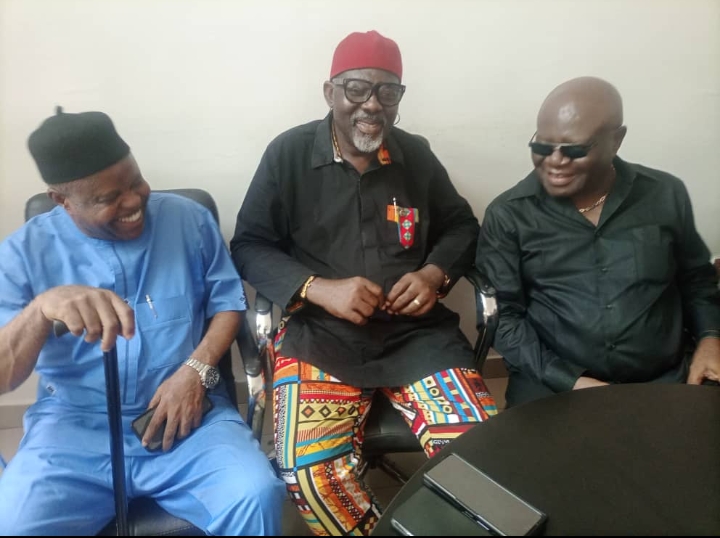
2027: Anambra ADC Intact Despite Obi, Kwankwaso Departure – Guber Candidate





-
 News5 years ago
Uncompleted structures in Enugu to undergo integrity test – Authority
-
 News4 years ago
BREAKING: FG to release Nnamdi Kanu tomorrow, fixes emergency hearing
-
 News2 years ago
BREAKING: Former Anambra Governor is Dead
-
 Entertainment4 years ago
Chrisland School Girl’s Online Activities Leak [Video]
-
 Social event4 years ago
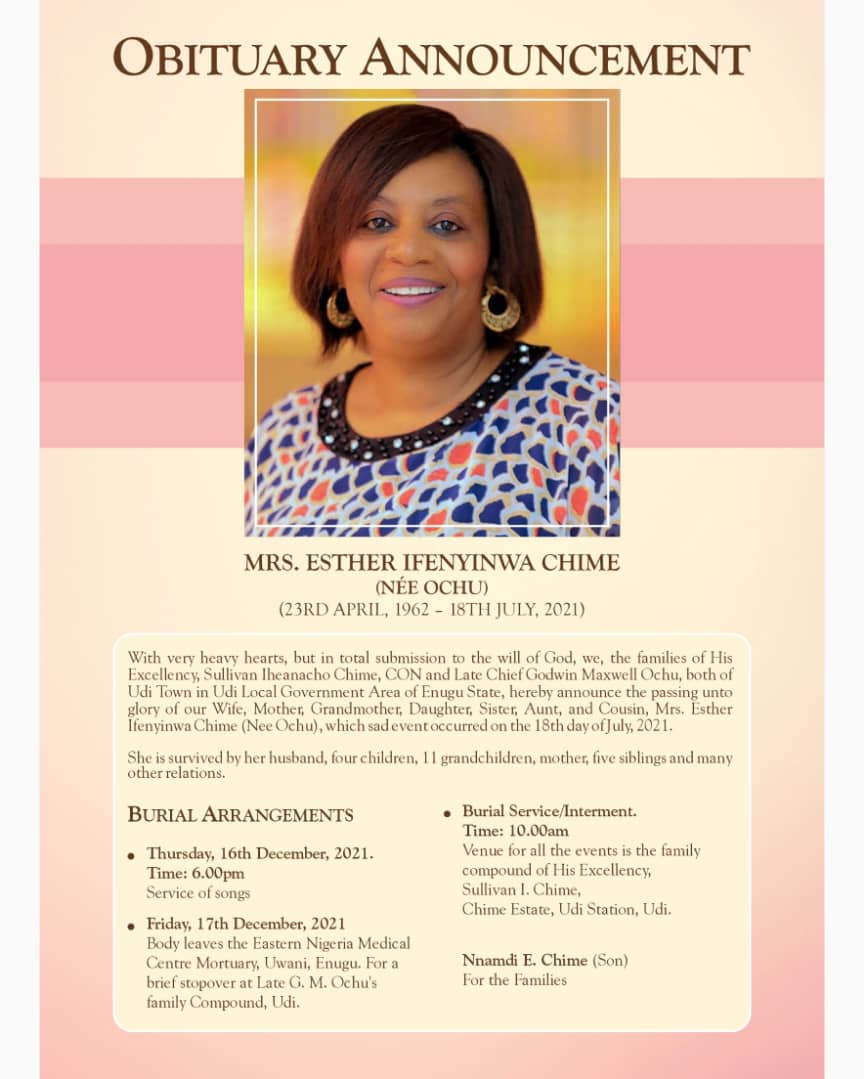
Ex-Enugu governor, Sullivan buries wife December 17
-
 Politics2 years ago
Enugu spends the least as 30 govs burn N968.64bn on refreshments, others in 3 months
-
 Foreign2 years ago
Denmark announces visas for, welders mechanics, bricklayers, others
-
 Crime5 years ago
BREAKING! Sit-at-home: Vehicle conveying tomatoes, set ablaze in Enugu


