

Politics
Law against open grazing: Over 15,000 herds of cattle impounded in Benue- Ortom


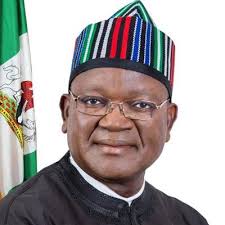
Governor of Benue state Samuel Ortom has commended the Governors of Southern Nigeria for taking the bold step of enacting Open Grazing Prohibition Laws.
Ortom who spoke on Thursday at a one day lecture organized by the Nigeria Union of Journalists, FRCN Chapel said the law has helped them in Benue- State to expose the evil agenda of Fulani terrorists.
Speaking on the theme, “Emerging Security Situation in the South East; the Place of Good Governance,” Ortom noted with dismay, the speed with which the leader of the Indigenous Peoples of Biafra, IPOB, Nnamdi Kanu and the Yoruba Nation agitator, Sunday Igboho, were arrested confirmed the fact that the Federal Government has the capacity to tackle insecurity with determination and commitment.
“We live in a country today where those who demand for equal rights and freedom to end the wave of injustice and marginalization are hurriedly declared terrorists, while real terrorists who invade communities and kill hundreds of innocent people are pampered and given government protection.
“The South East has been at the receiving end of such levels of injustice, impunity and marginalization. Let me make myself very clear. I am not a supporter of violence in any form, neither am I here to justify the violence being witnessed in parts of the East.
“This is why I condemn in strong terms, the destruction of Federal Government properties such as INEC offices, attacks on police stations, law enforcement operatives and even traditional rulers. Such attacks and destruction do not make a positive case for freedom fighters and campaigners for justice”. Ortom noted.
The governor said that dialogue remains the best option in any dispute.
“We must however admit that the ongoing agitations by youths of the South East are as a result of years of neglect, injustice, unfairness and lack of equity by those who have held this country to ransom”. Ortom said.
“There is no doubt that livestock production, as currently being carried out contributes significantly to food security and poverty reduction, but not without massive environmental implications like any other economic activity.
“In Nigeria, open grazing has been the practice of livestock production.
However, in recent times, livestock production system has led to unwarranted attacks on farmers in all parts of the country. This is due largely to population growth, infrastructural development and increased economic activities and above all, the Fulanisation agenda of Fulani nationalities worldwide who have vowed to make Nigeria their own country exclusively.
“Today, we live in the 21st century and open grazing is extinct in most countries of the world. In Europe, America, Asia and in many countries in Africa, pastoralism has long given way to ranching.
Ortom wondered how Nigeria can still be battling with the problem of open grazing of animals which had been solved over a century ago in other countries.
“According to the United States Department of Agriculture, USDA 2021 Report, India with a land mass of 1.2 square miles and with the highest number of cattle has about three hundred and five million, five hundred thousand (305,500,000) cattle, representing 30.52% of the world cattle population.
Brazil with a land mass of 3.3 million square miles has the second highest number of livestock of about two hundred and fifty-two million, seven hundred thousand (252,700,000) cattle representing 25.25%.
“China with a land mass of 3.7 square miles has about ninety-eight million, six hundred and twenty thousand (98,620,000) cattle which represents 9.55%.
“USA with a land mass of 3.6 square miles has ninety-three million, five hundred ninety-five thousand (93,595,000) cattle representing 9.35%. These are countries that have long abandoned open grazing and adopted ranching as the most sustainable and profitable form of livestock production.
To this, Ortom stated with dismay that there is no justification why Nigeria with just over twenty million cattle and land mass of 923,768 square kilometers should not adopt ranching.
“Across the country, open grazing has caused the invasion of farming communities by Fulani herdsmen leading to massive killings, maiming of people, raping of women, destruction of property, loss of livelihoods and displacement of persons.
“You might have heard that on 20th March, 2021, there was an assassination attempt on me by Fulani militia on my way back from the farm. It took the grace of God for me to survive the attack.
The group called Fulani Nationality Movement, FUNAM came out to take responsibility for the attack on me, saying that they narrowly missed their target owing to a technical hitch. Shockingly, the report of the investigation into the attack on me is yet to see the light of day”. Ortom said.
As at today, many States in Nigeria have been affected by the activities of marauding herdsmen and bandits alike.
“The decision by Governors of the Southern states to make laws to ban open grazing is therefore a step in the right direction which deserves to be supported by all good people from all the regions that make up the South.
“We in Benue State took our stand and rejected open grazing four years ago when I, in the presence of Benue stakeholders, on 22nd May, 2017 signed the Open Grazing Prohibition and Ranches Establishment Law.
“The law has since recorded tremendous success with more than 400 herders and cattle rustlers arrested with many already tried by competent courts of law and convicted.
More than fifteen thousand herds of cattle have been impounded. The law has helped us to expose the evil agenda of Fulani terrorists.
“In my lecture at the University of Nigeria, Nsukka in 2019, I predicted that one day, ranching will be embraced and celebrated in this country the same way June 12 is now being celebrated. That prediction is gradually coming to pass earlier than anyone could have anticipated”. Ortom noted
The governor however, noted that the lopsided federal appointments, nepotism and other acts of sectionalism, particularly from 2015 to date, have divided Nigeria now more than at any other time in the country’s history.
“The Federal Character Principle as enshrined in the Constitution has been abused and abandoned by the present administration. This is where leadership has failed Nigerians and good governance has also been relegated to the back seat.
“Eastern Nigeria, like other parts of the country, deserves equal attention with the provision of critical infrastructure and development projects, as well as allocation of resources and key appointments at the federal level.
“No section of this nation is more Nigerian than another. My definition of democracy is doing what the people want the way they want things done. As leaders, we owe the people who voted us a duty to serve them without prejudice and sentiments on account of region, religion, ethnicity, language and political affiliation”. He noted
Ortom said that the founding fathers of Nigeria saw a vision for a United country where the place of someone’s origin should not supersede the quality of what he or she has to offer the country.
“The present administration at the centre has adopted the approach of intimidation of those who dare to voice out their frustrations and concerns over growing insecurity and marginalization. But I, Samuel Ortom, will never keep quiet as long as injustice and marginalization prevail in the affairs of our country.
Ortom said that he upholds the words of Dr. Martin Luther King Junior when he said and I quote:
“If peace means accepting second class citizenship, I don’t want it. If peace means keeping my mouth shut in the midst of injustice and evil, I don’t want it. If peace means being complacently adjusted to a deadening status-quo, I don’t want peace. If peace means a willingness to be exploited economically, dominated politically, humiliated and segregated, I don’t want peace.” unquote.
Governor Samuel Ortom said that he wants peace that is anchored on equity, fairness and justice.
“The current Presidency is on record to have leveled weighty allegations and criticisms against the Goodluck Jonathan administration.
They even threatened that if they were not allowed to take over power in 2015, “the dog and the baboon would be soaked in blood”.
“As you may recall, they also claimed that the fight against Boko Haram was an attack on the north. Perhaps that explains why Boko Haram chose the then Presidential candidate of All Progressives Congress as their representative in negotiation with the Jonathan administration.
“These people occupying the Presidency at the moment also blamed the government of Jonathan for falling to tackle insecurity, but today, they are the same people harassing and intimidating Nigerians who speak against their failures.
“The present administration has introduced selective persecution and prosecution of perceived political opponents.
Its fight against corruption is only targeted at those who hold alternative views. No matter how corrupt someone is said to be, the moment such a person defects to APC, he becomes a saint. That is why some of my colleagues have already joined them. They have been intimidating members of other political parties with EFCC and other anti-corruption agencies.
“For instance, in Benue State, no day passes without one or more appointees of Government being invited and intimidated by EFCC simply because I have refused to bow to the strings of threats and harassment from Abuja to betray my people”.
Ortom made it clear that until the Presidency is willing to listen to the voices of patriotic Nigerians and take steps to address the worsening insecurity, excruciating poverty, hunger, unemployment and increasing prices of commodities, agitations may not go away so soon.
“Our universities and other tertiary institutions keep producing graduates on a yearly basis without commensurate efforts by the Federal Government to create an enabling environment for youths engagement and empowerment.
“The World Bank reported a few months ago that seven million Nigerians had plunged below the poverty line due to increase in inflation in the country in 2020. The statement came on the heels of the Presidency’s claim that in the last two years, the present administration lifted 10.5 million Nigerians out of poverty. The World Bank had earlier projected that an additional 20 million Nigerians could be impoverished by the year 2022.
“Similarly, Statistical Research Department in its January 29, 2021 Report, stated that Jihadist Fulani herdsmen activities in Nigeria from 2015 to 2020, led to the killing of over 7,400 Christians particularly in the Northern region. The Report further indicated that over five million people were displaced and their properties destroyed. Even the South East, South South and South West were not spared.
The pragmatic governor expressed optimism that the enactment of the law here in the East and other parts of the South followed by full implementation will drastically reduce the herdsmen attacks and guarantee peace and development in various communities of Benue State.
On national cohesion and sustainable development, Ortom said that youth restiveness, herdsmen attacks, banditry and other criminal activities have had negative impact on socio-economic life of Nigeria and are also fueling ethnic tensions.
“As I stated earlier, the current secessionist agitations here in the East and elsewhere are a result of injustice and lack of fairness to Nigerians by the current Presidency. This is why there is a growing perception that the Federal Government is encouraging the murderous activities of Fulani herdsmen by its actions and inaction.
From all indications, the public trust in the Presidency has been eroded. This does not speak well for the corporate existence of Nigeria” Ortom said.
On the issue of job creation as panacea to youth restiveness, Samuel Ortom said that in 2020, the unemployment rate in the country stood at 9.01 percent.
“This year 2021, the unemployment rate in the country is estimated to be at 32.5 percent.
You can now guess where Nigeria will be in terms of unemployment in 2023 when this administration will be leaving office. The question is, what has happened to the promise which those in control of the now government made in 2015 while campaigning that they will provide three million jobs per year?
“This was one promise that sparked jubilations at campaign rallies prior to the 2015 presidential elections. Sadly, the country has lost more jobs in six years than at any other time in the last few decades.
“If the Presidency had fulfilled its promise to create three million jobs per year, there would have been 12 million jobs in four years for Nigerians. On the contrary, the rate of unemployment under this government has risen from 18:8 percent in May 2015 to 33.3 percent in May 2021, translating to about 23.2 million jobless people.
“Tackling insecurity in the East and other parts of the country has to go hand in hand with job creation and youth empowerment. When youths are gainfully engaged, they have little or no time for agitations and criminal acts.
“The South East is known for entrepreneurship. If only the Federal Government had supported entrepreneurship development in the region, millions of youths would have been gainfully employed.
Finding the way forward, Ortom noted that the menace of insecurity in the East and other parts of the country can only be successfully addressed when Nigerians set aside sentiments and confront the monster.
“I therefore urge the federal, state and local governments, traditional rulers, religious groups, civil society organizations, youths and all other stakeholders to support security agencies to perform better. Security is everyone’s business”. Ortom said.
The governor called on governments at all levels to take aggressive steps to address the problem of youth unemployment.
“There must be concerted efforts at job creation and youth empowerment using the private sector to provide employment to young Nigerians. This is one sure way to reducing youth restiveness.
“The Federal Government should urgently put in place the enabling environment for the private sector to thrive, in order to prevent more industries from folding up. Government policies ought to be friendly to boost private sector participation.
Ortom called on the Federal Government to as a matter of honesty and urgency, respect the Federal Character Principle to end marginalization and injustice in form of appointments and development projects.
“The Federal Government should also implement the National Livestock Transformation Plan that was adopted by the National Economic Council (NEC). This will not only protect farming communities from attacks and herdsmen from cattle rustling but also lead to environmental protection, security of lives and property as well as guarantee food security. Indeed, ranching will also boost livestock production.
“As I have been saying, the Federal Government should publicly condemn the atrocities perpetrated by armed herdsmen, as well as arrest and prosecute the leadership of Miyetti Allah Kautal Hore, Fulani Nationality Movement, FUNAM and other armed herder groups who have consistently admitted to the wanton killings and destruction of communities across the country”. Ortom said.
He called on the Federal Government to proscribe all militant Fulani groups as was done in the case of the Indigenous People of Biafra (IPOB), given that the Global Terrorism Index ranks Fulani militia as the fourth deadliest terrorist group in the world.
“The Federal Government should urgently convene a national dialogue of all ethnic nationalities to address the concerns being expressed by Nigerians.
“The Presidency should urgently hold a meeting of stakeholders of the entire Eastern Nigeria (devoid of party affiliation), probably here in Enugu to discuss the challenges facing the people which have given rise to youth restiveness and the violence being witnessed across the region.
“The Federal Government should also listen to patriotic calls by Nigerians and address the worsening insecurity, injustice, marginalization, poverty, hunger, unemployment and inflation, to be able to end agitations across the country.
Governor Samuel Ortom however, appeal to youths of the Eastern region to uphold peace and the non-violence approach in their agitations. While expressing believe that the non-violence model is a better option, as it has worked in other parts of the world.
“I equally appeal to the youths to cease further destruction of federal government structures in the region. Remember that the property you are destroying is your own property. They have already made a genuine case for restructuring among other meaningful demands and their voices have been heard loud and clear across the country and beyond”. He stated.
Governor Ortom conclude by appreciating NUJ, Radio Nigeria Enugu for the honour and award given to him by leadership of the NUJ FRCN Chapel.
I am grateful that you found me worthy of your award. I also congratulate other awardees on this occasion.
“May this event serve as a pedestal for sober reflection over the future of our dear country. I beseech you all to take a moment and reflect on how to make this country a better place for all. Nigeria is on life support and is running out of oxygen.
All hands must therefore be on deck irrespective of political, ethnic, religious and cultural differences to ensure the resuscitation of the country”. Ortom stated.
End.








By Okey Maduforo, Awka
Ten communities that make up Anaocha Local Government Area of Anambra State are set for a showdown with their traditional rulers following the alleged suspension of the zoning arrangement for the Anambra State House of Assembly elections.
Recall that on April 7, 2022, the traditional rulers, in a Memorandum of Understanding (MoU), resolved that the House of Assembly seats for Anaocha I and Anaocha II constituencies would rotate among the ten communities, with each town occupying the seat for two terms.
The traditional rulers further resolved that the rotation would subsist irrespective of the political party through which lawmakers emerge, noting that the arrangement was aimed at ensuring that all ten communities have the opportunity to produce members of the State Assembly in the interest of equity and fairness.
However, the Anaocha Equity Forum, shortly after its meeting, expressed concern over the alleged suspension of the zoning arrangement.
Speaking, the Convener of the Anaocha Equity Forum, Mr. Valentine Okoye, said the forum would not take kindly to what it described as acts capable of destabilising the council area, adding that any such move would be resisted.
“This is a Memorandum of Understanding signed by our traditional rulers, and it has been respected until now. We in the Anaocha Equity Forum see this as a slap on the sensibilities of the ten communities that make up the area,” he said.
“We urge members of the public, political parties, and stakeholders to disregard the alleged position of the traditional rulers, as it does not represent the views and aspirations of our people.
“Our traditional rulers should be mindful of their roles as fathers of their respective communities. They should also understand that they would be held responsible for whatever backlash or consequences may arise from this recent position.
“We call on Governor Charles Soludo to call the traditional rulers to order so that the peace currently enjoyed in Anaocha Local Government Area will not be disrupted,” he stated.

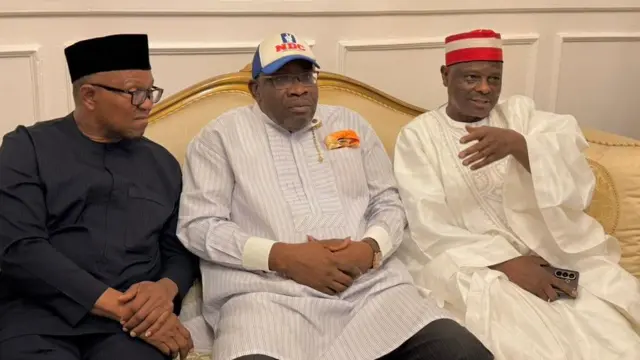
The exit of Peter Obi and Rabiu Kwankwaso, two prominent opposition figures, has weakened the African Democratic Congress across both chambers of the National Assembly.
The National Democratic Congress, which received Peter Obi and Rabiu Kwankwaso on Sunday, recorded its biggest gains on Tuesday with the addition of 17 House members and a senator. Weeks earlier, its ranks expanded when Seriake Dickson, representing Bayelsa West, defected from the Peoples Democratic Party to join the party.
The development comes a few days after several opposition parties resolved to present a single presidential candidate against President Bola Tinubu in the 2027 elections.
The wave of defection to the NDC occurred 48 hours after Obi and Kwankwaso, two of the ADC’s most prominent figures, formally exited the party. These moves have significantly altered the opposition landscape ahead of the 2027 general elections, setting the stage for shifting political alliances.
Additionally, the latest defectors, drawn from Kano, Anambra, Lagos, Edo, Rivers, and Kogi States, cited internal disarray within the ADC as a major factor that influenced their decision.
While reading their letters on the floor of the House, Deputy Speaker Benjamin Kalu, who presided over the plenary session, said the lawmakers blamed the party’s instability for their departure, noting that the crisis remained “unresolved starting from the ward to the national level.”
The defectors to the NDC are Yusuf Datti, Sani Adamu, Zakari Mukhtari, Kamilu Ado, Harris Okonkwo, George Ozodinobi, Lilian Orogbu, Peter Anekwe, Emeka Idu, Ifeanyi Uzokwe, and Afam Ogene. Others include Lagos lawmakers Thaddeus Attah, Oluwaseyi Sowunmi, George Olwande, and Jese Onuakalusi, as well as Murphy Omroruyi from Edo and Umezuruike Manuchim from Rivers State.
In a separate move, Kogi lawmaker Leke Abejide defected from the ADC to the ruling All Progressives Congress.
The coordinated nature of the defections is widely interpreted as a show of loyalty to Obi and Kwankwaso, whose switch to the NDC is already reshaping opposition dynamics.
Both men are influential political figures with strong regional bases—Obi in the South-East and Kwankwaso in the North-West—and their exit from the ADC appears to have triggered a ripple effect among lawmakers aligned with their political structures.
The ADC’s current troubles did not emerge overnight. In recent months, tensions within the party escalated over leadership struggles, strategy disagreements, and competing ambitions among top figures.
The situation worsened amid reports of irreconcilable differences between Obi, Kwankwaso, and former Vice President Atiku Abubakar, who was also a central figure in opposition coalition talks.
Efforts to build a united front ahead of 2027 reportedly broke down due to mistrust, zoning disagreements, and control of party structures.
Their eventual defection to the NDC marked a turning point. Seen as a more viable platform for consolidating opposition strength, the NDC quickly became a magnet for lawmakers and political actors seeking stability and clearer leadership direction.
With the departure of key figures and a steady decline in its legislative strength, the ADC now faces a daunting struggle to maintain political relevance.
The loss of national figures like Obi and Kwankwaso, combined with the defection of lawmakers across multiple states, appears to have weakened its structure and electoral prospects.
Only last week, the party boasted 24 members of the House of Representatives, but it is now left with six.
Once the dominant opposition party, the Peoples Democratic Party may equally struggle to retain its status.
Though still officially the most formidable opposition in the House, the PDP currently has 29 members in the Green Chamber, down from 116 members in its ranks at the inauguration of the 10th National Assembly in June 2023.

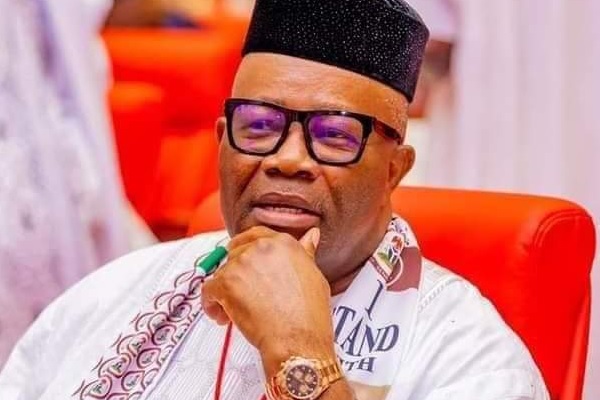
Barely a year to the inauguration of the 11th National Assembly, the Senate on Tuesday moved to tighten its internal rules, effectively narrowing the path to its most powerful offices and edging out a class of incoming lawmakers, including serving governors and former senators eyeing leadership positions.
In a move widely seen as pre-emptive, the red chamber, after about three hours of a closed-door session, amended Orders 4 and 5 of its Standing Rules, restricting eligibility for both presiding and principal offices to ranking lawmakers with defined legislative experience.
The amendments come amid growing interest by outgoing governors and political heavyweights, many of whom are positioning to enter the Senate in 2027 to contest for top leadership roles such as Senate President and Deputy Senate President.
Under the Revised Order 4, the Senate reinforced a strict hierarchy for the emergence of presiding officers, stating that “Nomination of senators to serve as Presiding Officers shall be in accordance with the ranking of senators and shall be strictly adhered to.
“The order of ranking are (i) Former President of the Senate, (ii) Former Deputy President of the Senate, (iii) Former Principal Officers of the Senate, (iv) Senators who had served at least one term of four years, (v) Senators who had been members of the House of Representatives, (vi) In the absence of i to v, senators elected into the Senate for the first time,” it stated.
Beyond this ranking structure, the Senate introduced a more stringent provision in Order 5, effectively excluding first-time and non-consecutive lawmakers from contesting principal offices.
The amended rule states: “Any senator shall not be eligible to contest for any principal office of the Senate unless he has served as a senator for at least two consecutive terms immediately preceding nomination.”
The implication is far-reaching: senators-elect who were not members of both the 9th and 10th National Assembly would be ineligible to vie for key leadership roles in the 11th Assembly.
Presiding offices in the Senate include the Senate President and Deputy Senate President, while principal offices comprise Senate Leader, Deputy Senate Leader, Chief Whip, Deputy Whip, Minority Leader, Deputy Minority Leader, Minority Whip and Deputy Minority Whip.
The rule changes come against the backdrop of an intensifying scramble for Senate seats ahead of the 2027 general elections, driven largely by governors completing their constitutionally allowed two terms.
No fewer than 10 state governors and several former governors are already angling to secure senatorial tickets, leveraging their influence over party structures to emerge as consensus candidates in their respective states.
At least 12 of the 36 state governors are in their second and final terms, with 10 set to complete their tenure by May 29, 2027.
The looming transition has triggered a wave of political realignments, with many seeking to maintain relevance and influence by moving to the National Assembly.
Eight of the affected governors are from the ruling All Progressives Congress, while Oyo State Governor, Seyi Makinde, belongs to the Peoples Democratic Party, and Bauchi State Governor Bala Mohammed is aligned with the Allied Peoples Movement.
Those expected to exit office in 2027 include AbdulRahman AbdulRazaq (Kwara), Abdullahi Sule (Nasarawa), Ahmadu Fintiri (Adamawa), Babagana Zulum (Borno), Inuwa Yahaya (Gombe), Mai Mala Buni (Yobe), Babajide Sanwo-Olu (Lagos), and Dapo Abiodun (Ogun), alongside Makinde and Bala Mohammed.
Although Bayelsa State Governor Douye Diri and Imo State Governor Hope Uzodimma will complete their tenures in early 2028 due to off-cycle elections, both have been drawn into early permutations for Senate seats.
In Imo State, the political temperature has risen sharply following moves by the All Progressives Congress to position Uzodimma for the Imo West senatorial seat.
Party leaders in the state have already named him as the consensus candidate, even as the incumbent senator, Osita Izunaso, is reportedly seeking a return to the red chamber.
Last Saturday, APC leaders from the Orlu Zone (Imo West), led by the state chairman, Chief Austin Onyedebelu, purchased the 2027 senatorial nomination form for the governor, urging him to accept the ticket.
Onyedebelu, who presented the forms to Uzodimma’s Chief of Staff, Chief Nnamdi Anyaehie, called for pressure on the governor to “accept the plea of Orlu people by filling the forms so that it can be submitted before the deadline of 5th May, 2026.”
The state APC has also warned other aspirants against contesting the seat, insisting that Uzodimma remains the consensus choice.
Complicating the contest, former Governor Rochas Okorocha equally purchased nomination forms in a bid to return to the Senate, a move confirmed by one of his aides, Darlington Ibekwe.
The Orlu Political Consultative Assembly further reinforced Uzodimma’s candidacy, declaring him the sole candidate for the district in what it described as a “total, unanimous, and irrevocable decision.”
The unfolding contest is also shaped by internal power dynamics within the ruling party.
Last month, President Bola Tinubu reportedly rebuffed attempts by National Assembly leaders to secure automatic return tickets for lawmakers, instead reaffirming the authority of state governors over candidate selection.
The stance has strengthened governors’ grip on party structures, enabling many of them to influence senatorial nominations as they prepare for life after office.
Against this backdrop, the Senate’s rule amendments appear designed to preserve institutional hierarchy and prevent an influx of first-time lawmakers, many of them politically powerful, from immediately taking control of the chamber’s leadership.
For ambitious entrants like Uzodimma and others plotting a return or debut in the Senate, the message from the red chamber is clear: experience within its ranks, not political clout outside it, will determine who leads in the 11th National Assembly.


“Go and Verify”: How Sunday Umeha Is Redefining Representation in Ezeagu/Udi
Chief Sir Paul Chukwuma Lays His Beloved Sister to Rest

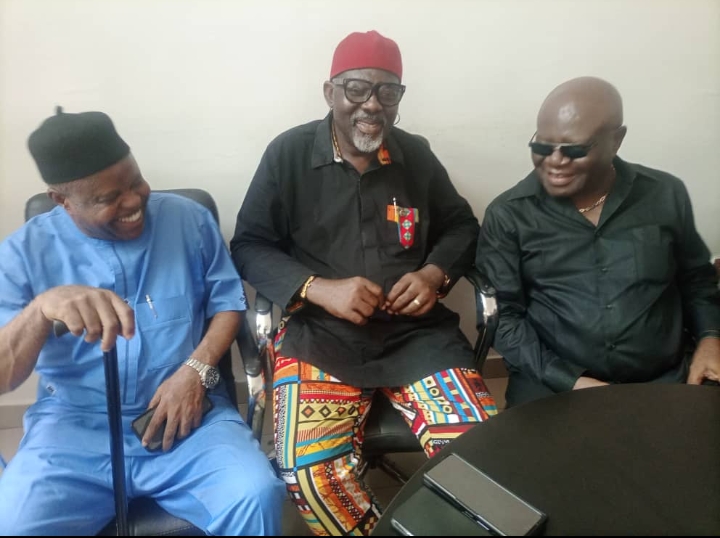
2027: Anambra ADC Intact Despite Obi, Kwankwaso Departure – Guber Candidate




-
 News5 years ago
Uncompleted structures in Enugu to undergo integrity test – Authority
-
 News4 years ago
BREAKING: FG to release Nnamdi Kanu tomorrow, fixes emergency hearing
-
 News2 years ago
BREAKING: Former Anambra Governor is Dead
-
 Entertainment4 years ago
Chrisland School Girl’s Online Activities Leak [Video]
-
 Social event4 years ago
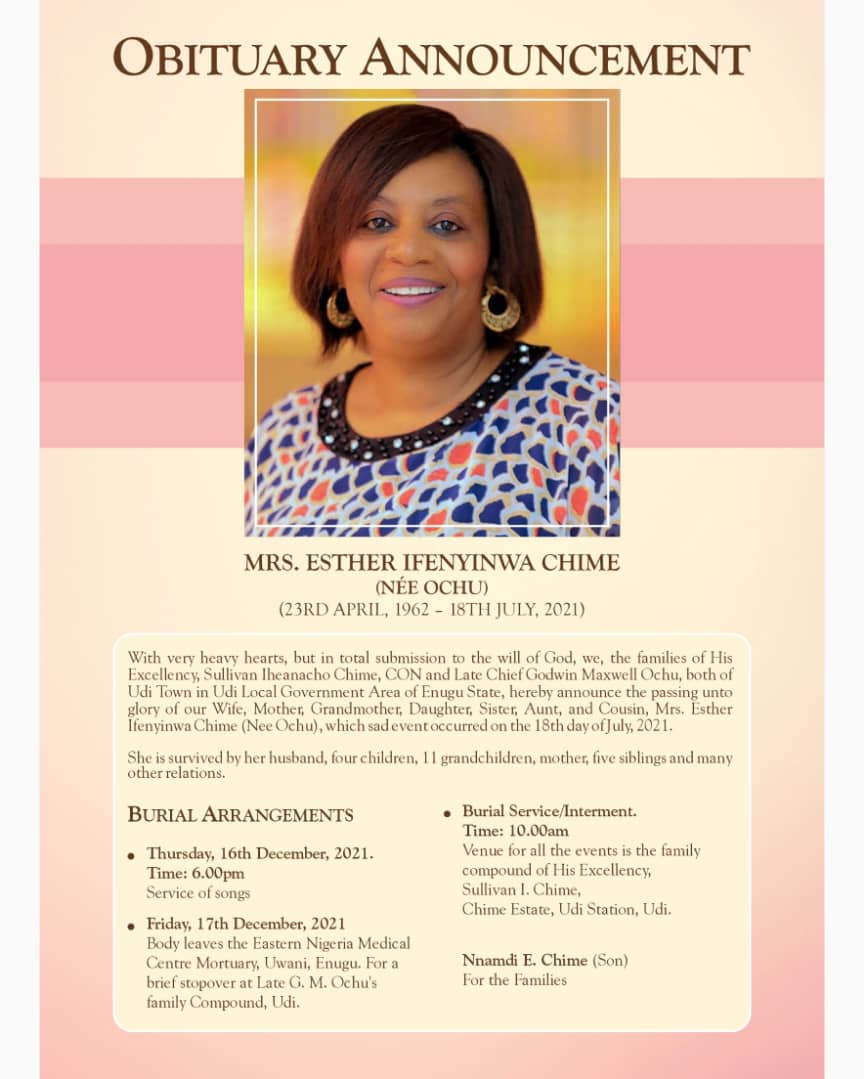
Ex-Enugu governor, Sullivan buries wife December 17
-
 Politics2 years ago
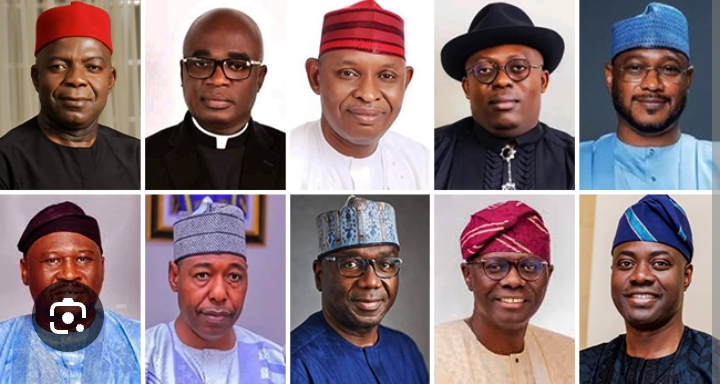
Enugu spends the least as 30 govs burn N968.64bn on refreshments, others in 3 months
-
 Foreign2 years ago
Denmark announces visas for, welders mechanics, bricklayers, others
-
 Crime5 years ago
BREAKING! Sit-at-home: Vehicle conveying tomatoes, set ablaze in Enugu


