

Politics
June 12: IBB’s regrets annulling MKO Abiola’s victory belated – Afenifere


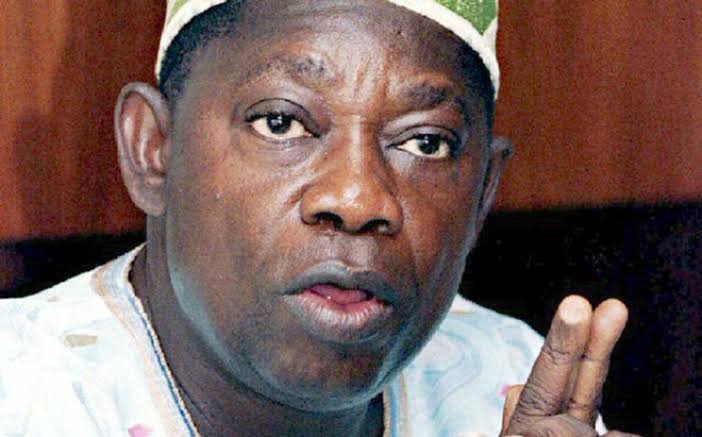
In the concluding section of the 12th chapter of his autobiography launched Thursday in Abuja, titled, ‘A Journey In Service,’ the former leader described the annulment of the election as an “accident of history.”
His remorse, however, attracted knocks and reactions from various individuals and pro-democracy groups, including the Afenifere, Coalition of Northern Groups, former Ogun State governor, Segun Osoba, Mike Ozhekome (SAN), and other prominent Nigerians.
However, the Abiola family was silent on IBB’s admission. Calls to Abiola’s children, including Hafsat and others, did not elicit any response.
The June 12, 1993, election, won by the businessman and politician, Abiola, was considered Nigeria’s freest and fairest.
However, Babangida annulled the results, citing concerns over national security.
The annulment sparked nationwide protests and political unrest, forcing Babangida to resign and leading to a prolonged struggle for democracy before the return to civilian rule in 1999.
Admitting his error, the ex-military leader said, “Although I am on record to have stated after the election that Abiola may not have won the election, upon deeper reflection and a closer examination of all the available facts, particularly the detailed election results…there was no doubt that MKO Abiola won the June 12 election.
“Upon closer examination of the original collated figures from the 110,000 polling booths nationwide, it was clear that he satisfied the two main constitutional requirements for winning the presidential elections, mainly majority votes and geographical spread, having obtained 8,128,720 votes against Tofa’s 5,848,247 votes and securing the mandatory one-third of the votes cast in 28 states of the federation, including Abuja.”
Nonetheless, Babangida noted that Abiola would have been eliminated all the same had he assumed the Presidency.
“Unfortunately, the forces gathered against him after the June 12 elections were so formidable that I was convinced that if he became President, he would be quickly eliminated by the same very forces who pretended to be his friends,” he added.
Speaking at the official launch of his autobiography and fundraiser for the IBB Presidential Library in Abuja, Babangida acknowledged that credible, free and fair elections occurred on June 12, 1993.
He observed, however, that the administration responsible for creating a near-perfect electoral system and overseeing those exemplary elections could not finalise the process.
He described this shortfall as a lamentable “accident of history” while noting that the nation was justifiably owed an expression of his remorse.
“Undoubtedly credible, free and fair elections were held in June, on June 12, 1993. However, the tragic irony of history remains that the administration that devised a near-perfect electoral system and conducted those near-perfect elections could not complete the process.
“That accident of history is most regrettable. The nation is entitled to expect my impression of regret,” said Babangida.
Accepting full responsibility for all decisions made during his leadership of the military government, the former Nigerian leader further noted that the events of June 12 unfolded on his watch, with errors, oversights and misjudgements occurring rapidly.
Nevertheless, he maintained that each action was taken in the overriding interest of Nigeria’s survival.
He also expressed regret that the country’s democratic progress was interrupted, yet emphasised that both Nigeria and its democracy endure.
“As a leader of the military administration, I accept full responsibility for all decisions taken under my watch. And June 12 happened under my watch; mistakes, oversights and missteps happened in quick succession, but I say in my book, in all matters, we acted in the supreme national interest so that Nigeria could survive.
“Our nation’s march to democracy was interrupted, a fact I deeply regret. But Nigeria’s democracy is still alive, a testament to commitment,” he noted.
While reviewing the book, former Vice President Yemi Osinbajo revealed that Babangida found the 1993 election arguably the most challenging chapter of his life.
“The June 12 elections were the most challenging of my life. If I have to do it all over again, I’ll do it differently,” Osinbajo said, quoting a section from the book.
The former vice president also quoted Babangida in the book as thanking former President Muhammadu Buhari for honouring MKO Abiola with the Grand Commander of the Federal Republic, the highest rank of the president of the country.
The book, which offers insights into key moments in the country’s history, also addresses other national controversies, including the 1976 coup attempt that led to the assassination of then-Head of State, Murtala Muhammed, and the 1986 letter bomb that killed investigative journalist, Dele Giwa.
While denying any involvement in Dele Giwa’s death, Babangida said he expected the truth to be unravelled one day.
He said, “The Giwa, like all mysterious murders, has remained unsolved after so many years. I keep hoping it will be uncovered in our lifetime or after us. More often than not, mysterious crimes are solved long after their commission.
“When the Obasanjo civilian administration reopened the Giwa case at the Oputa Panel on Human and Civil Rights, I expected that the police and lawyers would come forward with new evidence as to their findings on the Giwa murder over the years. Nothing of such happened.”
The IBB book launch drew an elite gathering of past and present leaders who reflected on his legacy and the state of democracy in West Africa.
Discussions ranged from Babangida’s contributions to Nigeria’s political history to concerns over the resurgence of military coups in the region.
In his keynote address, former Ghanaian President Nana Akufo-Addo emphasised the importance of multi-party democracy in Africa’s development.
He warned against the growing wave of military takeovers, calling them a setback to democratic progress.
“Multiple parties are good for our continent,” Akufo-Addo said, urging leaders to protect democratic institutions.
President Bola Tinubu praised the former leader for his “unparalleled contributions to national unity and economic growth.”
Tinubu pledged, as President, to continue making decisions—no matter how difficult—in the supreme interest of the nation, following the example set by Babangida.
“I’m glad about the revelation on June 12…I’m not here to read a speech; I’m here to pay homage and say thank you for everything, for who you are, what you are, and what you have contributed to the history of this great country.
“All I can promise as the President is to strive to do the best, put the best forward, and make decisions, no matter how difficult they are, in the interest of the country.
“You have done so, and you have laid the example. Thank you very much,” he stated.
Former Nigerian Head of State, Gen Yakubu Gowon (retd.), lauded Babangida’s rise from aide-de-camp to head of state, describing him as a “boss of bosses.”
Gowon also expressed gratitude for Babangida’s decision to restore his rank of General after it was stripped following the 1976 coup.
The former head of state said, “Thank you for restoring my rank,” reflecting on how Babangida’s leadership impacted his life.
Another former military head of state, Gen Abdulsalami Abubakar, shared personal anecdotes about his long-standing relationship with Babangida which, he said, spans over 80 years.
Abubakar recalled a childhood prophecy foretold Babangida’s rise to power and commended him for documenting his life’s journey.
“Your memoir will enrich the country,” he stated.
For his part, former President Goodluck Jonathan described Babangida as one of Nigeria’s most charismatic leaders and called for the creation of presidential libraries to preserve the country’s political history.
“IBB brought us here today to celebrate his book and library. His home has become somewhat of a pilgrimage site,” Jonathan noted.
Representing immediate-past President Muhammadu Buhari, ex-Minister of Transportation, Jaji Sambo, delivered a congratulatory message, expressing hope that Babangida would continue offering valuable counsel to Nigeria’s leadership.
Reacting to IBB’s admission on the June 12, 1993 election, the pan-Yoruba political organisation, Afenifere, described it as belated and insufficient to address its far-reaching consequences.
In a statement by its Organising Secretary, Kole Omololu, the group asserted that Babangida’s acknowledgement of the election’s credibility did not absolve him or his associates of the monumental and irreversible damage caused by the annulment.
“His belated acknowledgement that the election was indisputably free, fair, and credible merely reaffirms what Nigerians have known for over three decades—that Chief Moshood Kashimawo Olawale Abiola was the rightful winner of that historic election,” Omololu said.
“It does not restore the lives lost, nor does it atone for the enduring scars of oppression, bloodshed, and the suppression of democracy. The consequences of that reckless annulment remain irreversible.
“The Yoruba nation, and indeed all Nigerians, bore the brunt of Babangida’s self-serving power grab. His decision plunged the country into chaos and ushered in an era of state-sponsored terror against democracy activists, pro-democracy media, and innocent citizens who dared to demand justice,” it stated.
The group pointed to the monumental consequences of IBB’s annulment, including the assassination of Kudirat Abiola, the cold-blooded murder of Alfred Rewane, and the relentless persecution of Pa Abraham Adesanya, among others, which it said, remained an indelible stain on Nigeria’s conscience.
“Many distinguished Yoruba sons and daughters suffered grave injustices—exiled, imprisoned, or tragically eliminated—under the despotic military regimes of Babangida and Abacha, which were determined to silence the will of the people,” it added.
Afenifere reiterated its demand that all privileges and recognitions befitting a legitimately elected President be conferred on the late MKO Abiola.9
The group also emphasised that his family should be accorded the honour and recognition deserved by a leader whose mandate was unjustly stolen.
“We reiterate our unequivocal demand that his (Abiola’s) name must be inscribed in the annals of Nigeria’s history, not as a mere political casualty but as the rightful President-elect who was denied the opportunity to serve.
“Anything short of this remains a continued affront to justice and historical truth.
“Afenifere salutes MKO Abiola as a towering symbol of courage, a visionary whose unwavering commitment to democracy was matched only by his willingness to make the ultimate sacrifice for the emancipation of his people.
“Babangida’s so-called remorse rings hollow, for true atonement is measured not by words but by actions. His admission, far from being redemptive, serves only as a reminder of the grievous wrongs that remain unaddressed,” Afenifere said.
A former Secretary to the Government of the Federation, Chief Olu Falae, waived off IBB’s remorse, stating that he said nothing new.
Falae, who recalled how he was incarcerated for two years for fighting to uphold Abiola’s mandate, stated, “We formed NADECO to fight for the fact that Abiola won the election and should be declared president. I was detained for two years for fighting that cause.
“We gave the military an ultimatum to hand over Abiola’s mandate, but they started arresting us. I was kept in detention for two years. What he said is nothing new—we have always known and believed that Abiola won the election.”
A chieftain of the National Democratic Coalition, Ayo Opadokun, also dismissed the ex-Nigerian leader’s admission, describing it as unsurprising.
According to Opadokun, it was already evident to him and many Nigerians that Abiola won the election.
Speaking on the consequences of Babangida’s decision, Opadokun said he was more interested in reading Babangida’s autobiography to understand the circumstances the former president claimed led to the annulment of the historic election.
“The fact that he admitted that Abiola won the election does not bring any new revelation. We had the documents immediately after the election; we knew that Abiola won,” Opadokun said.
“What matters now is the context of his admission. I want to read the book and see what Babangida is admitting and in what context. I watched him express regret over annulling the election, but that no longer holds any significance to me because of the monumental consequences of his actions, consequences that he is now regretting 32 years later,” he noted.
But the Coalition of Northern Groups praised the former military leader for having the courage to own up to his faults over the annulment of the June 12 presidential election.
The CNG, in a statement by its National Coordinator, Jamilu Charanchi, described Babangida as an exemplary leader who distinguished himself by taking responsibility for his decision.
“It clearly shows that IBB is an exemplary leader who distinguished himself from so-called leaders who shy away from taking responsibility for decisions made by their cabinet,” Charanchi said.
He also noted that Babangida’s statement reaffirmed his commitment to the unity and progress of the country.
Charanchi said, “It clearly shows that IBB is an exemplary leader who distinguished himself from the so-called leaders that shy away from taking responsibility for the decisions taken by their cabinet.
“It equally reaffirms his commitment to the unity and progress of the country, and we believe that they took the decision for the best interest of the country, he is a true and patriotic leader who leads with a philosophy of messengers of God.”
Former governor of Ogun State, Osoba, said Abiola would be “laughing his head off in heaven” following the confession by the former military president.
Osoba said he had always been a firm believer that time heals every situation.
He said, “Time is healing the wounds of the situation created by the military regime. On my part, I keep thanking God for the life of MKO Abiola whom I work for to win the June 12 election. Even the man himself will be happy in heaven now.
“He has left a legacy by paying the supreme price for the democracy we are enjoying today. So what is more important to me is the legacy he left behind.”
On whether he is certain time will indeed heal all the anger, trauma and deaths recorded in the wake of the annulment, Osoba responded, “I am not a prophet. I should not be guessing for anybody (on how they feel). As far as I am concerned, God is working His wonders.
“You know we were all friends. All of us, including Babangida, myself, MKO Abiola and those who were involved in the whole thing. We were all deeply close. So, as I said, MKO will be in heaven laughing at all of us and enjoying the whole thing.”
Former Governor of Plateau State, Jonah Jang, commended Babangida for admitting that Abiola won the election and expressing regrets for annulling it.
In an interview in Jos, on Thursday, Jang praised Babangida’s honesty, stating, “I want to thank Babangida for owning up to that fact of what he did and it shows we are making progress as a country where we can tell ourselves the truth.”
Jang believed Babangida’s admission would help heal old wounds, saying, “I believe that will finally close some wounds that have long been open.”
The former governor also emphasised that the government should provide adequate compensation to the family of MKO Abiola, considering the government’s continuity.
“Since the government is a continuum, the MKO family should be adequately compensated,” Jang, who spoke through his Media Consultant, Clinton Garuba, said.
Speaking on the development, Ozekhome (SAN), said, I have read and listened carefully to General Ibrahim Gbadamosi Babangida’s remorse and regret over the annulment of the 1993 presidential elections.
“I want to very quickly say that it takes a man with strong guts and a man who has become born again and has seen the face of God to publicly recount his earlier deed and offer apologies to the entire nation to heal and mend wounded hearts.
“I want to salute Babangida for owning up like a man that everything that happened during the June 12 crisis happened under him as the head of state and the president. He was also the Commander-in-Chief of the Armed Forces.
“I salute him for acknowledging that his government held unarguably the freest, fairest and most credible election in the electoral calendar in the electoral history of Nigeria which introduced option A4 from electoral books that were never known to Nigeria or the world.
“I believe that Nigerians should forgive him because to err is human and to forgive is divine. I personally have now forgiven him, because the June 12 crisis threw up all manner of challenges where, in my very youth, in my thirties, I found myself marching on the street of Lagos every day from Ikeja bus stop roundabout to Ikorodu road, up to Tejuosho market from there to Surulere to Mushin to Shomolu. Every day we were on the streets protesting the annulment.”
Another Senior Advocate of Nigeria, Wahab Shittu, welcomed the public expression of regret by the former military leader, saying it was a necessary admission that a grave injustice had been done to the Nigerian nation.
“That is an admission that, at some point in time, a wrong was committed against the Nigerian nation, against our democracy. Having expressed his regret, he should be forgiven, and the Abiola family should be compensated,” Shittu said.
A former President of the Committee for the Defence of Human Rights, Malachy Ugwummadu, said Babangida’s regret over the June 12 annulment “was good for the health and sanity of the country to find closure.”
He expressed concerns over the narrative presented in the book and the General’s apology, saying it was a failed attempt to rewrite the history of Nigeria.
At the book presentation, the President and Chief Executive of Dangote Industries Limited, Aliko Dangote, praised Babangida for implementing policies that liberated the private sector in Nigeria during his regime.
Africa’s wealthiest man donated N8bn to the IBB Presidential Library, to be paid at N2bn annually over the four years allocated for the project’s completion.
He further pledged that if the project extends beyond this timeframe, he would continue to donate N2bn annually until it is finished.

By Okey Maduforo, Awka
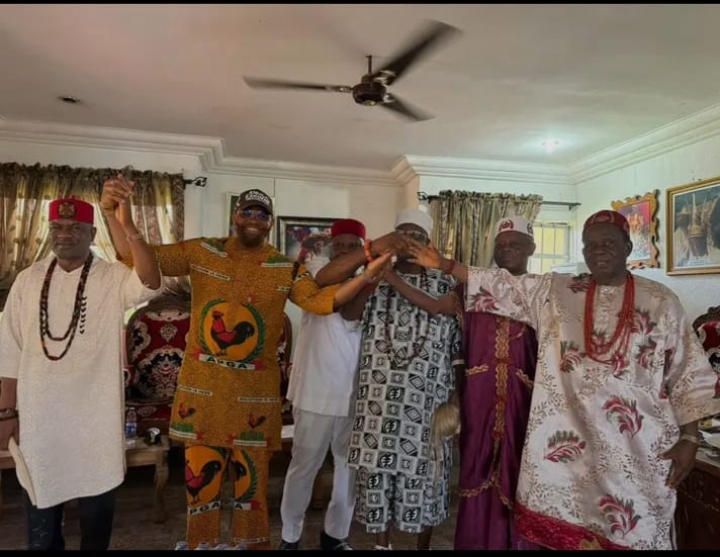
Ten communities that make up Anaocha Local Government Area of Anambra State are set for a showdown with their traditional rulers following the alleged suspension of the zoning arrangement for the Anambra State House of Assembly elections.
Recall that on April 7, 2022, the traditional rulers, in a Memorandum of Understanding (MoU), resolved that the House of Assembly seats for Anaocha I and Anaocha II constituencies would rotate among the ten communities, with each town occupying the seat for two terms.
The traditional rulers further resolved that the rotation would subsist irrespective of the political party through which lawmakers emerge, noting that the arrangement was aimed at ensuring that all ten communities have the opportunity to produce members of the State Assembly in the interest of equity and fairness.
However, the Anaocha Equity Forum, shortly after its meeting, expressed concern over the alleged suspension of the zoning arrangement.
Speaking, the Convener of the Anaocha Equity Forum, Mr. Valentine Okoye, said the forum would not take kindly to what it described as acts capable of destabilising the council area, adding that any such move would be resisted.
“This is a Memorandum of Understanding signed by our traditional rulers, and it has been respected until now. We in the Anaocha Equity Forum see this as a slap on the sensibilities of the ten communities that make up the area,” he said.
“We urge members of the public, political parties, and stakeholders to disregard the alleged position of the traditional rulers, as it does not represent the views and aspirations of our people.
“Our traditional rulers should be mindful of their roles as fathers of their respective communities. They should also understand that they would be held responsible for whatever backlash or consequences may arise from this recent position.
“We call on Governor Charles Soludo to call the traditional rulers to order so that the peace currently enjoyed in Anaocha Local Government Area will not be disrupted,” he stated.

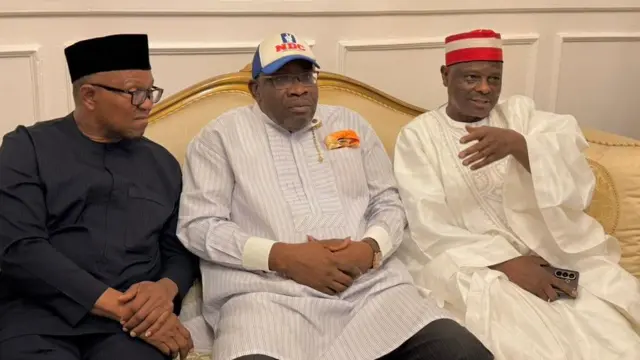
The exit of Peter Obi and Rabiu Kwankwaso, two prominent opposition figures, has weakened the African Democratic Congress across both chambers of the National Assembly.
The National Democratic Congress, which received Peter Obi and Rabiu Kwankwaso on Sunday, recorded its biggest gains on Tuesday with the addition of 17 House members and a senator. Weeks earlier, its ranks expanded when Seriake Dickson, representing Bayelsa West, defected from the Peoples Democratic Party to join the party.
The development comes a few days after several opposition parties resolved to present a single presidential candidate against President Bola Tinubu in the 2027 elections.
The wave of defection to the NDC occurred 48 hours after Obi and Kwankwaso, two of the ADC’s most prominent figures, formally exited the party. These moves have significantly altered the opposition landscape ahead of the 2027 general elections, setting the stage for shifting political alliances.
Additionally, the latest defectors, drawn from Kano, Anambra, Lagos, Edo, Rivers, and Kogi States, cited internal disarray within the ADC as a major factor that influenced their decision.
While reading their letters on the floor of the House, Deputy Speaker Benjamin Kalu, who presided over the plenary session, said the lawmakers blamed the party’s instability for their departure, noting that the crisis remained “unresolved starting from the ward to the national level.”
The defectors to the NDC are Yusuf Datti, Sani Adamu, Zakari Mukhtari, Kamilu Ado, Harris Okonkwo, George Ozodinobi, Lilian Orogbu, Peter Anekwe, Emeka Idu, Ifeanyi Uzokwe, and Afam Ogene. Others include Lagos lawmakers Thaddeus Attah, Oluwaseyi Sowunmi, George Olwande, and Jese Onuakalusi, as well as Murphy Omroruyi from Edo and Umezuruike Manuchim from Rivers State.
In a separate move, Kogi lawmaker Leke Abejide defected from the ADC to the ruling All Progressives Congress.
The coordinated nature of the defections is widely interpreted as a show of loyalty to Obi and Kwankwaso, whose switch to the NDC is already reshaping opposition dynamics.
Both men are influential political figures with strong regional bases—Obi in the South-East and Kwankwaso in the North-West—and their exit from the ADC appears to have triggered a ripple effect among lawmakers aligned with their political structures.
The ADC’s current troubles did not emerge overnight. In recent months, tensions within the party escalated over leadership struggles, strategy disagreements, and competing ambitions among top figures.
The situation worsened amid reports of irreconcilable differences between Obi, Kwankwaso, and former Vice President Atiku Abubakar, who was also a central figure in opposition coalition talks.
Efforts to build a united front ahead of 2027 reportedly broke down due to mistrust, zoning disagreements, and control of party structures.
Their eventual defection to the NDC marked a turning point. Seen as a more viable platform for consolidating opposition strength, the NDC quickly became a magnet for lawmakers and political actors seeking stability and clearer leadership direction.
With the departure of key figures and a steady decline in its legislative strength, the ADC now faces a daunting struggle to maintain political relevance.
The loss of national figures like Obi and Kwankwaso, combined with the defection of lawmakers across multiple states, appears to have weakened its structure and electoral prospects.
Only last week, the party boasted 24 members of the House of Representatives, but it is now left with six.
Once the dominant opposition party, the Peoples Democratic Party may equally struggle to retain its status.
Though still officially the most formidable opposition in the House, the PDP currently has 29 members in the Green Chamber, down from 116 members in its ranks at the inauguration of the 10th National Assembly in June 2023.

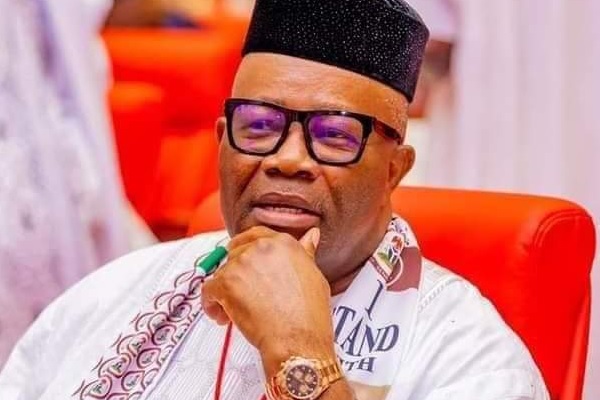
Barely a year to the inauguration of the 11th National Assembly, the Senate on Tuesday moved to tighten its internal rules, effectively narrowing the path to its most powerful offices and edging out a class of incoming lawmakers, including serving governors and former senators eyeing leadership positions.
In a move widely seen as pre-emptive, the red chamber, after about three hours of a closed-door session, amended Orders 4 and 5 of its Standing Rules, restricting eligibility for both presiding and principal offices to ranking lawmakers with defined legislative experience.
The amendments come amid growing interest by outgoing governors and political heavyweights, many of whom are positioning to enter the Senate in 2027 to contest for top leadership roles such as Senate President and Deputy Senate President.
Under the Revised Order 4, the Senate reinforced a strict hierarchy for the emergence of presiding officers, stating that “Nomination of senators to serve as Presiding Officers shall be in accordance with the ranking of senators and shall be strictly adhered to.
“The order of ranking are (i) Former President of the Senate, (ii) Former Deputy President of the Senate, (iii) Former Principal Officers of the Senate, (iv) Senators who had served at least one term of four years, (v) Senators who had been members of the House of Representatives, (vi) In the absence of i to v, senators elected into the Senate for the first time,” it stated.
Beyond this ranking structure, the Senate introduced a more stringent provision in Order 5, effectively excluding first-time and non-consecutive lawmakers from contesting principal offices.
The amended rule states: “Any senator shall not be eligible to contest for any principal office of the Senate unless he has served as a senator for at least two consecutive terms immediately preceding nomination.”
The implication is far-reaching: senators-elect who were not members of both the 9th and 10th National Assembly would be ineligible to vie for key leadership roles in the 11th Assembly.
Presiding offices in the Senate include the Senate President and Deputy Senate President, while principal offices comprise Senate Leader, Deputy Senate Leader, Chief Whip, Deputy Whip, Minority Leader, Deputy Minority Leader, Minority Whip and Deputy Minority Whip.
The rule changes come against the backdrop of an intensifying scramble for Senate seats ahead of the 2027 general elections, driven largely by governors completing their constitutionally allowed two terms.
No fewer than 10 state governors and several former governors are already angling to secure senatorial tickets, leveraging their influence over party structures to emerge as consensus candidates in their respective states.
At least 12 of the 36 state governors are in their second and final terms, with 10 set to complete their tenure by May 29, 2027.
The looming transition has triggered a wave of political realignments, with many seeking to maintain relevance and influence by moving to the National Assembly.
Eight of the affected governors are from the ruling All Progressives Congress, while Oyo State Governor, Seyi Makinde, belongs to the Peoples Democratic Party, and Bauchi State Governor Bala Mohammed is aligned with the Allied Peoples Movement.
Those expected to exit office in 2027 include AbdulRahman AbdulRazaq (Kwara), Abdullahi Sule (Nasarawa), Ahmadu Fintiri (Adamawa), Babagana Zulum (Borno), Inuwa Yahaya (Gombe), Mai Mala Buni (Yobe), Babajide Sanwo-Olu (Lagos), and Dapo Abiodun (Ogun), alongside Makinde and Bala Mohammed.
Although Bayelsa State Governor Douye Diri and Imo State Governor Hope Uzodimma will complete their tenures in early 2028 due to off-cycle elections, both have been drawn into early permutations for Senate seats.
In Imo State, the political temperature has risen sharply following moves by the All Progressives Congress to position Uzodimma for the Imo West senatorial seat.
Party leaders in the state have already named him as the consensus candidate, even as the incumbent senator, Osita Izunaso, is reportedly seeking a return to the red chamber.
Last Saturday, APC leaders from the Orlu Zone (Imo West), led by the state chairman, Chief Austin Onyedebelu, purchased the 2027 senatorial nomination form for the governor, urging him to accept the ticket.
Onyedebelu, who presented the forms to Uzodimma’s Chief of Staff, Chief Nnamdi Anyaehie, called for pressure on the governor to “accept the plea of Orlu people by filling the forms so that it can be submitted before the deadline of 5th May, 2026.”
The state APC has also warned other aspirants against contesting the seat, insisting that Uzodimma remains the consensus choice.
Complicating the contest, former Governor Rochas Okorocha equally purchased nomination forms in a bid to return to the Senate, a move confirmed by one of his aides, Darlington Ibekwe.
The Orlu Political Consultative Assembly further reinforced Uzodimma’s candidacy, declaring him the sole candidate for the district in what it described as a “total, unanimous, and irrevocable decision.”
The unfolding contest is also shaped by internal power dynamics within the ruling party.
Last month, President Bola Tinubu reportedly rebuffed attempts by National Assembly leaders to secure automatic return tickets for lawmakers, instead reaffirming the authority of state governors over candidate selection.
The stance has strengthened governors’ grip on party structures, enabling many of them to influence senatorial nominations as they prepare for life after office.
Against this backdrop, the Senate’s rule amendments appear designed to preserve institutional hierarchy and prevent an influx of first-time lawmakers, many of them politically powerful, from immediately taking control of the chamber’s leadership.
For ambitious entrants like Uzodimma and others plotting a return or debut in the Senate, the message from the red chamber is clear: experience within its ranks, not political clout outside it, will determine who leads in the 11th National Assembly.


“Go and Verify”: How Sunday Umeha Is Redefining Representation in Ezeagu/Udi
Chief Sir Paul Chukwuma Lays His Beloved Sister to Rest

2027: Anambra ADC Intact Despite Obi, Kwankwaso Departure – Guber Candidate






-
 News5 years ago
Uncompleted structures in Enugu to undergo integrity test – Authority
-
 News4 years ago
BREAKING: FG to release Nnamdi Kanu tomorrow, fixes emergency hearing
-
 News2 years ago
BREAKING: Former Anambra Governor is Dead
-
 Entertainment4 years ago
Chrisland School Girl’s Online Activities Leak [Video]
-
 Social event4 years ago
Ex-Enugu governor, Sullivan buries wife December 17
-
 Politics2 years ago
Enugu spends the least as 30 govs burn N968.64bn on refreshments, others in 3 months
-
 Foreign2 years ago
Denmark announces visas for, welders mechanics, bricklayers, others
-
 Crime5 years ago
BREAKING! Sit-at-home: Vehicle conveying tomatoes, set ablaze in Enugu


