

Politics
It’s a strange judgement, LP Legal Adviser, Atiku, Obi head to Supreme Court


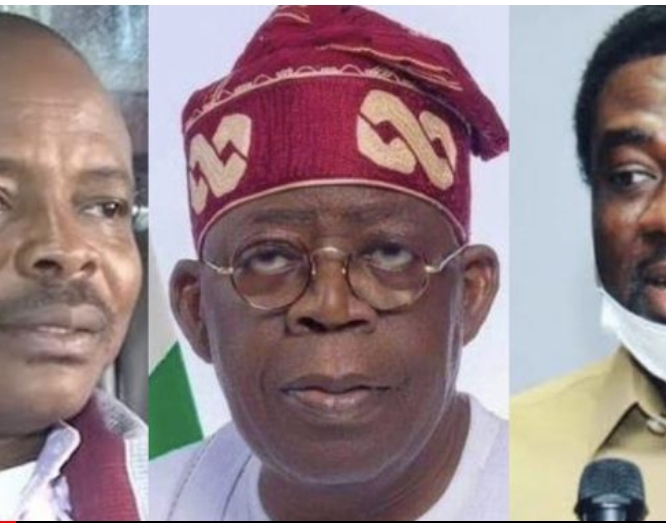
The Legal Adviser to the Labour Party, Kehinde Edun, vowed to challenge the judgment at the Supreme Court.
Also, Atiku’s Lead Counsel, Chris Uche, SAN, said he had received instructions from his client to file an appeal at the Supreme Court.
He said “The judgment has been delivered but we have not received justice. Luckily, the law has given us leverage to go on appeal to the Supreme Court. We have instructions from our clients to go to the Supreme Court. The struggle continues.”
The PEPT which began sitting at 9.40am at the Court of Appeal, Abuja, ruled that the petition filed by Atiku and Obi and their parties had no merit and unanimously upheld Tinubu’s electoral victory in the February 25 presidential election.
The five-member panel took turns to dismiss the petitions presented by Atiku and Obi against the declaration of Tinubu as the winner of the presidential election by the Independent National Electoral Commission on March 1, 2023.
The judgment was delivered by the Chairman of the tribunal, Justice Haruna Tsammani, assisted by other members of the panel-Justices Stephen Adah, Monsurat Bolaji-Yusuf, Moses Ugo and Abba Mohammed.
Delivering the death knell to Atiku’s petition on Wednesday night, Tsammani stated, “This petition accordingly lacks merit. I affirm the return of Bola Ahmed Tinubu as the duly elected President of the Federal Republic of Nigeria. The parties are to bear their cost.”
The National Legal Adviser of the LP, Edun, expressed disappointment with the judgment, stressing that the tribunal was unfair to reject 10 of their 13 witnesses, adding that the decision weakened their case.
Edun said, “We already had a premonition that this might happen. For example, where the court was saying the statements of some key witnesses should have been filed along with the petitions. How can that be? Subpoena is an order of court by which the court has compelled a witness to come and give evidence before or as of the time you are filing the petition.
‘’This is because I have not assumed jurisdiction, the tribunal has also not assumed jurisdiction. We are just filing. It is only after filing that the court assumes jurisdiction, not before. So how can you file a witness statement at the time of filing the petition? It is when the court signs the subpoena.”
He explained, ‘’That subpoena is an invitation to the person indicating that the court has given him an order to come and give evidence. So, if the court has not ordered the person, how can he give any statement?
‘’This is why I said the judgment is so strange. And it is on the basis that they knocked out the evidence of 10 of our 13 witnesses, which inevitably weakened our case. It is a strange judgment.”
On the next point of action for the party, the legal adviser disclosed that the apex court will be the final arbiter.
“There are some filings that are unacceptable to us. So we need to see what the apex court has to say to this. We have to address this, not only for today, but for the sake of our jurisprudence. We want to see what the judges at the Supreme Court will say about all these. It is so important to do this for the sake of tomorrow.”
Delivering judgment earlier on Obi and LP’s petition marked CA/PEPC/03/2023, Tsammani said the petitioners failed to prove the allegations in their petition as required by the law and went ahead to knock off the planks of the case one after the other.
The tribunal held that although the petitioners alleged that the election was marred by irregularities, they, however, failed to give specific details of where the alleged infractions took place.
The court noted that whereas Obi and the LP insisted that the election was rigged in 18, 088 polling units across the federation, they were unable to state the locations of the said polling units.
In the verdict that was read for five hours, the tribunal further held that Obi’s allegation that fictitious results were recorded for the Tinubu and the All Progressives Congress by the Independent National Electoral Commission was not proved.
Moreso, it pointed out that the petitioners were unable to state the figures they claimed were reduced from the election results they garnered in different states of the federation, especially in Ondo, Oyo, Rivers, Yobe, Borno, Tabara, Osun and Lagos States.
It added that the petitioners equally failed to state the polling units where over-voting occurred or the exact figures of unlawful votes that were credited to Tinubu by the INEC.
It stressed that though Obi and LP said they would rely on spreadsheets as well as forensic reports and expert analysis of their expert witnesses, they failed to attach the documents to the petition or serve the same on the respondents as required by the law.
The court stated that though the petition contained serious allegations that bordered on violence, non-voting, suppression of votes, fictitious entry of election results and corrupt practices, Obi and his party, however, failed to give particulars of specific polling units where the incidents took place.
It held that several portions of the petition that contained the allegations were “vague, imprecise, nebulous and bereft of particular materials.”
Therefore, the court struck out paragraphs 9, 60, 61, 66, 67, 68, 69, 70, 71, 72, 73, 76, 77, 78, 83 and 89 of the petition.
“They failed to state the number of votes affected and the number of people disenfranchised. The determination of the election is about figures,” Justice Mohammed declared.
He further stated, “It is unimaginable that a petitioner will allege widespread rigging in 176,000 polling units, over 8,000 wards, 774 LGAs, 36 states and FCT without stating the specific place where the alleged irregularities occur.
“The law is very clear that where someone alleged irregularities in a particular polling unit, such person must prove the particular irregularities in that polling unit for him to succeed in his petition.
“Labour Party made generic allegations of irregularities and said they would rely on spreadsheets, inspection reports, and forensic analysis but the documents promised by the petitioners were not attached to the petition.”
Obi nomination validated
Nevertheless, the court dismissed the contention of the respondents-Tinubu and the APC-that Obi was not validly nominated by the LP to contest the presidential election.
It noted that the respondents had argued that Obi left the PDP on May 24, 2022 and joined the LP on May 27, 2022.
The respondents in its petition claimed that as of May 30, 2022, Obi was not a valid member of the LP and could not have duly participated in its presidential primary election.
They insisted that his name could not have been contained in the membership register of the LP, which ought to be submitted to INEC 30 days before the primary election was held.
However, the court held that the issue of membership is an internal affair of a political party, which is not justiciable.
It maintained that only the LP has the prerogative of determining its members, adding that the respondents were bereft of the legal authority to query Obi’s membership of the LP.
Likewise, the court held that contrary to contention by Tinubu and the APC, the petitioners were not under any obligation to join Atiku who came second in the election or his party, the PDP, in the case.
It noted that both Atiku and the PDP are not statutory respondents or necessary parties to the petition.
On the alleged $460,000 forfeiture made by Tinubu to the United States Government, Justice Tsammani said, “The petitioners have evidently failed to establish their allegation that the 2nd respondent is disqualified from contesting the presidential election under section 137 (1)(d) of the 1999 constitution because he was fined $460,000 by a district court in Illinois.
“The order of forfeiture in exhibit P5 on which the petitioners have relied does not qualify as a sentence of fine for an offence involving dishonesty or fraud within the formulation of section 137 (d) of the 1999 constitution.”
25% FCT votes
On the interpretation of the 25 per cent votes cast in the Federal Capital Territory, Tsammani ruled that the interpretation of the constitution on the issue by the LP is “fallacious.”
According to him, sections 134 (1) and (2) of the 1999 Constitution of Nigeria (as amended) stipulate that a presidential candidate must attain or score a majority of votes cast in a presidential election, where two or more candidates are involved, and at least 25 per cent in two-thirds of the 36 states and the FCT to meet the constitutional requirement to be declared as duly elected as President of Nigeria.
“With due respect to counsel to the petitioners, their interpretation of the provision of the constitution as regards the 25 per cent in Abuja is fallacious if not completely ludicrous,” the jurist affirmed, stressing that there is equality of rights irrespective of which part of the country voters prefer to live.
Puncturing Obi’s claims, Tsammani added, “The futility and hollowness in the arguments of the petitioners that the votes of the voters in the FCT have more weight than others in other parts of the country to the extent that their votes purportedly have a greater effect on other votes is null and void.”
Meanwhile, the tribunal has said it is not mandatory for the INEC to transmit election results electronically, adding that INEC is at liberty to define the mode it intends to use.
It emphasised that the sole technological requirement mandated for use by the commission during elections is the Bimodal Voter Accreditation System.
“By the provision of section 52 and section 65 of the Electoral Act, INEC is at liberty to prescribe the manner in which results can be transmitted. INEC cannot be compelled to electronically transmit results,” the court held.
The tribunal rejected the European Union Election Observers Mission report on the February 25 presidential election on by Peter Obi and the Labour Party.
The court said it rejected the report on the grounds that it was not tendered by an official of the body which is the author and has custody of the document.
The tribunal similarly dismissed allegations of non-compliance with the Electoral Act 2022 filed against Tinubu’s election by Atiku and the PDP.
Justice Adah said the petitioners failed to substantiate their claim that the election did not comply with the provisions of sections 134 and 135 of the Electoral Act.
He said, “There has to be sufficient grounds before the petitioners can establish that there was no substantial compliance with the Electoral Act in the conduct of the election. The petitioners have in their petition listed some of the facts relating to their complaints of non-compliance with the Electoral Act 2022.
‘’The key facts are in paragraphs 18, 22, 23,, 25, 28, 29, 35, 36, 37, 38, 39, 40-44, 46 and 48 of the petition. The respondents have issues with the petitioners in respect of this issue and they all denied the facts pleaded by the petitioners.
“In paragraphs 17, 18, 19, 31, 32, 33, 34, 35, 36 and 37, the first respondent, the Independent National Electoral Commission replied to the petition and denied all the allegations in the petition. The verdict of proof remains on the petitioners to establish their claim as required by the law.
‘’Apart from the first respondent who is the primary respondent due to the fact that it is its acts that are challenged in this petition, the second and third respondents who are the beneficiaries of the declaration of the result, vary issues with the petitioners.
He added, “The second respondent in his reply to the petition countered all the petitions pleaded in the case of the issue. The third respondents countered the petitioners’ allegations in paragraphs 36, 37 and 40 in his reply to the petition.
“Non-compliance means failure to or refusal to do something that you are officially or statutorily required to do. The Electoral Act 2022 in an explicit manner has laid clear ground on which election can be questioned in section 134 thereof and section 135 which looks like a provision to section 134.
“For proper appreciation of the intention of the law, sections 134 and 135 of the Electoral Act must be considered together.”
Electoral Act sections
Section 134 (1) says that an election may be questioned on any of the following grounds-A person whose election is questioned was, at the time of the election, not qualified to contest the election; the election was invalid by reason of corrupt practices or non-compliance with the provisions of this Act.
“And 135 (1) says “An election shall not be liable to be invalidated by reason of non-compliance with the provisions of this Act if it appears to the Election Tribunal or Court that the election was conducted substantially in accordance with the principles of this Act and that the non-compliance did not affect substantially the result of the election.”
That said, Justice Adah further held that “This ground of non-compliance with the Electoral Act has been in all our election laws even when we had a parliamentary system of government.”
Adah, who read the ruling on objections against the petition, expunged several documents tendered by Atiku on the grounds that the exhibits were made during the pendency of the petition.
The tribunal equally expunged from the court’s records several key witnesses presented by Atiku for having been made in manners not known to law.
It held that the wrongful mode adopted by the Adamawa-born presidential candidate in the construction of the petition made several paragraphs liable for expunging due to lack of merit.
The court went further to strike out some portions of the reply filed by Atiku and his party, including the part where they accused Tinubu of having dual citizenship.
It also rejected the aspect where the petitioners claimed Tinubu was not qualified on the grounds of alleged criminal conviction and criminal forfeiture in the US.
The court held that the information contained in the reply was an attempt to smuggle in fresh evidence to cover for the information they failed to provide in their petition in support of their claim that Tinubu was not qualified.
It declared that the two witnesses’ statements and other documents filed along with the reply were inadmissible.
Delivering judgment in some objections argued by Tinubu’s lead counsel, Wole Olanipekun SAN, Justice Ugoh averred that several parts of Atiku’s petition could neither stand nor survive, hence, is incompetent.
In a similar judgement pronounced on Obi’s petition, the court stated that the former vice president failed to provide several facts fundamentally required to support his petition.
It said the PDP candidate failed to name the places where ballot boxes were snatched, the ways and manners the BVAS machines were manipulated, and specific polling units where the alleged malpractices happened.
Atiku, who claimed to have polled the majority of lawful votes, was said to have failed to state in strong terms, the total lawful votes he claimed to have scored.
Though the former VP alleged that Tinubu did not score the majority of lawful votes, the court said he failed to reveal the perceived lawful votes in his petition to the tribunal.
The panel recalled that the petitioner made grievous allegations against Governor Yahaya Bello of Kogi State and the Chairman of Olamaboro Local Government Area of Kogi, Friday Adejoh, but he neglected to join them as respondents in his petition.
Justice Ugoh held that the failure to join the governor who was accused of electoral fraud obstructed the petition because the governor was denied the opportunity to defend himself as required by law.
Therefore, the justice dismissed the allegations of over-voting nationwide by the petitioner saying such pleadings run foul of the law because he failed to mention the specific locations where the alleged over-voting took place.
Atiku’s petition was also faulted for introducing several facts and allegations in unlawful ways that caught the respondents unaware, adding that the tactic employed was unfair and made him clever by half.
Amongst the new facts he was said to have wrongfully introduced were the allegations of certificate forgery, criminal conviction, and dual citizenship of Guinea made against Tinubu outside the mode of filing a petition.






By Okey Maduforo, Awka
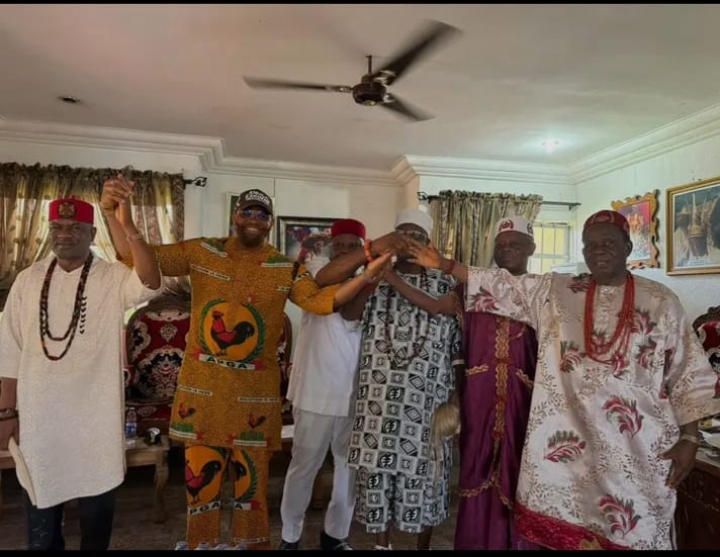
Ten communities that make up Anaocha Local Government Area of Anambra State are set for a showdown with their traditional rulers following the alleged suspension of the zoning arrangement for the Anambra State House of Assembly elections.
Recall that on April 7, 2022, the traditional rulers, in a Memorandum of Understanding (MoU), resolved that the House of Assembly seats for Anaocha I and Anaocha II constituencies would rotate among the ten communities, with each town occupying the seat for two terms.
The traditional rulers further resolved that the rotation would subsist irrespective of the political party through which lawmakers emerge, noting that the arrangement was aimed at ensuring that all ten communities have the opportunity to produce members of the State Assembly in the interest of equity and fairness.
However, the Anaocha Equity Forum, shortly after its meeting, expressed concern over the alleged suspension of the zoning arrangement.
Speaking, the Convener of the Anaocha Equity Forum, Mr. Valentine Okoye, said the forum would not take kindly to what it described as acts capable of destabilising the council area, adding that any such move would be resisted.
“This is a Memorandum of Understanding signed by our traditional rulers, and it has been respected until now. We in the Anaocha Equity Forum see this as a slap on the sensibilities of the ten communities that make up the area,” he said.
“We urge members of the public, political parties, and stakeholders to disregard the alleged position of the traditional rulers, as it does not represent the views and aspirations of our people.
“Our traditional rulers should be mindful of their roles as fathers of their respective communities. They should also understand that they would be held responsible for whatever backlash or consequences may arise from this recent position.
“We call on Governor Charles Soludo to call the traditional rulers to order so that the peace currently enjoyed in Anaocha Local Government Area will not be disrupted,” he stated.

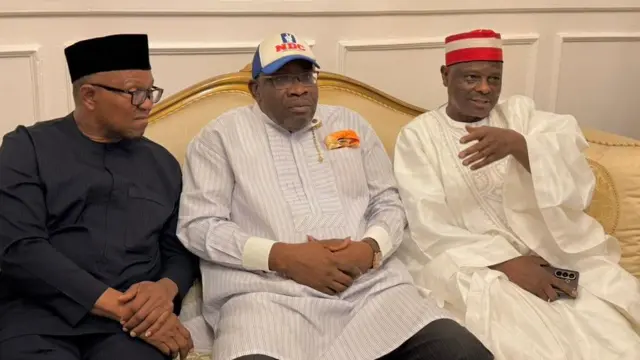
The exit of Peter Obi and Rabiu Kwankwaso, two prominent opposition figures, has weakened the African Democratic Congress across both chambers of the National Assembly.
The National Democratic Congress, which received Peter Obi and Rabiu Kwankwaso on Sunday, recorded its biggest gains on Tuesday with the addition of 17 House members and a senator. Weeks earlier, its ranks expanded when Seriake Dickson, representing Bayelsa West, defected from the Peoples Democratic Party to join the party.
The development comes a few days after several opposition parties resolved to present a single presidential candidate against President Bola Tinubu in the 2027 elections.
The wave of defection to the NDC occurred 48 hours after Obi and Kwankwaso, two of the ADC’s most prominent figures, formally exited the party. These moves have significantly altered the opposition landscape ahead of the 2027 general elections, setting the stage for shifting political alliances.
Additionally, the latest defectors, drawn from Kano, Anambra, Lagos, Edo, Rivers, and Kogi States, cited internal disarray within the ADC as a major factor that influenced their decision.
While reading their letters on the floor of the House, Deputy Speaker Benjamin Kalu, who presided over the plenary session, said the lawmakers blamed the party’s instability for their departure, noting that the crisis remained “unresolved starting from the ward to the national level.”
The defectors to the NDC are Yusuf Datti, Sani Adamu, Zakari Mukhtari, Kamilu Ado, Harris Okonkwo, George Ozodinobi, Lilian Orogbu, Peter Anekwe, Emeka Idu, Ifeanyi Uzokwe, and Afam Ogene. Others include Lagos lawmakers Thaddeus Attah, Oluwaseyi Sowunmi, George Olwande, and Jese Onuakalusi, as well as Murphy Omroruyi from Edo and Umezuruike Manuchim from Rivers State.
In a separate move, Kogi lawmaker Leke Abejide defected from the ADC to the ruling All Progressives Congress.
The coordinated nature of the defections is widely interpreted as a show of loyalty to Obi and Kwankwaso, whose switch to the NDC is already reshaping opposition dynamics.
Both men are influential political figures with strong regional bases—Obi in the South-East and Kwankwaso in the North-West—and their exit from the ADC appears to have triggered a ripple effect among lawmakers aligned with their political structures.
The ADC’s current troubles did not emerge overnight. In recent months, tensions within the party escalated over leadership struggles, strategy disagreements, and competing ambitions among top figures.
The situation worsened amid reports of irreconcilable differences between Obi, Kwankwaso, and former Vice President Atiku Abubakar, who was also a central figure in opposition coalition talks.
Efforts to build a united front ahead of 2027 reportedly broke down due to mistrust, zoning disagreements, and control of party structures.
Their eventual defection to the NDC marked a turning point. Seen as a more viable platform for consolidating opposition strength, the NDC quickly became a magnet for lawmakers and political actors seeking stability and clearer leadership direction.
With the departure of key figures and a steady decline in its legislative strength, the ADC now faces a daunting struggle to maintain political relevance.
The loss of national figures like Obi and Kwankwaso, combined with the defection of lawmakers across multiple states, appears to have weakened its structure and electoral prospects.
Only last week, the party boasted 24 members of the House of Representatives, but it is now left with six.
Once the dominant opposition party, the Peoples Democratic Party may equally struggle to retain its status.
Though still officially the most formidable opposition in the House, the PDP currently has 29 members in the Green Chamber, down from 116 members in its ranks at the inauguration of the 10th National Assembly in June 2023.

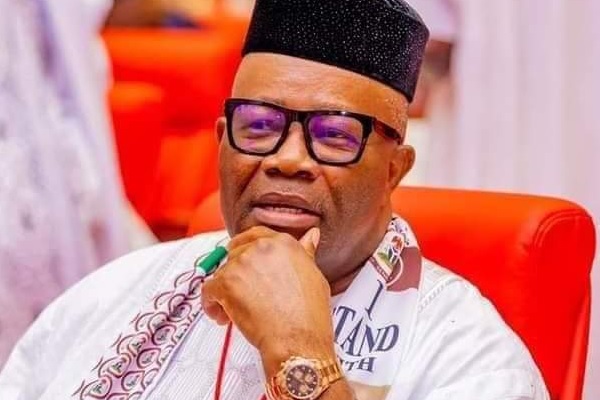
Barely a year to the inauguration of the 11th National Assembly, the Senate on Tuesday moved to tighten its internal rules, effectively narrowing the path to its most powerful offices and edging out a class of incoming lawmakers, including serving governors and former senators eyeing leadership positions.
In a move widely seen as pre-emptive, the red chamber, after about three hours of a closed-door session, amended Orders 4 and 5 of its Standing Rules, restricting eligibility for both presiding and principal offices to ranking lawmakers with defined legislative experience.
The amendments come amid growing interest by outgoing governors and political heavyweights, many of whom are positioning to enter the Senate in 2027 to contest for top leadership roles such as Senate President and Deputy Senate President.
Under the Revised Order 4, the Senate reinforced a strict hierarchy for the emergence of presiding officers, stating that “Nomination of senators to serve as Presiding Officers shall be in accordance with the ranking of senators and shall be strictly adhered to.
“The order of ranking are (i) Former President of the Senate, (ii) Former Deputy President of the Senate, (iii) Former Principal Officers of the Senate, (iv) Senators who had served at least one term of four years, (v) Senators who had been members of the House of Representatives, (vi) In the absence of i to v, senators elected into the Senate for the first time,” it stated.
Beyond this ranking structure, the Senate introduced a more stringent provision in Order 5, effectively excluding first-time and non-consecutive lawmakers from contesting principal offices.
The amended rule states: “Any senator shall not be eligible to contest for any principal office of the Senate unless he has served as a senator for at least two consecutive terms immediately preceding nomination.”
The implication is far-reaching: senators-elect who were not members of both the 9th and 10th National Assembly would be ineligible to vie for key leadership roles in the 11th Assembly.
Presiding offices in the Senate include the Senate President and Deputy Senate President, while principal offices comprise Senate Leader, Deputy Senate Leader, Chief Whip, Deputy Whip, Minority Leader, Deputy Minority Leader, Minority Whip and Deputy Minority Whip.
The rule changes come against the backdrop of an intensifying scramble for Senate seats ahead of the 2027 general elections, driven largely by governors completing their constitutionally allowed two terms.
No fewer than 10 state governors and several former governors are already angling to secure senatorial tickets, leveraging their influence over party structures to emerge as consensus candidates in their respective states.
At least 12 of the 36 state governors are in their second and final terms, with 10 set to complete their tenure by May 29, 2027.
The looming transition has triggered a wave of political realignments, with many seeking to maintain relevance and influence by moving to the National Assembly.
Eight of the affected governors are from the ruling All Progressives Congress, while Oyo State Governor, Seyi Makinde, belongs to the Peoples Democratic Party, and Bauchi State Governor Bala Mohammed is aligned with the Allied Peoples Movement.
Those expected to exit office in 2027 include AbdulRahman AbdulRazaq (Kwara), Abdullahi Sule (Nasarawa), Ahmadu Fintiri (Adamawa), Babagana Zulum (Borno), Inuwa Yahaya (Gombe), Mai Mala Buni (Yobe), Babajide Sanwo-Olu (Lagos), and Dapo Abiodun (Ogun), alongside Makinde and Bala Mohammed.
Although Bayelsa State Governor Douye Diri and Imo State Governor Hope Uzodimma will complete their tenures in early 2028 due to off-cycle elections, both have been drawn into early permutations for Senate seats.
In Imo State, the political temperature has risen sharply following moves by the All Progressives Congress to position Uzodimma for the Imo West senatorial seat.
Party leaders in the state have already named him as the consensus candidate, even as the incumbent senator, Osita Izunaso, is reportedly seeking a return to the red chamber.
Last Saturday, APC leaders from the Orlu Zone (Imo West), led by the state chairman, Chief Austin Onyedebelu, purchased the 2027 senatorial nomination form for the governor, urging him to accept the ticket.
Onyedebelu, who presented the forms to Uzodimma’s Chief of Staff, Chief Nnamdi Anyaehie, called for pressure on the governor to “accept the plea of Orlu people by filling the forms so that it can be submitted before the deadline of 5th May, 2026.”
The state APC has also warned other aspirants against contesting the seat, insisting that Uzodimma remains the consensus choice.
Complicating the contest, former Governor Rochas Okorocha equally purchased nomination forms in a bid to return to the Senate, a move confirmed by one of his aides, Darlington Ibekwe.
The Orlu Political Consultative Assembly further reinforced Uzodimma’s candidacy, declaring him the sole candidate for the district in what it described as a “total, unanimous, and irrevocable decision.”
The unfolding contest is also shaped by internal power dynamics within the ruling party.
Last month, President Bola Tinubu reportedly rebuffed attempts by National Assembly leaders to secure automatic return tickets for lawmakers, instead reaffirming the authority of state governors over candidate selection.
The stance has strengthened governors’ grip on party structures, enabling many of them to influence senatorial nominations as they prepare for life after office.
Against this backdrop, the Senate’s rule amendments appear designed to preserve institutional hierarchy and prevent an influx of first-time lawmakers, many of them politically powerful, from immediately taking control of the chamber’s leadership.
For ambitious entrants like Uzodimma and others plotting a return or debut in the Senate, the message from the red chamber is clear: experience within its ranks, not political clout outside it, will determine who leads in the 11th National Assembly.


“Go and Verify”: How Sunday Umeha Is Redefining Representation in Ezeagu/Udi
Chief Sir Paul Chukwuma Lays His Beloved Sister to Rest


2027: Anambra ADC Intact Despite Obi, Kwankwaso Departure – Guber Candidate




-
 News5 years ago
Uncompleted structures in Enugu to undergo integrity test – Authority
-
 News4 years ago
BREAKING: FG to release Nnamdi Kanu tomorrow, fixes emergency hearing
-
 News2 years ago
BREAKING: Former Anambra Governor is Dead
-
 Entertainment4 years ago
Chrisland School Girl’s Online Activities Leak [Video]
-
 Social event4 years ago
Ex-Enugu governor, Sullivan buries wife December 17
-
 Politics2 years ago
Enugu spends the least as 30 govs burn N968.64bn on refreshments, others in 3 months
-
 Foreign2 years ago
Denmark announces visas for, welders mechanics, bricklayers, others
-
 Crime5 years ago
BREAKING! Sit-at-home: Vehicle conveying tomatoes, set ablaze in Enugu


