

Politics
2023: Tinubu is making a mistake to say it’s his turn– Kwankwaso


The former two-time governor of Kano State also warned Nigerians to avert a repeat of the late President Umaru Musa Yar’Adua scenario in 2023 by scrutinising the candidates and ensuring that the best is elected.
Claiming that he is the best man for the Aso Villa job, Kwankwaso, who holds a doctorate degree in Engineering, urged older candidates to look at themselves in the mirror, tell themselves the truth, quit the presidential race and save the country avoidable agony as was witnessed when late President Yar’Adua died in 2010.
Kwankwaso also outlined how he would fight insecurity, poverty, boost the economy, turn the fortunes of the education sector around, and how he would get the funds to do so.
Kwankwaso said over the years he and his friends have done a lot and built goodwill across the country, which the NNPP is reaping now because within a few months of his joining the party millions of people have registered as members. Within a short time produced credible candidates across the country. Apart from the APC and PDP, we have the largest number of candidates across the country.
“NNPP is the only party growing now and the growth will continue as the 2023 polls approach. The other parties have nothing to say again. I was a founding member of the PDP, which was formed to kick the military out of power. There was no ideology behind the formation of PDP other than kicking the military out.
“After kicking out the military, we realised our differences. It was one of the reasons I lost re-election as Kano governor in 2003. So we have to think of getting a progressive party, and five of us, PDP governors, had to move and join in forming APC. We also realised that APC has issues and our expectations were dashed. We decided to form a party of like minds. However, when the INEC refused to register our party, we looked around and found NNPP. It meets our beliefs and ideology. We are happy that we left APC and PDP and joined NNPP.
“Like us, there are millions of Nigerians who are tired of the status quo. By status quo I mean APC and PDP, who through bad leadership are responsible for the insecurity, bad infrastructure, poor economy and other problems we have come to correct.”
Why I won’t step down for any candidate
Kwankwaso, who stressed that NNPP was poised to win the presidential poll, said any candidate thinking of stepping down now when the window for mergers and alliances had closed was not being fair to himself.
“The reports of my stepping down are coming from detractors who go about concocting stories to suit their mind. Anybody who thinks of stepping down at this stage is not fair to himself because the time for merger, alliances, etc, has gone. NNPP is all out to win the 2023 elections. The other parties are going down in terms of support and popularity and there is nothing any of them can do to stop this misfortune.





By Okey Maduforo, Awka
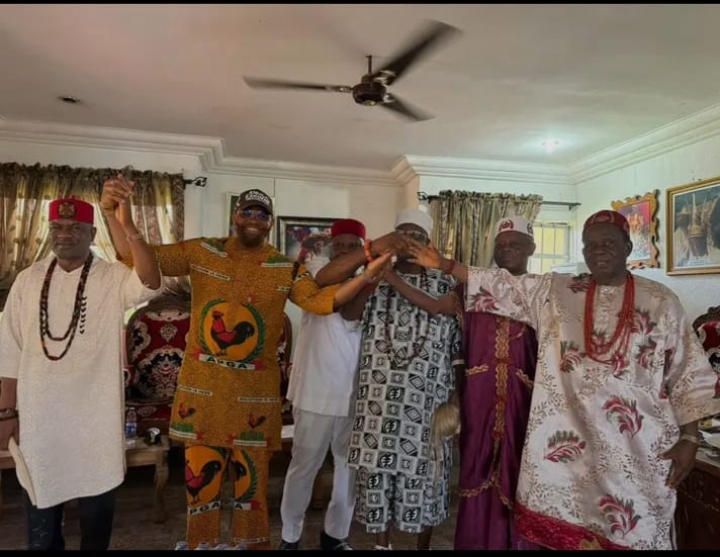
Ten communities that make up Anaocha Local Government Area of Anambra State are set for a showdown with their traditional rulers following the alleged suspension of the zoning arrangement for the Anambra State House of Assembly elections.
Recall that on April 7, 2022, the traditional rulers, in a Memorandum of Understanding (MoU), resolved that the House of Assembly seats for Anaocha I and Anaocha II constituencies would rotate among the ten communities, with each town occupying the seat for two terms.
The traditional rulers further resolved that the rotation would subsist irrespective of the political party through which lawmakers emerge, noting that the arrangement was aimed at ensuring that all ten communities have the opportunity to produce members of the State Assembly in the interest of equity and fairness.
However, the Anaocha Equity Forum, shortly after its meeting, expressed concern over the alleged suspension of the zoning arrangement.
Speaking, the Convener of the Anaocha Equity Forum, Mr. Valentine Okoye, said the forum would not take kindly to what it described as acts capable of destabilising the council area, adding that any such move would be resisted.
“This is a Memorandum of Understanding signed by our traditional rulers, and it has been respected until now. We in the Anaocha Equity Forum see this as a slap on the sensibilities of the ten communities that make up the area,” he said.
“We urge members of the public, political parties, and stakeholders to disregard the alleged position of the traditional rulers, as it does not represent the views and aspirations of our people.
“Our traditional rulers should be mindful of their roles as fathers of their respective communities. They should also understand that they would be held responsible for whatever backlash or consequences may arise from this recent position.
“We call on Governor Charles Soludo to call the traditional rulers to order so that the peace currently enjoyed in Anaocha Local Government Area will not be disrupted,” he stated.

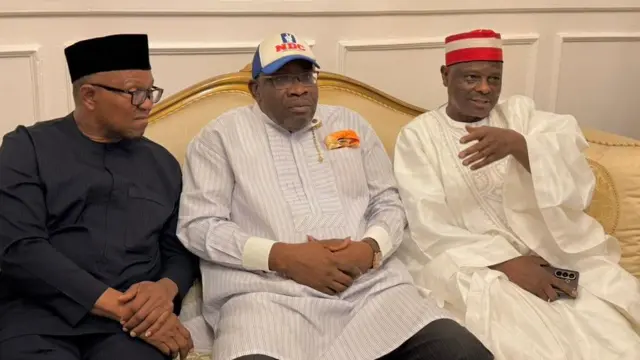
The exit of Peter Obi and Rabiu Kwankwaso, two prominent opposition figures, has weakened the African Democratic Congress across both chambers of the National Assembly.
The National Democratic Congress, which received Peter Obi and Rabiu Kwankwaso on Sunday, recorded its biggest gains on Tuesday with the addition of 17 House members and a senator. Weeks earlier, its ranks expanded when Seriake Dickson, representing Bayelsa West, defected from the Peoples Democratic Party to join the party.
The development comes a few days after several opposition parties resolved to present a single presidential candidate against President Bola Tinubu in the 2027 elections.
The wave of defection to the NDC occurred 48 hours after Obi and Kwankwaso, two of the ADC’s most prominent figures, formally exited the party. These moves have significantly altered the opposition landscape ahead of the 2027 general elections, setting the stage for shifting political alliances.
Additionally, the latest defectors, drawn from Kano, Anambra, Lagos, Edo, Rivers, and Kogi States, cited internal disarray within the ADC as a major factor that influenced their decision.
While reading their letters on the floor of the House, Deputy Speaker Benjamin Kalu, who presided over the plenary session, said the lawmakers blamed the party’s instability for their departure, noting that the crisis remained “unresolved starting from the ward to the national level.”
The defectors to the NDC are Yusuf Datti, Sani Adamu, Zakari Mukhtari, Kamilu Ado, Harris Okonkwo, George Ozodinobi, Lilian Orogbu, Peter Anekwe, Emeka Idu, Ifeanyi Uzokwe, and Afam Ogene. Others include Lagos lawmakers Thaddeus Attah, Oluwaseyi Sowunmi, George Olwande, and Jese Onuakalusi, as well as Murphy Omroruyi from Edo and Umezuruike Manuchim from Rivers State.
In a separate move, Kogi lawmaker Leke Abejide defected from the ADC to the ruling All Progressives Congress.
The coordinated nature of the defections is widely interpreted as a show of loyalty to Obi and Kwankwaso, whose switch to the NDC is already reshaping opposition dynamics.
Both men are influential political figures with strong regional bases—Obi in the South-East and Kwankwaso in the North-West—and their exit from the ADC appears to have triggered a ripple effect among lawmakers aligned with their political structures.
The ADC’s current troubles did not emerge overnight. In recent months, tensions within the party escalated over leadership struggles, strategy disagreements, and competing ambitions among top figures.
The situation worsened amid reports of irreconcilable differences between Obi, Kwankwaso, and former Vice President Atiku Abubakar, who was also a central figure in opposition coalition talks.
Efforts to build a united front ahead of 2027 reportedly broke down due to mistrust, zoning disagreements, and control of party structures.
Their eventual defection to the NDC marked a turning point. Seen as a more viable platform for consolidating opposition strength, the NDC quickly became a magnet for lawmakers and political actors seeking stability and clearer leadership direction.
With the departure of key figures and a steady decline in its legislative strength, the ADC now faces a daunting struggle to maintain political relevance.
The loss of national figures like Obi and Kwankwaso, combined with the defection of lawmakers across multiple states, appears to have weakened its structure and electoral prospects.
Only last week, the party boasted 24 members of the House of Representatives, but it is now left with six.
Once the dominant opposition party, the Peoples Democratic Party may equally struggle to retain its status.
Though still officially the most formidable opposition in the House, the PDP currently has 29 members in the Green Chamber, down from 116 members in its ranks at the inauguration of the 10th National Assembly in June 2023.

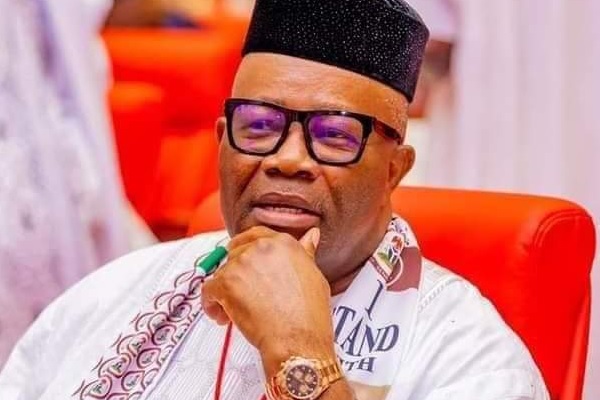
Barely a year to the inauguration of the 11th National Assembly, the Senate on Tuesday moved to tighten its internal rules, effectively narrowing the path to its most powerful offices and edging out a class of incoming lawmakers, including serving governors and former senators eyeing leadership positions.
In a move widely seen as pre-emptive, the red chamber, after about three hours of a closed-door session, amended Orders 4 and 5 of its Standing Rules, restricting eligibility for both presiding and principal offices to ranking lawmakers with defined legislative experience.
The amendments come amid growing interest by outgoing governors and political heavyweights, many of whom are positioning to enter the Senate in 2027 to contest for top leadership roles such as Senate President and Deputy Senate President.
Under the Revised Order 4, the Senate reinforced a strict hierarchy for the emergence of presiding officers, stating that “Nomination of senators to serve as Presiding Officers shall be in accordance with the ranking of senators and shall be strictly adhered to.
“The order of ranking are (i) Former President of the Senate, (ii) Former Deputy President of the Senate, (iii) Former Principal Officers of the Senate, (iv) Senators who had served at least one term of four years, (v) Senators who had been members of the House of Representatives, (vi) In the absence of i to v, senators elected into the Senate for the first time,” it stated.
Beyond this ranking structure, the Senate introduced a more stringent provision in Order 5, effectively excluding first-time and non-consecutive lawmakers from contesting principal offices.
The amended rule states: “Any senator shall not be eligible to contest for any principal office of the Senate unless he has served as a senator for at least two consecutive terms immediately preceding nomination.”
The implication is far-reaching: senators-elect who were not members of both the 9th and 10th National Assembly would be ineligible to vie for key leadership roles in the 11th Assembly.
Presiding offices in the Senate include the Senate President and Deputy Senate President, while principal offices comprise Senate Leader, Deputy Senate Leader, Chief Whip, Deputy Whip, Minority Leader, Deputy Minority Leader, Minority Whip and Deputy Minority Whip.
The rule changes come against the backdrop of an intensifying scramble for Senate seats ahead of the 2027 general elections, driven largely by governors completing their constitutionally allowed two terms.
No fewer than 10 state governors and several former governors are already angling to secure senatorial tickets, leveraging their influence over party structures to emerge as consensus candidates in their respective states.
At least 12 of the 36 state governors are in their second and final terms, with 10 set to complete their tenure by May 29, 2027.
The looming transition has triggered a wave of political realignments, with many seeking to maintain relevance and influence by moving to the National Assembly.
Eight of the affected governors are from the ruling All Progressives Congress, while Oyo State Governor, Seyi Makinde, belongs to the Peoples Democratic Party, and Bauchi State Governor Bala Mohammed is aligned with the Allied Peoples Movement.
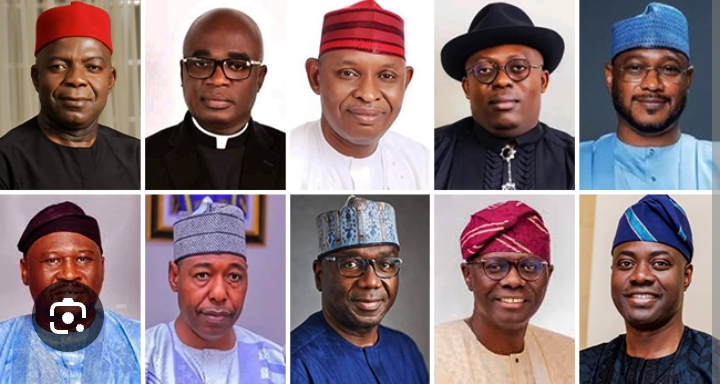
Those expected to exit office in 2027 include AbdulRahman AbdulRazaq (Kwara), Abdullahi Sule (Nasarawa), Ahmadu Fintiri (Adamawa), Babagana Zulum (Borno), Inuwa Yahaya (Gombe), Mai Mala Buni (Yobe), Babajide Sanwo-Olu (Lagos), and Dapo Abiodun (Ogun), alongside Makinde and Bala Mohammed.
Although Bayelsa State Governor Douye Diri and Imo State Governor Hope Uzodimma will complete their tenures in early 2028 due to off-cycle elections, both have been drawn into early permutations for Senate seats.
In Imo State, the political temperature has risen sharply following moves by the All Progressives Congress to position Uzodimma for the Imo West senatorial seat.
Party leaders in the state have already named him as the consensus candidate, even as the incumbent senator, Osita Izunaso, is reportedly seeking a return to the red chamber.
Last Saturday, APC leaders from the Orlu Zone (Imo West), led by the state chairman, Chief Austin Onyedebelu, purchased the 2027 senatorial nomination form for the governor, urging him to accept the ticket.
Onyedebelu, who presented the forms to Uzodimma’s Chief of Staff, Chief Nnamdi Anyaehie, called for pressure on the governor to “accept the plea of Orlu people by filling the forms so that it can be submitted before the deadline of 5th May, 2026.”
The state APC has also warned other aspirants against contesting the seat, insisting that Uzodimma remains the consensus choice.
Complicating the contest, former Governor Rochas Okorocha equally purchased nomination forms in a bid to return to the Senate, a move confirmed by one of his aides, Darlington Ibekwe.
The Orlu Political Consultative Assembly further reinforced Uzodimma’s candidacy, declaring him the sole candidate for the district in what it described as a “total, unanimous, and irrevocable decision.”
The unfolding contest is also shaped by internal power dynamics within the ruling party.
Last month, President Bola Tinubu reportedly rebuffed attempts by National Assembly leaders to secure automatic return tickets for lawmakers, instead reaffirming the authority of state governors over candidate selection.
The stance has strengthened governors’ grip on party structures, enabling many of them to influence senatorial nominations as they prepare for life after office.
Against this backdrop, the Senate’s rule amendments appear designed to preserve institutional hierarchy and prevent an influx of first-time lawmakers, many of them politically powerful, from immediately taking control of the chamber’s leadership.
For ambitious entrants like Uzodimma and others plotting a return or debut in the Senate, the message from the red chamber is clear: experience within its ranks, not political clout outside it, will determine who leads in the 11th National Assembly.


“Go and Verify”: How Sunday Umeha Is Redefining Representation in Ezeagu/Udi
Chief Sir Paul Chukwuma Lays His Beloved Sister to Rest

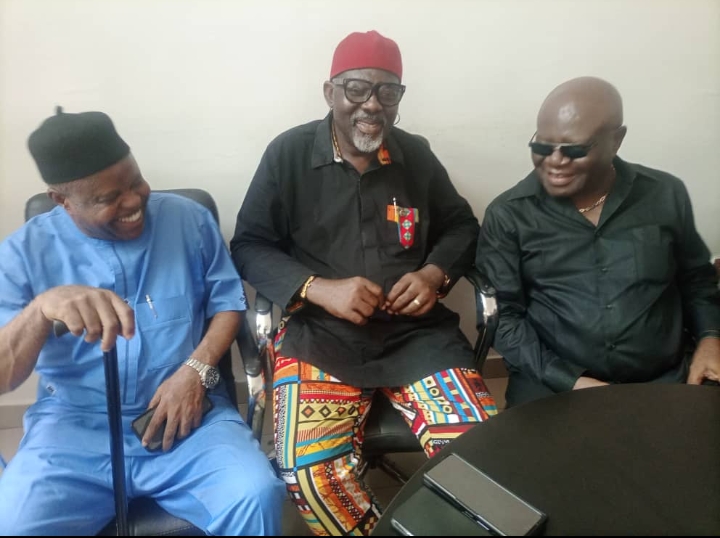
2027: Anambra ADC Intact Despite Obi, Kwankwaso Departure – Guber Candidate




-
 News5 years ago
Uncompleted structures in Enugu to undergo integrity test – Authority
-
 News4 years ago
BREAKING: FG to release Nnamdi Kanu tomorrow, fixes emergency hearing
-
 News2 years ago
BREAKING: Former Anambra Governor is Dead
-
 Entertainment4 years ago
Chrisland School Girl’s Online Activities Leak [Video]
-
 Social event4 years ago
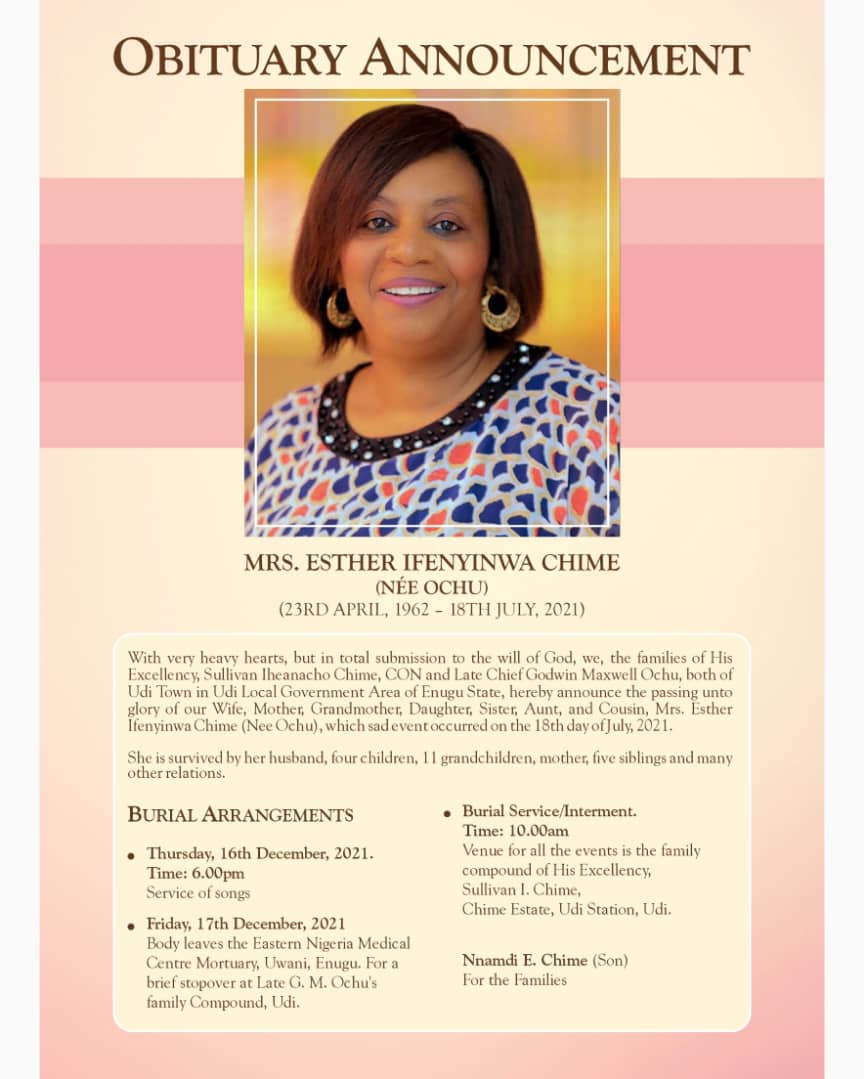
Ex-Enugu governor, Sullivan buries wife December 17
-
 Politics2 years ago
Enugu spends the least as 30 govs burn N968.64bn on refreshments, others in 3 months
-
 Foreign2 years ago
Denmark announces visas for, welders mechanics, bricklayers, others
-
 Crime5 years ago
BREAKING! Sit-at-home: Vehicle conveying tomatoes, set ablaze in Enugu


