

Interview
Nigerians go to prison because they don’t have money – Ex-Taraba gov, Nyame



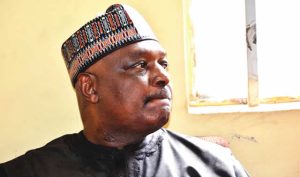
Let’s talk about your prison experience. How did you feel when you received the news that you were granted a presidential pardon?
I was so excited. I thank President Muhammadu Buhari, the governors and the Council of State for the role they played in granting me pardon. But to be honest with you, when the judge slammed me with a 14-year jail sentence, something told me that I would not spend 14 years in jail. So, I was not surprised when I was granted pardon. However, to be frank, I was excited. In all, I knew that it was an act of God and I am happy that I can now socialise with my people. For the people of Taraba State, it is time to work together, unite and ensure that we do our best in realising a new Taraba State.
Do you consider the presidential pardon an indication that you are not guilty of the offences for which you were convicted or a lesson in strategic relationship?
Yes, I believe I have been vindicated because the President and the Council of State cannot just grant me pardon just like that. There must be a reason for them to be convinced that I deserved the pardon. I want you to also understand that there are people who came while I was in prison to ask for forgiveness and I have forgiven all of them. For them to come and seek forgiveness, it means some people played roles that led to my incarceration and that is why I feel so okay now that I know I did nothing wrong. If I had done something wrong, why would people come to me seeking forgiveness over their roles in my ordeal?
Do you have any regrets?
I have seen my incarceration as a divine project designed by God. I hold no grudge against anybody; I consider all that happened as an act of God. It has happened and it is now a thing of the past. I don’t want to think about it again. I want to forget about the past and forge ahead and put Taraba State on the best political footing in the politics of Nigeria.
Can you share your experience in prison?
Yes, when I met with the incumbent Governor of Taraba State, Darius Ishaku, I told him that this was one experience I would not like even my enemy to pass through. Imagine you being a chief executive of a state and you enjoyed that for eight years and from nowhere, you just came to the level of less than a servant. You are confined to a particular room, a particular space and you can’t go out. Even to go to the hospital for medical treatment, you have to take a special permission. So, it was that bad for four years. Even physically, if you sit down in one place for long depending on your age, it is not easy. If you are aged, it’s not good to sit down in one place for too long. So, like I said, I don’t wish even my enemy to go through that kind of horrible experience.
While you were in the prison in Kuje, there was an attack on the facility by terrorists; can you recall your experience during the incident?
I had only heard the sound of an AK-47 and a small pistol in my life until that day. On that day, the gunshots I heard were terrible. To be honest with you, I had to say my last prayers that day, because the sound and what we were passing through emotionally made me so scared. I couldn’t believe I would be alive to see the following morning; so, I had to say my last prayers, but God in His infinite mercy saw me and others through that life-threatening experience.
Given your experience, what kind of reforms will you advocate for prisons in the country?
If I should suggest to the Federal Government to consider reform in the prison, I will start with justice delivery. But let us talk about the disposition of some of the inmates. First of all, I would like to appeal to the Federal Government to consider those who voluntarily refused to go when the attack happened to be granted pardon. That place is not a place that one would like to stay if he has the opportunity to escape. So, how I wish that the Federal Government will grant pardon to those who refused to escape during the attack. That apart, during my years in prison, I interacted with a lot of inmates and I realised that there is something wrong with prosecution in this country. In the course of my interactions with the inmates, I discovered that some of them were wrongly accused and the prosecution would tell them, ‘Look, if you are able to pay so and so amount of money, you will be freed and not taken to prison’. So, you will discover that sometimes, people go to court and later prison because they don’t have the money to pay. I also realised that if there is due diligence in prosecution, not many people will go to prison.
Do you mean that prison decongestion should start with due diligence in prosecution?
Yes. That is where the problem starts from. So, that aspect of the reform should be taken seriously.
What is your take on the increasing level of insecurity in Nigeria and the prospects for the 2023 elections?
Nigerians are resilient people and God is always by our side. We are prayerful people. Sometimes, we feel things are getting out of hand and God will then step in to solve our problems. Many people did not believe that Nigeria will survive as one indivisible nation today, but here we are, Nigeria is still surviving. So, with prayers, Nigeria will survive and there will be elections in 2023.
Taraba State has had its share of the herders, farmers’ conflict and banditry. Is this the Taraba State you dreamt of? What then will you do to help address the security challenge?
What were the major lessons you learnt while in prison?
To be honest, being a chief executive is being next to God because with your red pen, you can approve a death sentence. So, you can imagine that immediately after leaving office, you are subjected to trial, and in my case, for a period of 10 years. So, it was like I was broken down during those years before I was finally convicted. When I went there, for the first one or two weeks, I was living in self-denial. I could not believe it because when I went into prison, there was nothing in the room allocated to me. They had to provide a mattress, and when they brought the first food, it wasn’t like food to be honest. It was like I was eating toilet paper garnished with sauce. So, the first lesson I learnt was humility. No matter who you are, if you are convicted, you have to know that you are under someone’s authority.
Secondly, I also learnt that as a former chief executive, I was a pal to every inmate there and with time, I started interacting with them. It was when I was able to interact with them that I was able to appreciate the degree of problems I passed through. I realised that we have problems with the judicial system in this country. I came to understand after interacting with them that some came in without even knowing why they were there. One of them said they just found him roaming and they just picked him and said he was a Boko Haram member. The inmate has been there for a couple of years. Someone said he was hungry; so, he went to the field where they planted ugu (fluted pumpkin leaves), and that was how he was arrested and taken to prison.
In the course of my interaction with them, I met a police officer, who was given a pass to escort a VIP and something went wrong between Abuja and Sokoto. So, they brought him back in chains and he found himself in a police cell. He told me that one night, they brought him out of the police cell and he saw a corpse on the ground and was asked to kneel by the corpse and they took his picture. That was the conviction that he killed somebody. There was no link at all, according to him, and there are a couple of those things.
You see, the problem starts with the investigation; if the police will do their jobs well, less people will be convicted. Sometimes, they even ask for a certain amount of money to let someone go free and if you don’t give, they will charge you to court. Before you know it, you will have four or more counts against you and you will end up in prison. If the police do their jobs well, they won’t have to go to court. And if they do, it is the judges’ duty to pass a verdict. What I have also realised is that if one big person doesn’t like you, he will influence the conviction and before you know it, you go to court and before you say Jack Robinson, you have been convicted. My case is clear evidence.
Well, let me say I am not an angel, but there are witnesses that gave their own statements that do not add up. I shared a story with the Christian lawyers recently. One of the witnesses said he took N110m to my office. So, my lawyer asked, ‘How many people helped you?’ and he said he carried it alone and at that time, there was no N1,000 note. So, what kind of bag would carry N110m, because no ‘Ghana must go bag’ can even carry N50m even if you get them in N500 notes. So, my lawyer went further to ask, between your office and the governor’s office, who did you meet on the way and he said nobody. So, it was during my time that the governor would be in the office alone and between the cashier’s office and the governor’s office, you would not meet anybody on the way. Thank God, at the end of the day, some of the witnesses came to me and asked for forgiveness, and I have forgiven them. I know these things were orchestrated for a reason and I have taken the reason for my incarceration for good.
Did you get any preferential treatment while in the correctional facility?
To be honest with you, yes. That was done largely because of my former status, but the preferential treatment was not that big, but maybe because in my own cell, I had a separate bathroom. I had to share along the line with former Plateau State governor, Joshua Dariye, and one other person, but in the end, I stayed there alone. But even that treatment came at a price because if for any reason you are in a correctional centre and they know that you are a big man, virtually all other inmates will come to you with one problem or the other. I cannot say exactly, but I believe the people I assisted to pay fines and go home should be more than 50. Some of the charges were as little as N10,000, N20,000 and N50,000. Sometimes, some inmates would have to serve and then pay the fine, but some served and couldn’t go because they had to pay. So, that preferential treatment came at a cost, not just to me, but to some of the other VIPs there.
You talked about sharing your bathroom with a former governor of Plateau State, Dariye. Can you tell us more about how the two of you related while in the correctional centre?
Yes, there were times we sat and deliberated on many issues. We came to a conclusion at one of the sittings that we all did well for our states, but we asked ourselves, ‘Why us?’ We heard about other people being charged with offences involving N10bn, N20bn and so on, but at the end of the day, their case gets missing or withdrawn. There are instances too where they say instead of convicting you, let’s do a plea bargain. So, we asked this question: why us? Why is ours different? At the end of the day, we came to the fact that what President Muhammadu Buhari did was to show an example of good leadership. I’m sure that he must have seen that these people (Dariye and myself) are the birds of the same plumage, so why them alone? Getting us off the hook is a plus to the government and the judiciary because if you compare what’s happening now, ours is just a child’s play. We didn’t even agree with all the charges. So, we reflected on this and we felt so bad for this country, because there seems to be justice meant for some people. You don’t even talk about poor people when you are talking about justice because they are just there and you can convict them anytime. But even as a former governor, there are some selections; there is preferential treatment given to some former governors who belong, while some are just there and can be locked up anytime.

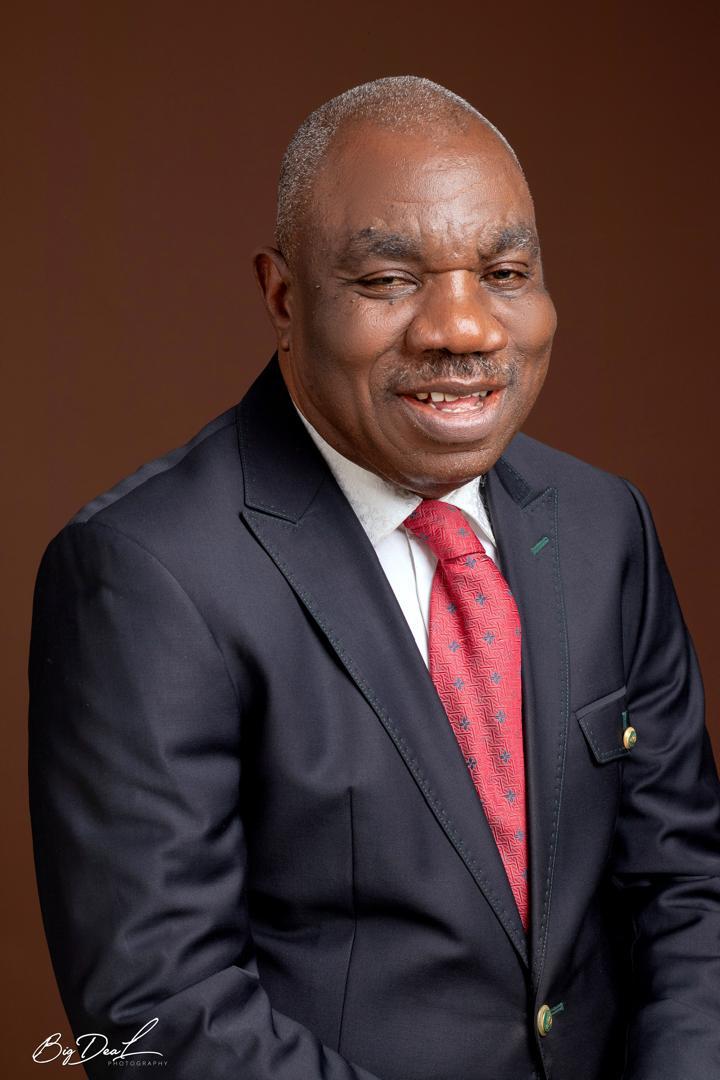
Tracking down Pastor Sam Iyiogwe, a former LGA Chairman and former SSA to Governor Ifeanyi Ugwuanyi for this interview was as difficult as anything one can think of. At a time politicians are avoiding the press ahead the 2027 election Iyiogwe couldn’t help but accept when the issue of infrastrucural development of his people was mentioned.
As Nkanu East LGA Chairman, Iyiogwe, led journalists through neglected communities in his area where schools were scarce, chemist shops doubled as hospitals, and some areas lacked road access for decades. In Amankanu, residents recalled transporting pregnant women in wheelbarrows to distant health facilities.
Iyiogwe began opening up rural roads and improving access to services before Governor Peter Mbah’s election in 2023. In this chat with PETRUS OBI, he reflects on the situation of his people 10 years later.
Interview
“I’m Not Playing Victim; the Contractor Toshel Failed to Do the Job” — Aniagboso Michael Speaks on Jesus Bu Eze Plaza Dispute

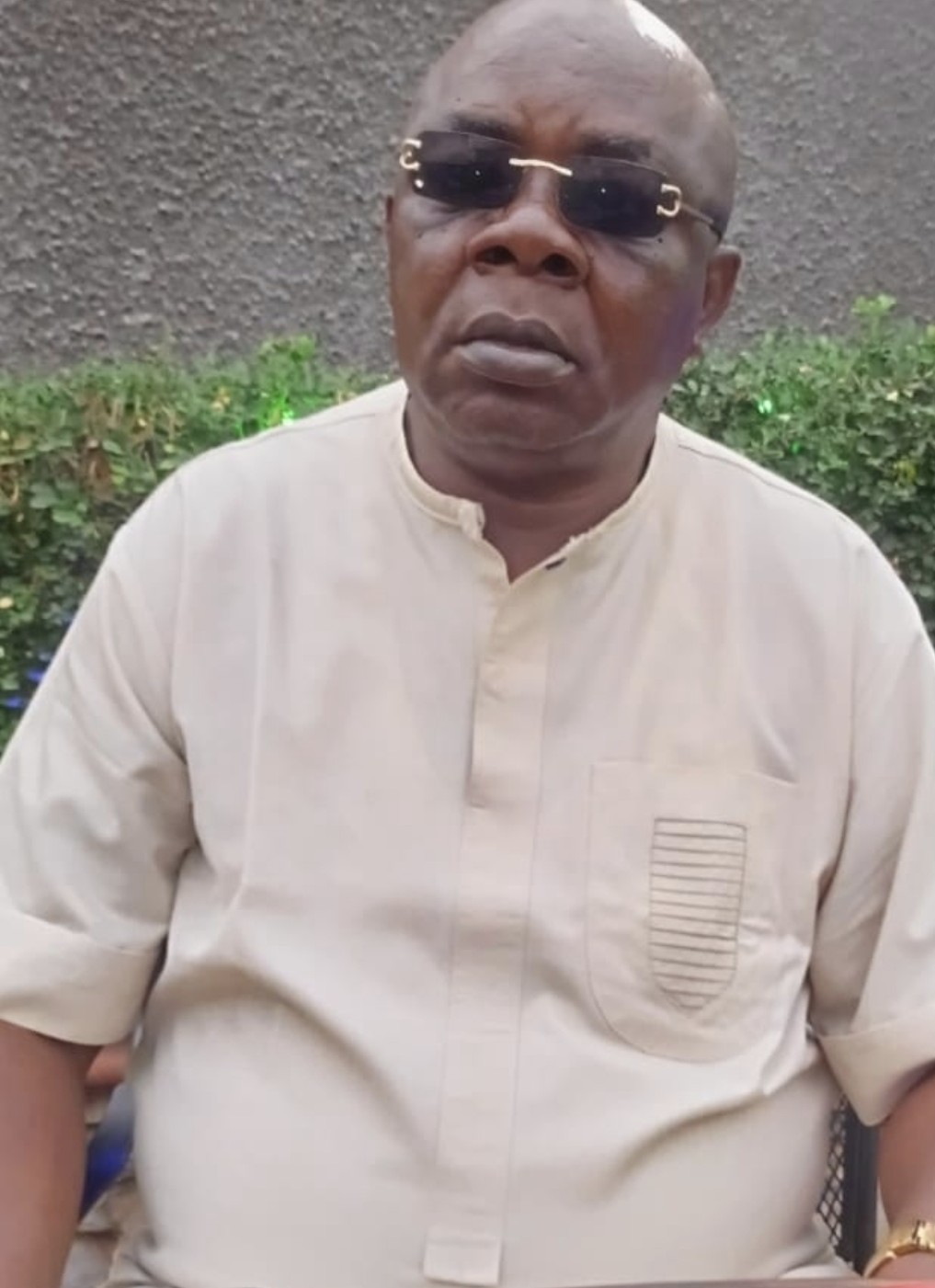
Aniagboso Michael, a real estate developer and promoter of Jesus Bu Eze Plaza, has responded to allegations circulating on social media that he is playing the victim to damage the reputation of Mr. Tochukwu Nzekwe, Chairman of Toshel Company, and to avoid contractual obligations.
In this interview, with EverydayNewsNGR Aniagboso gives his account of the events surrounding the construction of the plaza located along Kano Street, Coal Camp, Enugu State.
Q: There are allegations that you are playing the victim to avoid fulfilling your obligations to the contractor. How do you respond?
Those allegations are completely false. I am not playing any victim card—there is no “victim card” here. The simple truth is that the contractor, Mr. Tochukwu Nzekwe, failed to execute the job he was contracted to do.
This is not about sentiments or social media narratives; it is about facts and contractual performance.
We signed a Memorandum of Understanding (MOU) in which both parties agreed that his company would fund and execute the entire asphalting project, valued at ₦118 million, covering approximately 5,500 square metres of the plaza.
Q: Can you explain the scope of the project and the agreement entered into?
The project covered about 5,500 square metres along Kano Street, Coal Camp. The agreement included construction of access roads, asphalt work, and the entire internal road network, including Silversmith Road.
The Bill of Quantities (BOQ) was prepared by his own engineers, reviewed by both parties, and mutually agreed upon. The total contract sum was ₦118 million, with a completion period of three months.
He undertook to handle everything—from clearing and laterite filling to asphalt work and landscaping.
Q: What went wrong during execution of the project?
After the three-month period elapsed, the project was nowhere near completion. One of the major problems was the use of obsolete and inadequate equipment—bulldozers, graders, and trucks that frequently broke down.
Materials would be brought to site, but work would stall for weeks. These delays seriously disrupted the project timeline. We held several site meetings and issued formal notices pointing out his failure to meet contractual obligations.
Despite repeatedly boasting that he had sufficient funds and equipment, the work did not progress. There were also constant disputes with his workers, drivers, and machine operators, which further slowed down the project.
Q: Was the project eventually completed?
Yes, but not by him. The project was originally scheduled for commissioning within three months. However, due to the contractor’s failure, I had to mobilise my own resources, lease equipment from other operators, and complete the remaining work myself.
The plaza was eventually commissioned on 4 March 2024 by the Governor of Enugu State, Dr. Peter Mbah, who was represented by his deputy, Barr. Ifeanyi Ossai.
Q: Despite this, the contractor is said to be demanding full payment. What is your response?
That demand is unjustified. An independent assessment confirmed that he completed only about 10% of the total work.
Based on that assessment, we paid him ₦27.5 million, which was proportional to the work actually done. He demanded payment for 15%, but that entitlement was conditional upon full completion of the project. Since the job was abandoned, that condition was never met.
Instead, he allegedly began blocking the entrance to the plaza with heavy equipment and issuing threats.
Q: There are claims of police involvement and intimidation. What exactly happened?
Rather than resolving the matter professionally, he reportedly came to the site with police officers and other security personnel, instructing workers to stop work unless he was paid in full.
He reportedly took me to the police station, the DSS, and the EFCC. Subsequently, I experienced repeated harassment, including the presence of thugs at the site, intimidation of workers, vandalism of parts of the plaza, and threats to my personal safety.
Q: Did you seek legal redress?
Yes. I approached the court and filed a suit seeking an injunction to restrain him from further interference with the plaza. By that time, shops had already been sold and business activities were ongoing.
The court issued a statutory order recognising that M & B Company had taken possession of the plaza and that operations were ongoing under the Build, Operate and Transfer (BOT) agreement, which is for 25 years.
At the time, there were about 250 shops and 32 functional toilets in operation. Despite the court process, he allegedly continued to return to the site, boasting of influence and connections.
Q: What is the nature of the BOT agreement and the contractor’s role?
The BOT agreement was entered into with Enugu North Local Government for a period of 25 years. Mr. Tochukwu Nzekwe and his company have no contractual relationship with the local government.
I brought him in solely as a contractor to execute the asphalting project using his own funds, estimated at ₦118 million—as clearly stated in the agreement already tendered in court.
Under the BOT arrangement, the local government is entitled to 30% of revenue, while my company retains 70%. The contractor’s 15% entitlement was conditional upon full completion of the project and was to come from my own share of the revenue generated from park operations and gate tolls.
Q: You have raised serious concerns about your safety. Can you explain?
My greatest fear is that the Chairman of Enugu North Local Government, Hon. Ibenaku Onoh, has allegedly connived with the contractor to forcefully take over the plaza.
I have been barred from accessing a property I developed with my hard-earned money. I have received threats, including claims that my children’s movements are being monitored. Because of this, I have gone into hiding and no longer move freely within Enugu.
I allege that the plaza has been taken over, handed to individuals loyal to the local government, and revenue has been collected for months without reference to me, the developer.
Q: What is your appeal to the government?
I am appealing directly to the Governor of Enugu State, Dr. Peter Mbah, to urgently intervene. I have always supported this administration and remain committed to its success.
If the local government doesn’t want to respect the MOU because of perceived personal interest of the chairman, it’s better the Enugu State Government assume full control of its management, ensure transparency, respect the BOT agreement, and allow me to recover my investment.
I am under severe financial pressure from creditors and cannot withstand further intimidation. My life and the lives of my family members are at risk. I am pleading for urgent intervention before the situation escalates further.


PASTOR Beloved-Dan Anike, the chairman of Enugu East LGA, in this interview said that council fiscal autonomy is working well in Enugu State, adding that the metropolitan council is complementing the state government’s economic and social policies.
He asserts that Governor Peter Mbah is changing the narratives and politics Enugu State.
It has been 100 days full of activities, trying to convert vision to realities, navigate the new environment and connect with the promises made during the campaign and maintain the social contracts with the people. Another influencing factor in the state is the kind of governor we have. Governor Peter Mbah is changing the narratives and politics in Enugu State such that if you’re a public officer, you must rate performance over politics. If you’re not ready to perform, then you won’t even be ready to navigate the scheme and see his break light. So he is a factor that makes everybody to be on their toes, especially the local government because he is working on every ward and so you have to match his strides.
How the grassroots felt his impact in 100 days
From the word go, we announced that we would introduce what we call City Charter which will not leave anyone behind. We will involve people to increase participation. We invited all communities, not wards, to conduct needs assessment and they stated clearly what they want. Our goals are clear, our major target is human capital development, upon which we now launch what we call the greater tomorrow scholarship for young students and also the One youth, one skill.
As part of the greater tomorrow scholarship, 50 students were selected from local schools and they migrated to major highbrow secondary institutions of private and missionary schools, just like a brand of the smart schools that are coming up in Enugu State.
About 1,750 students have been enrolled for WAEC of which about 70 per cent are non-indigenes, only 30 per cent are indigenes of the local government. We still have other educational programmes that are still pending such as the scholarships and bursaries for undergraduates. We have also declared that we want to train nurses as professionals in the health sector and education. These are purely targeted to support the state’s ongoing Primary Health Centres and smart school projects.
On infrastructure, we have commenced the construction of 1.4km road leading to the smart school in Ugwuomu, we have also commenced the construction of 1.2km road leading to a PHC centre at Emene, near Emenite. Drainage and earthworks are ongoing. On power, we said one Ward one transformer and we have 12 wards. So we have 12 transformers which we have distributed and are currently being installed and energized in various wards.
On public participation and open governance, we set up seven committees and I have received five reports of those committees. One was on the Needs Assessment of all our rural roads so as to match them with the state government’s vision of one ward 10km road. The state government has a 60/40 per cent infrastructure financing plan with the local governments, we are even saying if we can get 80/20 per cent rebate having seen the deficit we have on our roads.
Our former secretariat building covering over 3,000 square meters of land is being envisaged for the take-off of the Metropolitan School of Health Technology and Nursing, which we are working on now. We have written to the state government for provisional consent for us to proceed with that project. These are some of the projects under three months and in our budget this year, we are going to launch what we call Family Economic Empowerment Program (FEEP) and that will be a component of One youth one skill. We trained about 350 people in various skills and we have about 10 being trained in ANAMCO now in mechatronics. Some people have enrolled in heavy machines training.
On market developments, because we want to decongest Abakpa market, we’re looking at establishing neighbourhood markets in Ugbene II, Umuchigbo, Ogwuagor, and Ibagwa and two markets are already ongoing in Ugwogo – that is the Amankpaka market and the new Orie Ugwogo produce market.
To achieve this, in the next one month we are going to have an investment dialogue because our budget moved from about N5 billion to over N200 billion, which is about 400 per cent increase and it won’t be feasible if we don’t bring in critical investors in this journey. We want to create spaces and bring in investors who will bring in money to grow our economy.
What has been your experience on the fiscal autonomy of the local government councils?
Actually, the local government councils are in charge of their finances. Every remittance goes to the local government purse and every disbursement has been approved by me since September 2024 when I came in. It comes through the joint state account but it goes straight to the designated account of the local government and from salaries to capital expenditures, to overheads, recurrent and other economic commitments are done by the local government.
Does the state dictate to the local governments how the money is being shared or disbursed; does the state tamper with LG funds in any way?
No, I have told you that all money comes to us and we disburse the money according to our needs. There are obligations we have at the state level, I mean economic obligations like joint ventures with the state such as the 60/40 per cent on road construction and there are others like the 17 local governments coming together for whatever we want to do together; they are obligations on joint economic policies that benefit everyone.


“Go and Verify”: How Sunday Umeha Is Redefining Representation in Ezeagu/Udi
Chief Sir Paul Chukwuma Lays His Beloved Sister to Rest

2027: Anambra ADC Intact Despite Obi, Kwankwaso Departure – Guber Candidate





-
 News5 years ago
Uncompleted structures in Enugu to undergo integrity test – Authority
-
 News4 years ago
BREAKING: FG to release Nnamdi Kanu tomorrow, fixes emergency hearing
-
 News2 years ago
BREAKING: Former Anambra Governor is Dead
-
 Entertainment4 years ago
Chrisland School Girl’s Online Activities Leak [Video]
-
 Social event4 years ago
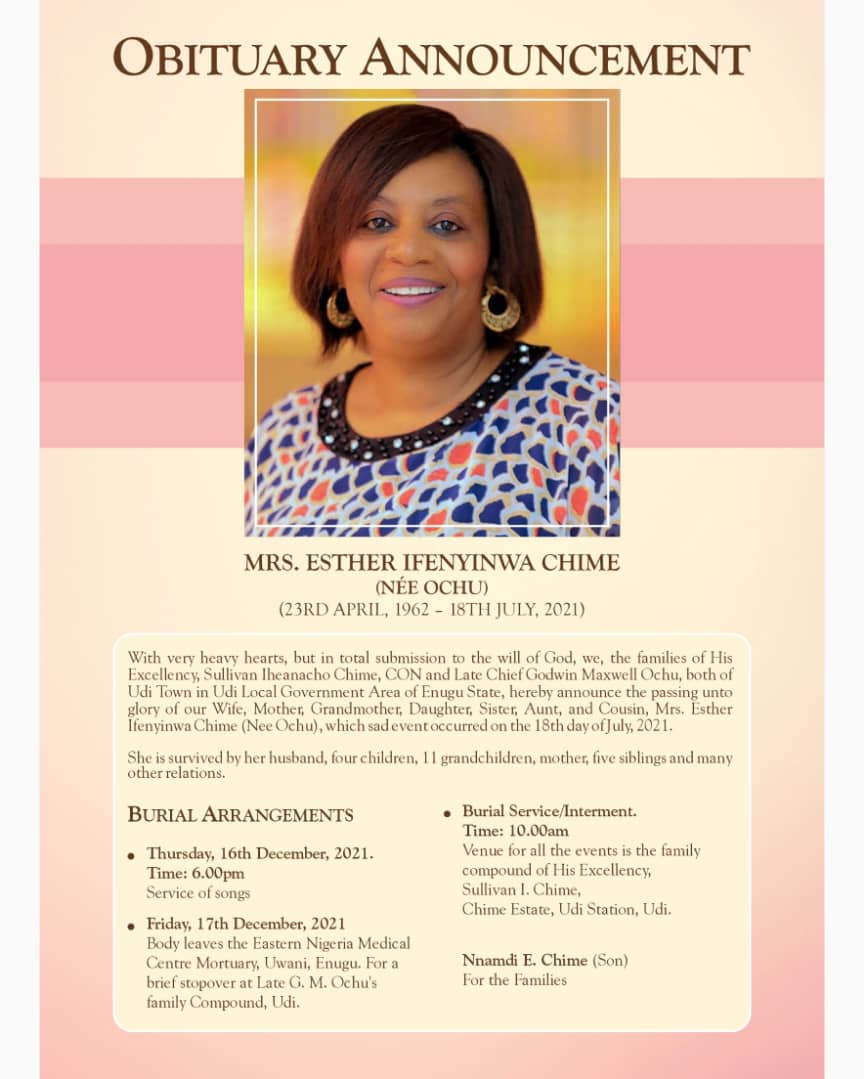
Ex-Enugu governor, Sullivan buries wife December 17
-
 Politics2 years ago
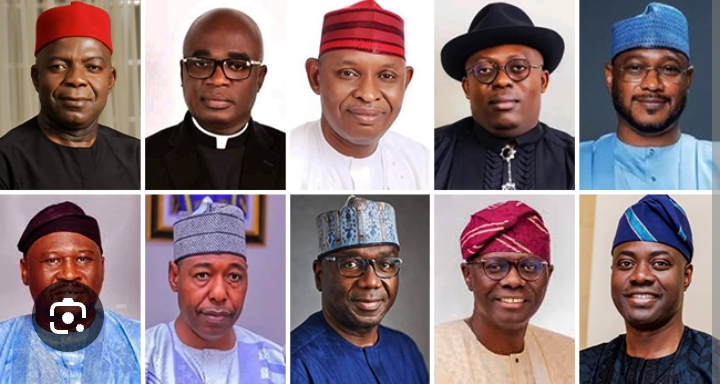
Enugu spends the least as 30 govs burn N968.64bn on refreshments, others in 3 months
-
 Foreign2 years ago
Denmark announces visas for, welders mechanics, bricklayers, others
-
 Crime5 years ago
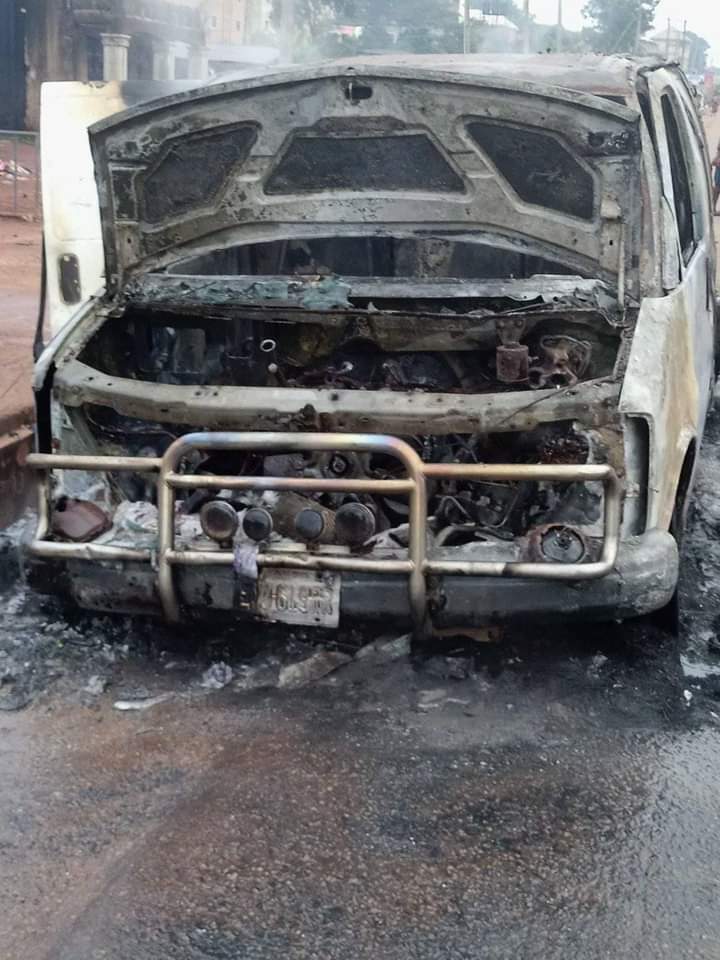
BREAKING! Sit-at-home: Vehicle conveying tomatoes, set ablaze in Enugu


