

Health
FG MDAs bar unvaccinated visitors, Lagos to demand jab cards at parties


Federal and Lagos State governments on Tuesday got tougher with the enforcement of their directives on compulsory COVID-19 vaccination.
The central government, which on December 1 disallowed unvaccinated civil servants from accessing their offices, on Tuesday barred visitors that were not vaccinated from government buildings in Abuja.
On its part, the Lagos State Government stated that all attendees of social events in the state must present their vaccination cards.
The Presidential Steering Committee on COVID-19 led by the Secretary to the Government of the Federation, Boss Mustapha, had in October said civil servants without proof of vaccination and negative coronavirus tests would not be allowed to enter their offices as from December 1, 2021. On Wednesday last week, security agents started barring unvaccinated civil servants from government buildings.
On Tuesday, the Federal Government went a step further in enforcing its compulsory vaccination order when it stopped contractors, journalists and other regular visitors from entering various ministries in the Federal Capital Territory. Responding to a question on whether the restriction of unvaccinated workers ought to be extended to journalists and others, the Head of Technical Secretariat, Presidential Steering Committee on COVID-19, Mukhtar Muhammad, simply said, “it is not out of order.”
Over 10 federal ministries are located in the Federal Secretariat complex and the Office of the Civil Service of the Federation.
The ministries located at the secretariat include The Ministry of Labour and Employment, the Ministry of Health, the Ministry of Information and Culture, the Ministry of Science and Technology, the Ministry of Special Duties, the Ministry of Aviation, the Ministry of Youth and Sports Development, the Ministry of Education, the Ministry of Police Affairs and the Ministry of Communications and Digital Economy.
Also affected were agencies at the Federal Capital Development Authority including the Federal Ministry of Agriculture and Rural Development.
Three of our correspondents were denied access to various ministries for failing to present vaccination cards.
One of our correspondents was informed by an unnamed security guard that the move had become necessary because civil servants could pose as visitors and gain access.
“We were asked not to allow anyone without vaccination cards to gain access. Some people who are civil servants could easily pose as visitors or contractors in order to gain access. So, the instruction is that anyone without vaccination cards should not be allowed in,” he said.
A reporter who was going to cover an event at the Ministry of Communications and Digital Economy, showed the security man his identity card, stating that he is a journalist, and was there to cover an event but he was not allowed to access the building around 11 am on Tuesday.
“The only thing I want to see is your vaccine card, not an ID card,” he said.
He further directed our reporter and others without the COVID-19 vaccination card to a tent opposite the secretariat, where the vaccine was being administered.
It was, however, observed that after 12pm, the security guards left the entrance.
It was observed that both guests and employees of the Federal Ministry of Agriculture and Rural Development were asked to show their vaccination cards before being allowed entry into the FMARD’s building.
Employees of the ministry who had been vaccinated gained entry into the ministry’s building located at Area 11 in the Federal Capital Territory.
The development made guests who had yet to be vaccinated to leave the vicinity, to avoid being denied entry at the entrance of the building.
A Professor of Medical Virology, University of Maiduguri, Marycelin Baba, in an interview stated that barring unvaccinated visitors from government facilities might help to promote rate of vaccination among Nigerians. According to the expert, allowing unvaccinated visitors to the government facilities might endanger the lives of vaccinated workers.
But human right lawyer, Victor Giwa, said it was wrong of the government to make such a move, adding that medical issues are personal.
He said, “My position is that the issue of the medical status of any individual is personal. Telling anyone to present his or her vaccination card or PCR test is a breach of his own right to private life.”
Attempts to reach the Office of the Head of Service proved abortive as the Spokesperson, Abdulganiyu Aminu, did not pick calls or reply messages.
In Lagos State, Governor Babajide Sanwo-Olu released new COVID-19 guidelines for social events and gatherings in the festive season.
Social event organisers must register to obtain safety clearance – Sanwo-Olu
Sanwo-Olu disclosed that all social events in the state must be duly registered to obtain an event safety clearance from the Lagos State Safety Commission website.
The governor, who said this on Tuesday in a press statement by the Commissioner for Information, Mr Gbenga Omotoso, said that every attendee of a social gathering must now present their evidence of vaccination.
He said, “Where possible events should be held in an outdoor space. Occupancy limit at any event must not exceed 60 per cent of maximum design capacity of the commission.
“Every attendee of a social gathering must present their vaccination cards or digital bar code page, showing at least first dose but preferably double dose full vaccination. In unvaccinated people, a negative Polymerase Chain Reaction within 72 hours will be an exemption.
Every attendee must be tested irrespective of vaccination status – Sanwo-Olu
“Everybody irrespective of vaccination status must be subject to Rapid Diagnostic test (antigen) to be conducted at the event venue within 24 hours prior to the event at the laboratories listed below. (Request for rapid tests at the venue requires an application through the LSSC).
“Under 18 years of age are unvaccinated and the above applies. Guests and service providers with high temperature (above 37.5) are to be politely turned back and referred to paramedics or the emergency response team on ground.”
Sanwo-Olu added that all-inbound passengers who refused to adhere to COVID-19 protocols would be prosecuted.
“While it is a stringent requirement that all inbound passengers perform a day two test within 48 hours of arrival into the country; and an additional day seven PCR test for all partially or unvaccinated inbound passengers, we cannot stress enough how important the strict adherence to these protocols are.
“These tests are mandatory to assist the state monitor the inflow of positive passengers, which we have identified as a veritable source of our waves and community spread.
“Based on this, we will commence the prosecution of those who refuse to submit themselves for these mandatory tests by blacklisting their passports for a period of one year. This would be carried out in partnership with the Presidential Steering Committee.
Meanwhile, the Nigeria Centre for Disease Control on Tuesday announced the discovery of three additional cases of the Omicron variant in the country.
The agency had on Wednesday detected the first three cases of the variant. With Tuesday’s discovery, the total number of the omicron variant cases in Nigeria stands at six.
Last week, Canada after it said it detected three cases with travel history to Nigeria, banned travellers from the country.
Also, on Saturday the United Kingdom placed a travel ban on Nigeria following the discovery of 21 Omicron cases with travel history to Nigeria.
On Tuesday, the NCDC, in a statement signed by its Director General, Ifedayo Adetifa stated that three additional cases of the variant had been discovered.
He said, “The Nigeria Centre for Disease Control has confirmed three more cases of COVID-19 with the B.1.1.529 SARS-CoV-2 lineage, i.e., the Omicron variant, in Nigeria. In addition to the three cases announced earlier on 1st December 2021, this brings the total number of confirmed cases of the Omicron variant detected in Nigeria to six .”
The NCDC also added that it had been notified by the UK of seven cases of the omicron variant which were linked to passengers from Nigeria.


In 2024, the Minister of Health and Social Welfare, Prof. Muhammad Pate, revealed that Nigeria had about 55,000 licensed doctors.
Speaking during an interview on Channels TV’s Politics Today, Pate disclosed that no fewer than 16,000 doctors had left the country in the past five years, while about 17,000 others had been transferred out of active service.
Worrisomely, a new revelation by the Lagos State Commissioner for Health, Prof. Akin Abayomi, indicates that the number of practising doctors in Nigeria has declined from 55,000 to 40,000 within just one year.
In his presentation at a one-day leadership dialogue in Lagos themed “Strengthening PHC Systems: A Joint Leadership Dialogue,” Abayomi identified manpower shortage as one of the most critical challenges facing the health sector.
The dialogue, organised by the Lagos State Primary Health Care Board with support from development partners, addressed barriers hindering PHCs from meeting expectations and proposed practical solutions for building sustainable PHCs with lasting impact.
Abayomi stated that Lagos currently has only 7,000 doctors serving an estimated 30 million residents, far below the number needed for optimal care delivery.
The commissioner raised concerns over the acute shortage of health workers in the state, disclosing that the state requires an additional 33,000 doctors to meet the healthcare demands of its growing population.
“Nigeria currently has about 40,000 doctors against an estimated need of 300,000, while Lagos alone requires about 33,000 doctors but has only about 7,000,” he said.
According to him, Lagos’ doctor-to-population ratio remains far below what is required for optimal healthcare delivery, noting that the state’s doctors are serving an estimated population of nearly 30 million people.
To address the shortfall, Abayomi said the state government is investing in its newly established University of Medicine and Health.
“Within five years, UMH will produce about 2,500 healthcare workers annually, including laboratory scientists and other essential cadres,” he stated.
The mass exodus of healthcare professionals popularly known as japa syndrome, especially doctors, nurses, and pharmacists has remained a major concern in Nigeria.
A 2017 survey conducted by a Nigerian polling organisation in partnership with Nigeria Health Watch revealed that about 88 per cent of Nigerian doctors were seeking job opportunities abroad at the time.
The President of the Nigerian Medical Association, Prof. Bala Audu, recently warned that Nigeria has moved beyond passive brain drain and has become a direct recruitment hub for foreign governments seeking skilled medical professionals.
In an interview, Audu revealed that international recruiters now visit Nigeria to directly hire doctors—particularly specialists such as obstetricians, gynaecologists, and paediatricians—offering them superior working conditions, remuneration, and infrastructure.
He lamented that while Nigeria’s population continues to grow and mortality rates remain high, the country is losing specialists at an alarming rate.
“Many of our doctors are not even going abroad to look for jobs. Foreign governments now come into Nigeria to pick doctors and take them away,” Audu said.
“We are still having more births, yet maternal deaths remain high because the skilled birth attendants who should care for these women are reducing every day.”
Audu added that in some specialties, the number of Nigerian doctors practising abroad may already exceed those still working within the country, a situation worsened by the government’s failure to significantly improve doctors’ welfare despite existing policy frameworks.
Experts have warned that with the current pace of emigration, it would be impossible for Nigeria to produce enough health workers to meet its growing healthcare demands. They estimate that it would take at least 20 years to train the over 400,000 health workers required to close the gap.
A former President of the NMA, Prof. Mike Ogirima, described Nigeria’s doctor-to-patient ratio as “horrible,” noting that the country currently has about one doctor to 8,000 patients—far below the World Health Organisation’s recommendation of one doctor to 600 patients.


Nigerian health communication researcher, Ifesinachi Ayogu, has attributed the rising number of cancer-related deaths in the country to the neglect of routine self-breast examination among women and routine Prostate-Specific Antigen (PSA) testing among men.
Ayogu told journalists on Monday that the failure to prioritise regular screening had contributed significantly to late detection of breast and prostate cancers, which are among the leading causes of cancer-related deaths in Nigeria.
He said many cancer cases were only discovered when the disease had reached advanced stages, making treatment more complex and survival chances lower.
According to him, the increasing burden of cancer deaths calls for a more intentional and sustained approach to cancer awareness, early detection, and preventive health behaviour.
“Early detection saves lives, but many people are not practising simple, routine screening that could help detect cancer early,” Ayogu said.
He noted that breast cancer and prostate cancer were often manageable when detected early, but ignorance, fear, stigma, and limited awareness continued to discourage people from carrying out regular checks.
The researcher explained that self-breast examination allows women to notice unusual lumps or changes early, while routine PSA testing helps detect prostate abnormalities before symptoms become severe.
Ayogu said deaths resulting from breast and prostate cancers were often preventable, stressing that delayed diagnosis was a major factor contributing to high mortality rates.
He added that many Nigerians still lacked basic information on how to conduct self-breast examinations, when to go for PSA tests, and where to seek appropriate medical care.
The health communication researcher emphasised the need for community-based education, especially in rural areas, using trusted platforms such as churches, markets, women’s groups, and radio programmes to promote routine screening practices.
He also urged healthcare providers and public health institutions to intensify public education on cancer prevention and ensure that screening information was simple, accurate, and accessible.
Ayogu advised individuals with a family history of breast or prostate cancer to be particularly vigilant about routine screening and healthy lifestyle practices.
He stressed that promoting routine self-breast examination and PSA testing would play a critical role in reducing late presentation and improving cancer survival outcomes in Nigeria.
Ifeshinachi Ayogu is a PhD graduate student, at the University of Oklahoma United States of America, his core interest is cancer communication, according to him, he believes that the next breakthroughs in cancer care for Nigerian women and men will not come from medicine alone.


The Federal Government said it had intensified monitoring and screening procedures at all points of entry in response to the ongoing outbreak of the Ebola Virus Disease in the Democratic Republic of Congo.
The Director of Port Health Services at the Federal Ministry of Health and Social Welfare, Dr Akpan Nse, disclosed this in an exclusive interview with Saturday PUNCH on Friday.
Nse also noted that additional staff had been employed to strengthen border surveillance in the country.
Health authorities in the Democratic Republic of Congo declared an outbreak of Ebola virus disease in Kasai Province, where 28 suspected cases and 16 deaths, including four health workers, had been reported as of September 5, 2025.
The outbreak comes at a time when much of Central and West Africa is grappling with overlapping health and humanitarian crises, including cholera, malnutrition, and population displacement.
The DRC’s last outbreak of Ebola virus disease occurred in the north-western Equateur Province in April 2022.
It was brought under control within three months.
In Kasai Province, previous Ebola outbreaks were reported in 2007 and 2008. Overall, the country has experienced 15 outbreaks since the disease was first identified in 1976.
Ebola virus disease is a rare but severe, often fatal illness in humans.
It is transmitted to people through close contact with the blood, secretions, organs, or other bodily fluids of infected animals such as fruit bats (believed to be the natural hosts). Human-to-human transmission occurs through direct contact with the blood or bodily fluids of an infected person, contaminated objects, or the body of someone who died from the disease.
In the ongoing outbreak, samples tested on September 3 at the National Institute of Biomedical Research in the capital, Kinshasa, confirmed that the cause was Ebola Zaire, a strain of the Ebola virus.
Dr Nse noted that although Nigeria was at risk of importing the virus due to high levels of international travel with the DRC, Port Health Services was on alert and had strengthened surveillance to prevent this.
He said, “We have intensified surveillance at all points of entry across the country—airports, land borders, and seaports. Every inbound traveller coming from Congo to Nigeria is thoroughly screened, and we collect their medical history through mandatory forms.
“We have also reactivated our portals. Every passenger on every flight coming to Nigeria from Congo is screened upon arrival. This applies to airports, seaports, and land borders. Even if passengers transit through Congo on their way to Nigeria, they must undergo screening.
“In addition, with support from WHO, we have recruited more staff to enhance surveillance. Increasing the workforce allows us to effectively prevent the importation of the virus and ensure thorough screening at all borders.”
He added that some private organisations had partnered the Federal Government to ensure that thermal scanners at airports remained fully functional.
Meanwhile, the WHO has released $500,000 from its Contingency Fund for Emergencies to support the response to the Ebola Virus Disease outbreak in the DR Congo.
Announcing this at a media briefing on global health issues on Friday, the WHO Director-General, Dr Tedros Adhanom Ghebreyesus, disclosed that 28 suspected cases and 16 deaths had been reported so far, including four health workers.
He highlighted that the UN body already had staff on the ground in Kasai, with more on the way.
“We’re joining rapid response teams to trace contacts and find cases; we’re collecting and testing samples, and we’re providing technical expertise in surveillance, infection prevention and control, treatment, risk communication, and more. WHO has also delivered personal protective equipment, laboratory equipment, medical supplies, and a mobile laboratory.
“We had previously prepositioned 2000 doses of Ebola vaccine in Kinshasa, which we are releasing to vaccinate contacts and health workers. This is the 16th outbreak of Ebola in the DRC, and the government has rich experience from those previous outbreaks,” the WHO boss stated.


“Go and Verify”: How Sunday Umeha Is Redefining Representation in Ezeagu/Udi
Chief Sir Paul Chukwuma Lays His Beloved Sister to Rest


2027: Anambra ADC Intact Despite Obi, Kwankwaso Departure – Guber Candidate






-
 News5 years ago
Uncompleted structures in Enugu to undergo integrity test – Authority
-
 News4 years ago
BREAKING: FG to release Nnamdi Kanu tomorrow, fixes emergency hearing
-
 News2 years ago
BREAKING: Former Anambra Governor is Dead
-
 Entertainment4 years ago
Chrisland School Girl’s Online Activities Leak [Video]
-
 Social event4 years ago
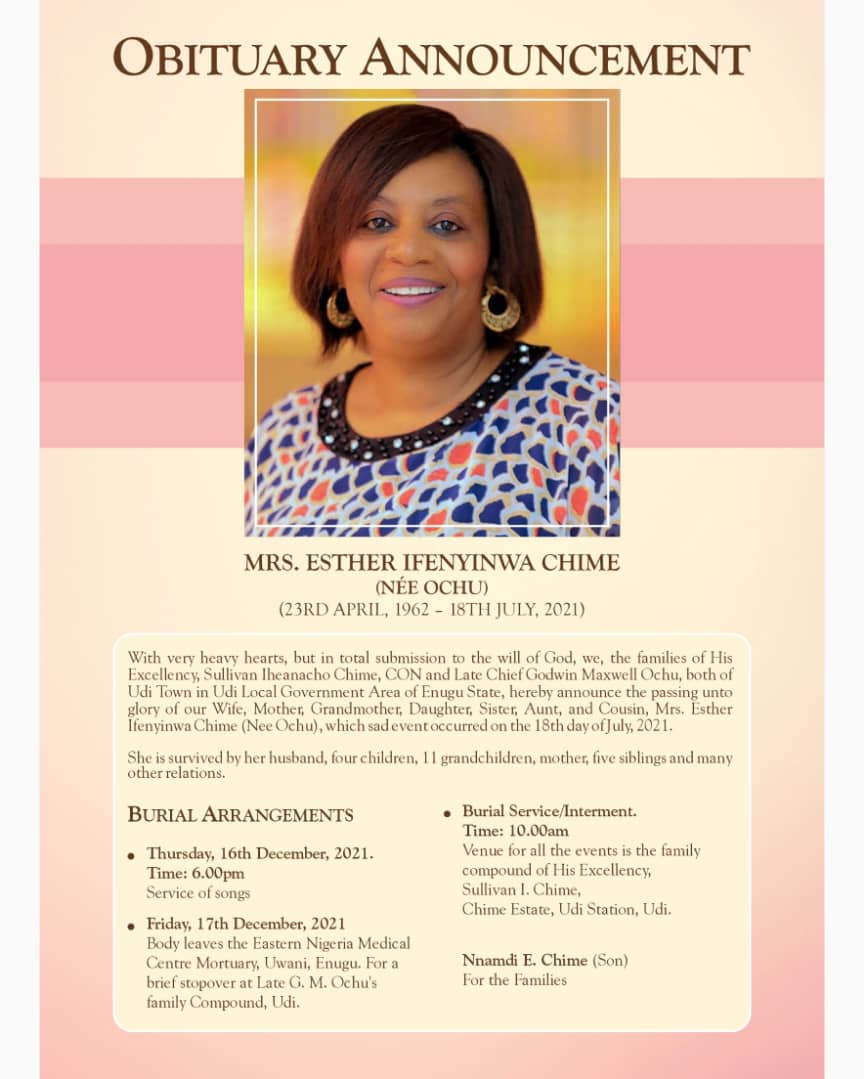
Ex-Enugu governor, Sullivan buries wife December 17
-
 Politics2 years ago
Enugu spends the least as 30 govs burn N968.64bn on refreshments, others in 3 months
-
 Foreign2 years ago
Denmark announces visas for, welders mechanics, bricklayers, others
-
 Crime5 years ago
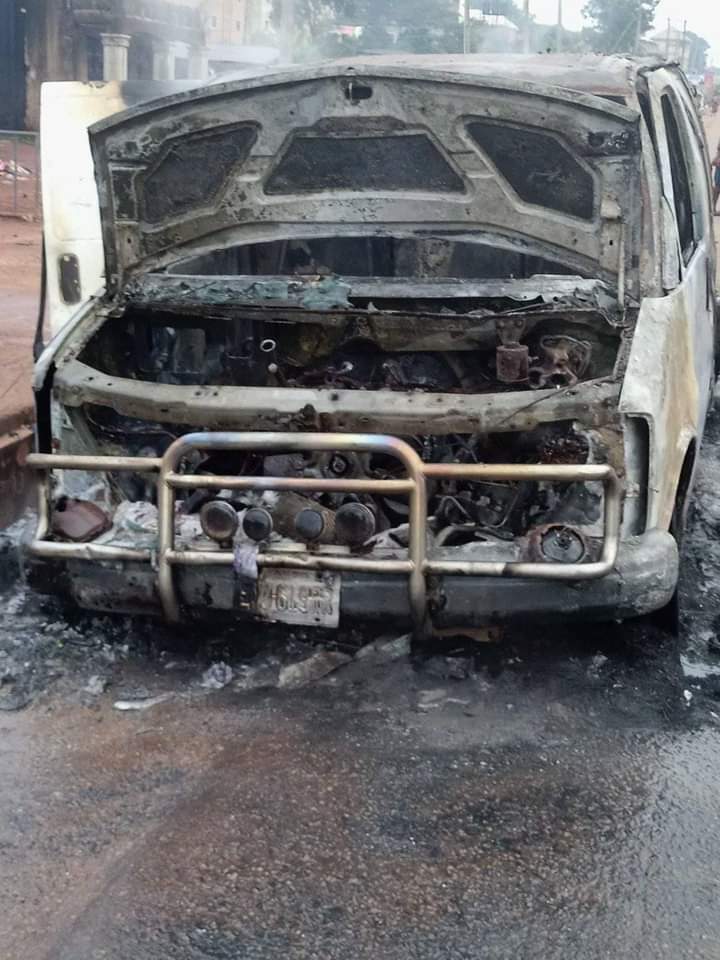
BREAKING! Sit-at-home: Vehicle conveying tomatoes, set ablaze in Enugu


