

Foreign
Foreign students: UK varsities may fall into deficit, says report


Many universities in the United Kingdom are at risk of falling into financial deficit due to the astronomical decline in international students after Prime Minister Rishi Sunak’s ban on bringing dependants into the country.
The Home Office of the United Kingdom announced that it had commenced the implementation of its policy banning Nigerian students and other overseas students from bringing in dependants via the study visa route.
In a post on X (formerly Twitter), the Home Office reiterated that only those on postgraduate research or government-sponsored scholarship students will be exempted from the development.
“We are fully committed to seeing a decisive cut in migration. From today, new overseas students will no longer be able to bring family members to the UK. Postgraduate research or government-funded scholarships students will be exempt,” the Home Office said.
Meanwhile, Financial Times on Friday reported the chief executive of Universities UK, Vivienne Stern, who represents more than 140 universities, said the sector was facing the prospect of a “serious overcorrection” thanks to immigration policies that deterred international students from coming to study in Britain.
“If they want to cool things down, that’s one thing, but it seems to me that through a combination of rhetoric, which is off-putting, and policy changes . . .[they have] really turned a whole bunch of people off that would otherwise have come to the UK,” Stern told the Financial Times.
Stern’s plea came as it emerged that some top universities, including York, which is a member of the elite Russell Group, were being forced to soften their entry requirements in order to maintain numbers of overseas students.
“The government needs to be very careful: we could end up with, from a policy point of view, what I would consider a serious overcorrection,” she added.
With the £9,250 domestic tuition fee effectively frozen for the past decade, UK universities have increasingly relied on non-EU students to make ends meet, with fees from non-EU students now accounting for nearly 20 per cent of sector income.
Universities are warning privately that numbers have softened sharply this year following a series of hostile policy moves by the government, with indications that enrolments may have fallen by more than a third from key countries, including Nigeria and India.
One senior university insider told the FT that the sector as a whole had been “spooked” by data that showed the number of international students taking up places in January 2024 was “way below the bottom end of projections for everyone”.
In January, Sunak highlighted changes in government policy to stop international graduate students from bringing family members to the UK, adding the policy was “delivering for the British people.”
The government also announced in December that it was reviewing the so-called “graduate route” enabling international students to work in the UK for two years after they graduate and announced a crackdown on “low-value courses”, even though only 3 per cent are failing to meet criteria set out by the regulator.
Data from Enroly, a web platform used by one in three international students for managing university enrollment, showed that deposit payments were down 37 per cent compared to last year.
A new analysis for UK by consultants PwC found that the combination of falling international student numbers, frozen tuition fees, rising staff wage bills, and a softening in UK student numbers was leaving the sector facing a perfect storm.
“You take those things together, and you’ve got a big problem,” Stern said, warning that the government needed to wake up to the risk posed to a sector that contributes £71bn to the UK economy every year.
The PwC analysis was based on 2021-22 financial returns for 70 UUK members in England and Northern Ireland and found that about 40 per cent are expected to be in deficit in 2023-24, falling to 19 per cent by 2025-26.
However, Paul Kett, a former senior Department for Education official who now advises PwC on education, said the numbers reflected assumptions about spending and income growth that now looked highly optimistic given the policy environment.
The PwC analysis found that if the growth in international students stagnated in the 2024-25 academic year, the proportion of universities in the financial deficit would rise from 19 per cent to 27 per cent — but if numbers started to fall between 13 and 18 per cent then four-fifths would be in deficit.
On the other side of the ledger, it found that increasing fees by 10 per cent for UK undergraduates in 2024-25 would shrink the share of universities in deficit from 19 per cent to 7 per cent.
The report said the effects of declining international enrolments could be compounded by other negative shocks, such as a rise in spending growth or a fall in domestic student numbers. It warned that mounting financial pressure could force universities to cut provision and delay investment, compromising quality for students.
Stern argued three interventions were necessary to put the sector on a stable footing: uprating tuition fees in line with inflation, increasing government teaching grants and stabilising the international market by dialling down negative rhetoric and ending question marks over the graduate route.
“You can take these individual scenarios that PwC looked at, and think that any one of them could tip a large number of institutions into a very difficult position, but the problem is that lots of those things are happening at once,” she said.
Robert Halfon, higher education minister, said: “We are fully focused on striking the right balance between acting decisively to tackle net migration, which we are clear is far too high, and attracting the brightest students to study at our universities,” he added.
PUNCH


The Nigerian community in the United States has been thrown into mourning following the sudden death of Eric Ezeokoli, a student of California State University, Long Beach.
Ezeokoli, who was born on October 6, 1960, reportedly died on Friday, April 11, 2026, at Saint Mary’s Hospital after a brief illness.
Until his death, he was studying Engineering at the university, also known as Long Beach State University. Sources disclosed that he had previously lived in San Jose before relocating to the Los Angeles area.
Tragically, at the time of his passing, Ezeokoli was said to be homeless and living in his car, with no fixed address.
The deceased was originally from Anambra State, although details about his exact hometown remain unclear. There are indications he may have hailed from Aguata, but this has not been officially confirmed.
Efforts are currently underway to locate his family members and relatives in Nigeria. Members of the Nigerian community and concerned individuals are appealing to anyone with useful information about Ezeokoli’s background or family to come forward.
A contact person, Paul Kizito Eze, has been designated to receive information that could help trace the deceased’s relatives.
The appeal has also been extended to people from Anambra State, particularly those familiar with communities in Aguata, to assist in identifying and notifying the family.
The situation has sparked renewed concern over the welfare of some Nigerians living abroad, especially those facing hardship and isolation.
Anyone with relevant information is urged to reach out urgently to assist in reconnecting the late Ezeokoli with his family for proper burial arrangements.


President Donald Trump doubled down Monday on his threat to wreck Iran’s civilian infrastructure, warning US forces could destroy every bridge and power plant in the country within four hours and that a truce proposal from international mediators was not yet enough.
Five weeks into the Middle East war triggered by a joint US-Israeli air assault on Tehran, the US leader has demanded that Iran reopen the Strait of Hormuz to international shipping by midnight GMT on Tuesday, or face a newly devastating round of bombing.
Both Trump and Iran have said that a proposal touted by international mediators for a 45-day ceasefire is not yet ready, and in a Washington press conference, the US president dialled up his warlike rhetoric once again.
“We have a plan — because of the power of our military — where every bridge in Iran will be decimated by 12 o’clock tomorrow night, where every power plant in Iran will be out of business, burning, exploding and never to be used again,” Trump said.
Trump had earlier accepted the ceasefire plan was a “significant proposal”, but went on to say it was not good enough. Iranian state media quotes officials stating that Tehran too “has rejected a ceasefire and insists on the need for a definitive end to the conflict”.
Trump said intermediaries “are negotiating now” on improving the ceasefire proposal, which US media reported was being mediated by Pakistan, Egypt and Turkey.
Iran’s military said it would “continue the war as long as the political authorities see fit”.
Trump’s latest threats, including a profanity-laced social media post on Sunday, have sent shockwaves through the international community.
International Committee of the Red Cross chief Mirjana Spoljaric warned that “deliberate threats… against essential civilian infrastructure” are illegal.
But talk of a ceasefire came as the US and Israel were striking targets across Iran, including major petrochemical facilities, and as Iran continued missile and drone attacks around the region.
Iran’s virtual blockade of Hormuz has sent oil and gas prices soaring and pushed countries around the world to enact measures to contain the fallout.
Earlier Monday, Israeli strikes had hit major Iranian petrochemical facilities, including in Asaluyeh on the Gulf coast, the country’s biggest, and another outside Shiraz in central Iran.
Israel’s military said it had also struck Iranian air force targets, including planes and helicopters at airports in Tehran and elsewhere.
Iran’s Guards posted on Telegram on Monday that their intelligence chief Majid Khademi, had been killed at dawn in US-Israeli strikes.
Israel’s military also said it had killed Asghar Bagheri, commander of the Guards’ Quds Force special operations unit, on Sunday.
“We will reach anyone who seeks to harm us,” Israeli Prime Minister Benjamin Netanyahu said.
The Guards’ Intelligence Organisation vowed a “major retaliatory strike” against those responsible for killing their commanders, their official Sepah News website reported.
Yemen’s Houthi rebels said they launched an attack targeting Israel, supporting their backer Iran and Lebanon’s Hezbollah.
The war, which erupted on February 28 with US-Israeli strikes on Iran that killed Supreme Leader Ayatollah Ali Khamenei, has engulfed the Middle East and roiled the global economy.
The worldwide oil squeeze has hit aviation, with Indonesia on Monday saying it would increase a jet fuel surcharge and low-cost carrier Air Asia X announcing ticket price hikes of up to 40 per cent.
South Korea will send ships to fetch oil from Saudi Arabia’s Red Sea port of Yanbu, avoiding Hormuz altogether, a ruling party MP said, while Taiwan’s government said it too would take the Red Sea route.
Gulf nations allied with the US have also been sucked into the war, with Kuwait and the UAE reporting strikes and injuries from Sunday to Monday.
Iran has continued to launch attacks at Israel, where the military and medics said four bodies were recovered from a residential building in the northern city of Haifa that was struck by a missile.
Iranian media reported several attacks on residential areas of Tehran, while the state broadcaster said gas outages hit parts of the capital after a strike on a university.
AFP

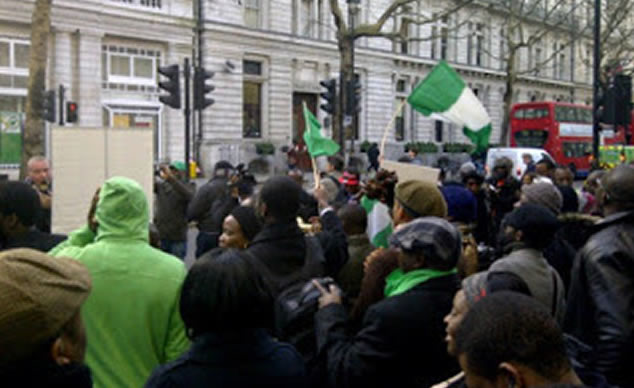
Some Nigerians in India have raised the alarm over what they described as increased racial profiling and brutalisation by the Indian police.
They lamented visa regularisation challenges and high renewal fees, which they said had made life unbearable in the Asian country.
Some of the residents alleged that some Nigerian students were physically assaulted, adding that reporting to the authorities had changed nothing.
NANS issued a seven-day ultimatum to the Federal Government for urgent diplomatic engagement, warning that it would escalate advocacy actions nationwide if the issues were not addressed.
Speaking with journalists during the demonstration, the NANS Vice President (Special Duties), Abubakar Mallawa, decried the alleged ill-treatment of Nigerians, adding that the association had received multiple distress reports from students in Indian cities, particularly Mumbai, over visa challenges, discriminatory practices and systematic profiling.
He noted that the affected students and other Nigerians engaged in legitimate businesses had faced difficulties in renewing visas, mass arrests linked to immigration status, denial of rental accommodation based solely on nationality, closure of Nigerian-owned shops, confiscation of goods, and, in some cases, forceful entry into residences and detention under degrading conditions.
The group also raised concerns over the visa application process, alleging that Nigerian applicants were often required to pay interview and processing fees but denied visas without clear explanations.
In a recent interview on Arise TV, the National Secretary of NANS, Anzaku Shedrack, said the group had been receiving disturbing videos showing the brutalisation of Nigerians in several parts of India, and called on the Ministry of Foreign Affairs to intervene.
A video clip played by the tv station showed some suspected Indians attacking and stoning an individual, said to be a Nigerian, on the floor.
In an interview with Saturday PUNCH, the Education Coordinator of the Association of African Students in India, Rajasthan chapter, Abisola Williams, said Nigerians were going through tough times in India.
Williams also admitted that Nigerian students were seriously affected by regularisation challenges.
The third-year physiotherapy student explained that India does not grant permanent residency to international students.
“It’s either you’re a student or a professional with a work visa. As for Nigerians, we have to renew our visas every year, as students or professionals,” she said.
Williams noted that Indian authorities reserved the right to deny visa extensions to students who failed to meet academic or financial obligations.
Another Nigerian student in Delhi, who spoke on condition of anonymity, alleged that Nigerians were required to pay 10,000 rupees (about N146,000) every three months to renew their visas, a fee she claimed is lower for students from other African countries.
“Other students from other African countries do not pay for it. We were told it was an agreement between the Indian and Nigerian governments for students to pay every three months. I know Zimbabweans who are not paying to renew visas, while Ghanaians pay a maximum of 500 rupees, which is about N8,000. This is just unfair. That’s the cross Nigerians bear to regularise their stay in India. They don’t give us enough time to raise the money. But for other nationals like Zimbabweans, they get about eight months before their next visa expires,” the student said.
She added that the fee was not disclosed during visa processing in Nigeria and that many students only became aware of it after arriving in India.
The student further alleged that Indian police actively track Nigerians, whose visas had expired, leading to arrests, intimidation and deportation.
“When my visa was about to expire, I went to renew it, but was surprised to learn it was 10,000 rupees. After that, the police came looking for me because I had not renewed my visa.
“I have seen male students who were bullied and harassed because of this. They don’t believe we live by the rules. Anything that goes wrong is attributed to Nigerians, and it’s unfair.
“There are people who have faced serious injustice in the hands of these officers. Some were taken to deportation camps. I knew someone who was deported to Nigeria for this,” she said.
Drug crimes in India
No fewer than 50,000 Nigerians are believed to be resident in India.
Analysts believe that the Nigerian community is being targeted due to increased arrests of some people from the country for alleged drug trafficking.
In 2024, Indian agencies arrested 660 foreign nationals for drug-related crimes.
No fewer than 106 of the suspects were reported to be Nigerians, the second highest. Nepal was first on the list with 203 nationals.
Also, 2,356 Nigerians were deported by India between 2019 and 2024, with removals quadrupling from 339 in 2021 to 1,470 in the 2023-2024 fiscal year.
Nigerians are police informants – Diplomat
But a diplomat in India said some Nigerians were being used as informants by the Indian police.
The official, who spoke on condition of anonymity, alleged that such people were usually induced with money.
“Fellow Nigerians report one another to the police when they have disputes. They become informants because the authorities give them a share. When Nigerians are arrested, the police extort money from them, and the informants take a cut. These practices put the country in a bad light,” the source said.
The source also urged Nigerians to comply with local laws.
The official added, “People should ask why Nigerians are being maltreated. What offence did they commit? You are in another country and must obey their laws. Some individuals have overstayed for years without valid visas. Once caught, there may be consequences.”
On the quarterly visa renewal, the official said the issue also affects Nigerian diplomats and called for reciprocal measures.
“As diplomats, our families renew visas yearly. It is an issue we have raised at the highest level, but nothing has been done. The best approach is reciprocity. We should ensure their families get similar terms, while we consider shorter durations for their students.”
PUNCH


“Go and Verify”: How Sunday Umeha Is Redefining Representation in Ezeagu/Udi
Chief Sir Paul Chukwuma Lays His Beloved Sister to Rest


2027: Anambra ADC Intact Despite Obi, Kwankwaso Departure – Guber Candidate






-
 News5 years ago
Uncompleted structures in Enugu to undergo integrity test – Authority
-
 News4 years ago
BREAKING: FG to release Nnamdi Kanu tomorrow, fixes emergency hearing
-
 News2 years ago
BREAKING: Former Anambra Governor is Dead
-
 Entertainment4 years ago
Chrisland School Girl’s Online Activities Leak [Video]
-
 Social event4 years ago
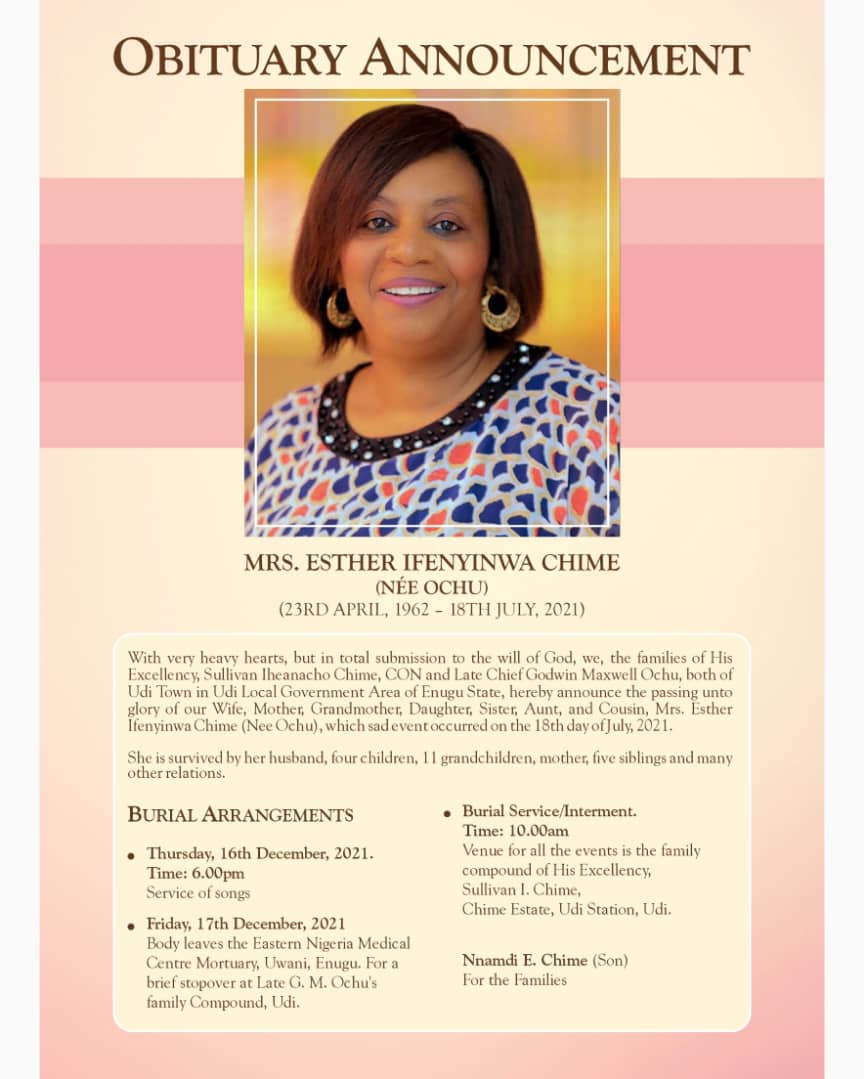
Ex-Enugu governor, Sullivan buries wife December 17
-
 Politics2 years ago
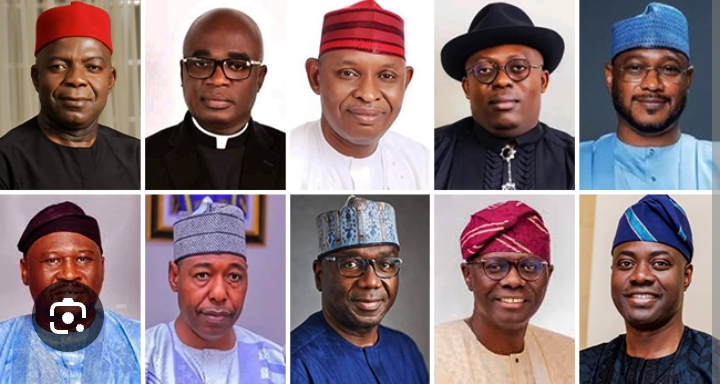
Enugu spends the least as 30 govs burn N968.64bn on refreshments, others in 3 months
-
 Foreign2 years ago
Denmark announces visas for, welders mechanics, bricklayers, others
-
 Crime5 years ago
BREAKING! Sit-at-home: Vehicle conveying tomatoes, set ablaze in Enugu


