
Education
NIGERIAN EDUCATIONAL SYSTEM: A CRITICAL ASSESSMENT AND NEED FOR REVIEW

By: Professor Frank Amagwu & Chuks Sokari
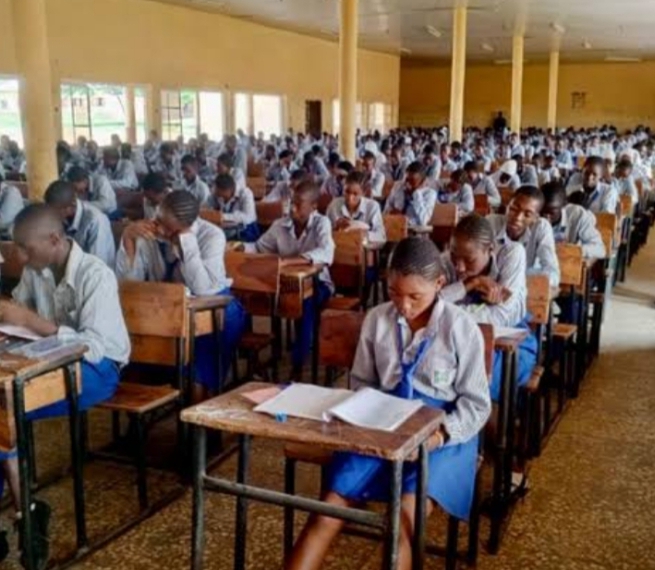
The Nigerian educational system has experienced an inexcusable decline over the years, particularly in the last thirty years (1995 to date). This situation began in the 1980s during a troubling period known as the “expo era,” where systemic corruption permeated the West African Examination Council (WAEC) processes. Question papers were illicitly smuggled and sold to students ahead of examinations, setting a troubling precedent that has only spiraled in severity over the years.
As the reputation of public schools—both at the secondary and tertiary levels—deteriorated, an increasing number of Nigerians, particularly from affluent backgrounds, began to seek alternative educational options. Many opted for private institutions, both locally and abroad, creating a stark divide in educational access and quality. This trend not only exacerbated inequalities but also weakened public educational institutions, which became abysmally underfunded and neglected; poor (if not total absence of) infrastructure, inadequate remuneration for teachers, and increased strikes and restiveness of students were manifest.
Public schools increasingly became associated with poverty and lower standards, while private schools flourished for those who could afford them, thus fostering a troubling class consciousness among Nigerians. Sadly, this situation has not only remained unchanged but has become worse.
Tragically, the Nigerian educational system has suffered a final blow, relegating it to a status where only local or foreign private schools are deemed acceptable by the privileged elite.
REASONS FOR THE COLLAPSE OF OUR PUBLIC SCHOOLS
The Nigerian privileged class, comprised of economic operators in both the public and private sectors, is largely responsible for the decline and eventual demise of the Nigerian educational system. Employers are now more interested in foreign or private university graduates in their hiring decisions. This has created an undeniable stigma against local graduates and a strong desire to study abroad to prevent the glaring discrimination against them who, despite their qualifications, are still deemed inferior and inadequately trained for employment. Worse still, for graduates of our public schools, it is a case of ‘to your tents, oh Israel’, and many, out of frustration from years of job hunting, end up as okada riders or Keke drivers.
The authorities at the top echelon of our educational sector, often complicit with private interest, have, over the years, amassed tremendous wealth through corruption and mismanagement of public funds to establish their own private secondary schools and universities. This has led to the proliferation of private secondary schools and universities that cater exclusively to the wealthy, further exacerbating the challenges faced by public education and driving more students away from public institutions.

IMMEDIATE EFFECTS OF THE BOOM IN PRIVATE EDUCATIONAL INSTITUTIONS…
1. Emergence of more private universities with inadequate infrastructure.
2. Attractive profit margins for investors, charging higher school fees without corresponding training facilities and quality of results.
3. Increased corruption among authorities in the ministries responsible for approving/licensing new schools, leading to poor standards in monitoring and evaluation.
4. Growing appetite and patronage for private university and secondary school education.
5. High school fees as a distinguishing criterion for the quality of education in Nigeria.
6. High influx and increased student population in private schools.
7. Contamination of monitoring and evaluation standards, which have plagued public schools, is now prevalent in private schools as well.
In the end, as the classical economists would say, ‘we are all dead.’ What goes around comes around. Most private universities and secondary schools have now become glorified commercial enterprises, suffering much the same fate as public schools, despite the enormous fees being paid by parents.
In all these instances, ‘Nigeria is happening to us’ across the various sectors of our economic landscape.
THE WAY FORWARD
To reverse the decline of Nigeria’s educational system, a comprehensive overhaul is imperative. Stakeholders—including the government, private sector employers, educators, and parents—must engage in a collaborative effort to rebuild public education. This includes prioritizing funding for infrastructure, enhancing teacher training and support, and implementing policies that ensure equity across all educational institutions.
Furthermore, public perceptions of local education must be transformed. By valuing and promoting the achievements of graduates from public schools, we can begin to dismantle the stigma that has been attached to these institutions and instill pride in what they can offer.
In conclusion, the Nigerian educational system is at a critical juncture. The pathway forward requires collective action and a renewed commitment to ensuring that all Nigerian children, regardless of their socioeconomic background, have access to quality education that equips them for the future. Only then can we hope to restore integrity and functionality to our educational landscape.
The Urgent Need for Review of the Nigerian Educational System
The deteriorating standards of Nigeria’s educational institutions and the quality of its graduates together underscore the dire need for a comprehensive review of the educational system. In an increasingly interconnected and competitive world, it is imperative that Nigeria’s educational system aligns with global information technology innovations and advancements.
The current structure of Nigeria’s educational system is unsuitable and inadequate to meet contemporary global standards and demands. The system is fragmented, with varying quality across public and private institutions. This has led to a significant gap in educational outcomes, with many graduates lacking the skills and knowledge needed to compete in the global job market.
To address these issues, the Nigerian educational system can be restructured into the following five categories:
Nursery and Primary Education
Secondary Education
Technical Educational Institutions
Public University Education
Private University Education
This restructuring aims to create a more cohesive and standardized system that ensures quality education at all levels. It envisages a system where there will be no more private secondary and private technical/tertiary education institutions in Nigeria.
To implement this effectively, the following measures should be considered:
Four ministries of education should be established, each headed by two ministers—one senior and one junior—responsible for specific areas such as nursery and primary education, secondary education, technical education, and university education.
Separate education boards should also be established to supervise the management of these specific institutions. This will ensure focused and efficient oversight.
The following additional areas should also be included in the review:
School Fees: An implementation of regulations to check arbitrary and discriminatory fees. Standardization of fee structures will ensure affordability and accessibility for all.
Infrastructure and Logistics: Investment in infrastructure and logistics will provide a conducive learning environment. This includes building and maintaining of classrooms, libraries, laboratories, and other essential facilities.
Hostel and Accommodation Evaluation: Periodic evaluation of hostel and accommodation facilities will ensure they meet safety and comfort standards.
Industry Collaboration: Fostering of strong collaboration with industries will offer opportunities for student attachments and internships. This will provide students with practical experience and enhance their employability.
Exchange Programs: Encouragement and promotion of exchange programs with international institutions will expose students to diverse cultures and educational practices, thereby broadening their perspectives.
University Sports and Games: Organizing university sports and games for both private and public universities will promote physical fitness, teamwork, and a sense of community among students.
CONCLUSION
The current state of the Nigerian educational system is a call to action. It is clear that without immediate and comprehensive reforms, the system will continue to fail the youth and, by extension, the nation. The proposal to revamp the educational structure into distinct categories, coupled with the establishment of specialized ministries and supervisory boards, represents a strategic approach to addressing systemic failures. By tackling issues such as fee regulation, infrastructure, industry collaboration, and international exchange programs, Nigeria can forge a path towards an educational system that not only meets global standards but also serves as a pillar of national development.
The success of these reforms hinges on the unwavering commitment and collaboration of all stakeholders—government, educators, private sector, and parents. By prioritizing education and ensuring equitable access and quality, Nigeria can uplift its youth and position itself competitively on the global stage. In doing so, we will not only restore the integrity of our educational institutions but also lay the foundation for a brighter, more prosperous future for Nigeria.
Professor Frank Amagwu is Faculty; Micro & Dev. Finance, Apollos University Great Falls, Montana USA. Also, Adjunct Professor, Accounting & Finance, PG Biz Sch, ANAN University.
Chuks Sokari is a Retired Deputy Director (Operations), CBN.

By Our Reporter
Tragedy has struck the family of Comrade Ambrose Nnamani of Isi-Ama Ejona in Mbu Amon, Isi-Uzo Local Government Area of Enugu State, following the death of their 14-year-old son, Kosisochukwu Nnamani.
The deceased, who was a student of the College of Immaculate Conception (CIC) Enugu, was reportedly drowned while attempting to recover a bucket that fell into a water reservoir.
Sources disclosed that the unfortunate incident occurred on May 4, 2026, throwing the family and members of the community into mourning.
A burial poster released by the family described the death of the teenager as a “painful exit,” stating that his sudden demise has left relations, friends and schoolmates devastated.
According to the burial arrangements, a Christian wake is scheduled to hold at the College of Immaculate Conception (CIC) Enugu on Tuesday, May 12, 2026, while funeral Mass and interment will take place on Thursday, May 14, 2026, at his father’s compound in Ugwu-Faith, Isi-Ama Ejona, Isi-Uzo LGA of Enugu State.
The family prayed for the peaceful repose of the young boy, describing him as a “little angel gone too soon.”
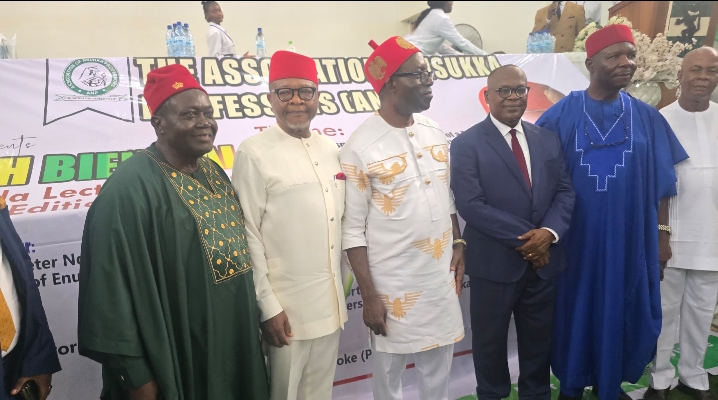
By Okey Maduforo Awka .
Governor Charles Soludo of Anambra state has lamented lack of research in public policy making contending that academic research with positive impact on governance is sterial.
He further challenged the academic community to step up it’s intellectual works towards solving contending issues that shape the wellbeing of the immediate society.
The Governor who delivered a lecture at the 6th Biennial Adada Lecture Series 2026 convened by Association of Nsukka Professors noted that gone are those days when intellectual works end up at the University book shelf without transforming the socioeconomic needs of any given society.
Soludo observed that the “fusion of thought and action” remains the only bridge to a national rebirth.
Soludo questioned why academic discussions have seemingly lost their authority in national life. Despite producing thousands of professors and journals, he noted a “severed link” between academic research and public policy.
“If you have 200 Professors as members, how is the Adada zone not a first world?” he asked, challenging the audience to move beyond the walls of the university. “We produce journal articles, but how many have become policies? Intellectualism without activism is sterile.”
The Governor further advocated for “Productive Intellectualism,” where critical thinking guides public purpose. Drawing from his first tenure as Governor over the last four years, Governor Soludo highlighted how he has attempted to bring intellectualism to governance through “sacrificial volunteerism” and how he succeeded in laying the foundation for the African Dubai-Taiwan-Silicon Valley.
He emphasized that nations do not develop by resources alone, but by ideas that precede institutions; citing historical giants like Isaac Newton, Nnamdi Azikiwe, Obafemi Awolowo, Kwame Nkrumah, Ahmadu Bello, and a host of others, as examples of a shared pattern of logical thinking that yield ideas and then built.
“This is a challenge to the intellectuals and the wider academic community: to multi-task, as the modern intellectual must be both a thinker and a doer, Question the Status Quo which remains a fundamental element of true intellectualism”
“Standing akimbo is too expensive,” Soludo warned. “We don’t just live; we live to matter. It is time to get back to basics and drive the African renaissance through active participation.”
Speaking earlier, Professor Osita Ogbu, presiding as Chairman, observed that the true benchmark of academic excellence is not found in the complacency of achievement, but in an unyielding hunger for discovery and the courage to apply that knowledge to real-world challenges. He asserted that intellectuals are never satisfied, they keep working.
Also speaking, the Vice Chancellor of the University of Nigeria, Nsukka, Professor Simon Ortuanya, framed the gathering as a significant homecoming for Governor Soludo. He offered a glowing tribute to the Governor, commending his transformative contributions to the Nigerian state and his broader dedication to the service of humanity.
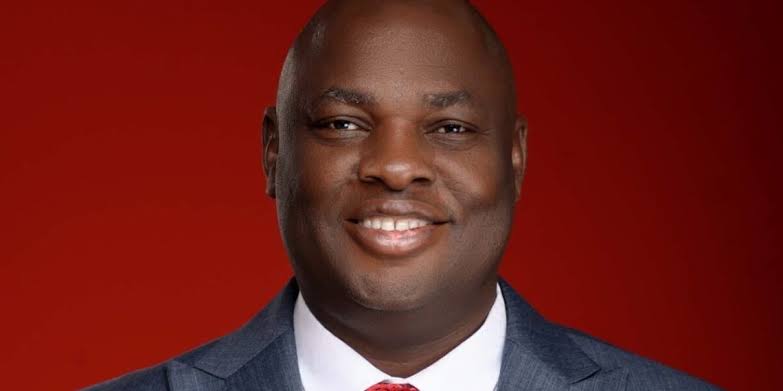
Enugu East Local Government Area has formalised a strategic partnership with David Umahi Federal University of Medical Sciences following the signing of a Memorandum of Understanding (MoU) aimed at strengthening human capital development in the council area.
The agreement, signed during a high-level meeting between officials of the council and the university’s management, is expected to open new opportunities in medical education, training, and healthcare capacity building.
Speaking at the signing ceremony, the Executive Chairman of Enugu East LGA, Engr. Pst. Beloved-Dan Obi Anike, described the partnership as a major step toward building a healthier and more prosperous society through deliberate investment in education.
He noted that the initiative aligns with the broader development agenda of the Enugu State Government under Governor Peter Ndubuisi Mbah, particularly in the area of human capital development.
As part of the agreement, the council unveiled plans to sponsor 100 students from Enugu East to study medical-related courses at the university, a move aimed at addressing manpower gaps in the health sector while empowering local youths.
“This partnership is not just about education; it is about securing the future of our people. By investing in medical training, we are building a foundation for sustainable healthcare delivery in Enugu East,” Anike said.
In his remarks, the Vice Chancellor of the university, Jesse Uneke, commended the council for its forward-thinking approach, describing the MoU as a mutually beneficial arrangement that would enhance both academic excellence and community impact.
He assured that the institution would provide the necessary support to ensure the success of the scholarship programme and other areas of collaboration captured in the agreement.
The MoU is also expected to cover research collaboration, capacity building, and possible medical outreach programmes within Enugu East communities.
Stakeholders say the partnership marks a significant milestone in the council’s drive to improve access to quality education and healthcare, while positioning Enugu East as a model for grassroots-driven development.
Implementation of the agreement is expected to commence in the coming weeks, with both parties set to outline detailed modalities for its execution.
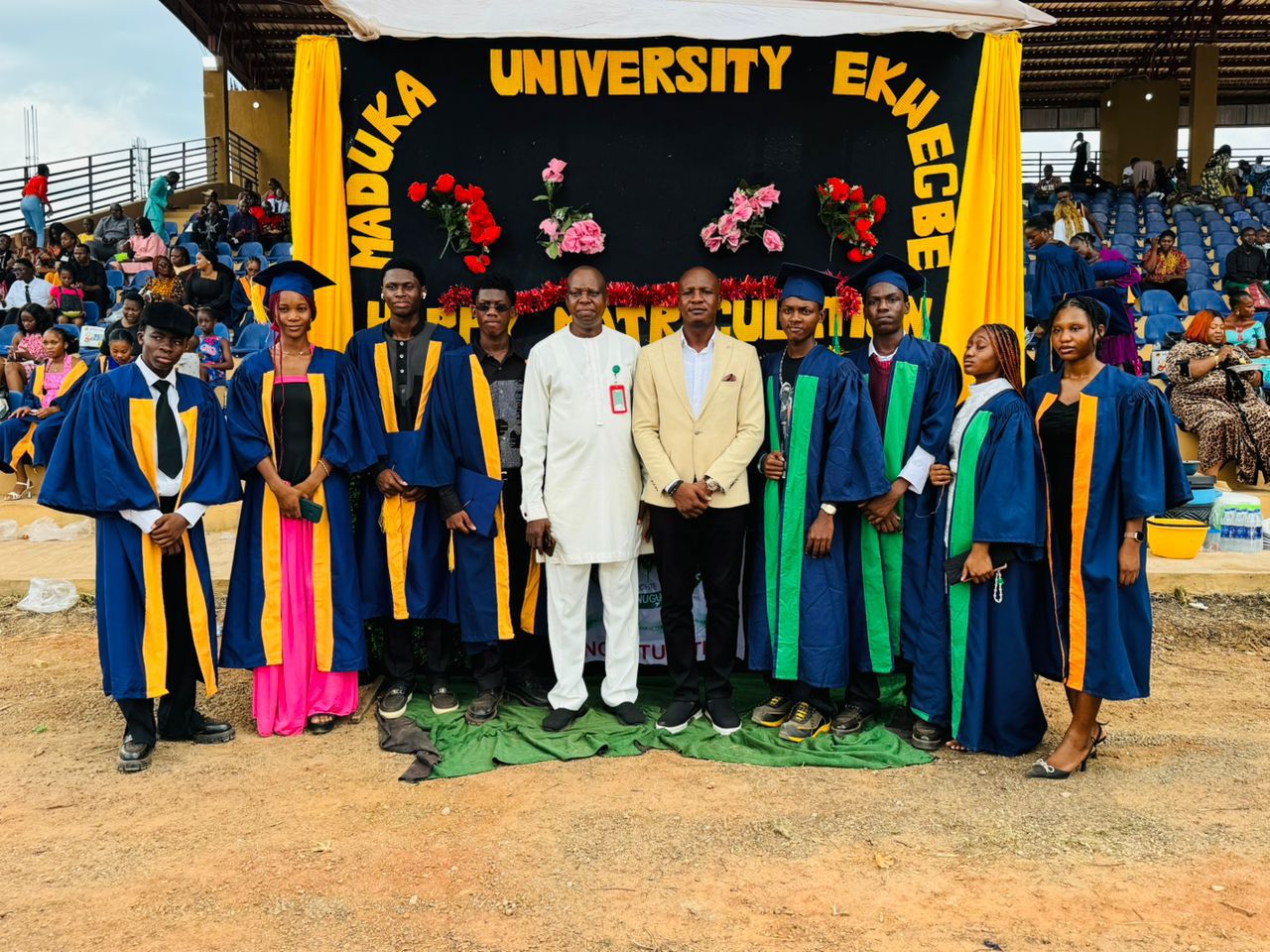
Fifteen students from Enugu East Local Government Area who were awarded scholarships to study medicine and engineering at Maduka University have officially matriculated, marking a major milestone in their academic journey.
The scholarship initiative, driven by the Enugu East Local Government Council under the leadership of Engr. Pst. Beloved-Dan Obi Anike, is part of efforts to boost human capital development through strategic investment in education.
The council facilitated admission for the beneficiaries into high-demand professional courses, positioning them to become future leaders in medicine, engineering, and related fields.
The matriculation ceremony was attended by key government representatives, including Barr. Uche Mbaeke, Secretary of Enugu East LGA, and Pst. Polycarp Ugwu, Secretary of the Enugu East Human Capital Trust Fund, who represented the council at the event.
The ceremony signals the beginning of a new academic chapter for the students, who are expected to make meaningful contributions to their community and beyond.
The initiative has been widely commended as a bold step toward youth empowerment and sustainable development in Enugu East.

A lecturer at Kogi State Polytechnic, Lokoja, Mr. Anslem Ojodomo, has died after collapsing in class while teaching.
The Rector of the polytechnic confirmed the incident in a statement issued on Friday in Lokoja by the Acting Coordinator, Directorate of Public Relations, Mr. John Onimisi, describing the development as a “deep personal shock.”
The tragic incident has sent shockwaves across the institution, coming just a month after another lecturer, Dr. Barnabas Akuba, passed away shortly after completing his PhD programme.
Ojodomo’s death has sparked concern among staff and students, with many questioning the circumstances surrounding the sudden losses.
Student eyewitnesses, who spoke to journalists on condition of anonymity, said Ojodomo collapsed while addressing his class. Despite efforts to save him, he was pronounced dead at a nearby hospital.
The polytechnic community has been left in a state of uncertainty, having lost two lecturers in quick succession.
Meanwhile, the Rector, Prof. Salihu Avidime, extended heartfelt condolences to the institution and the family of the deceased, noting that Ojodomo was a lecturer in the Department of Public Administration.
Avidime recalled meeting Ojodomo just hours before his death, where they exchanged pleasantries.
He described the late lecturer as a dedicated and humble academic committed to excellence.
“The Polytechnic community is mourning the loss of a promising academic and dependable colleague who embodied scholarship, service, and character,” he said.
“Ojodomo’s contributions as Deputy Dean, Student Services, and lecturer were impactful and inspiring.”
Anselm Victory Ojodomo (October 5, 1992 – March 27, 2026) held a Master’s degree from Prince Abubakar Audu University, Anyigba, where he had recently defended his PhD proposal.
He joined Kogi State Polytechnic in 2021 and served on several committees.
The polytechnic community commiserated with his family and the people of Igalamela/Odolu, praying for his soul to rest in peace.
-
 News2 days ago
“Go and Verify”: How Sunday Umeha Is Redefining Representation in Ezeagu/Udi
-
News2 days ago
Chief Sir Paul Chukwuma Lays His Beloved Sister to Rest
-
 Politics3 days ago
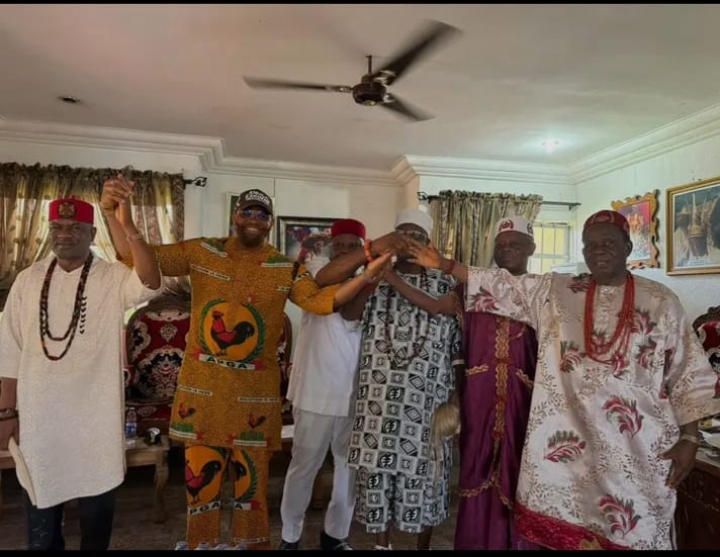
Anambra Communities Boil As Group Carpets Traditional Rulers Over Zoning
-
 News4 days ago
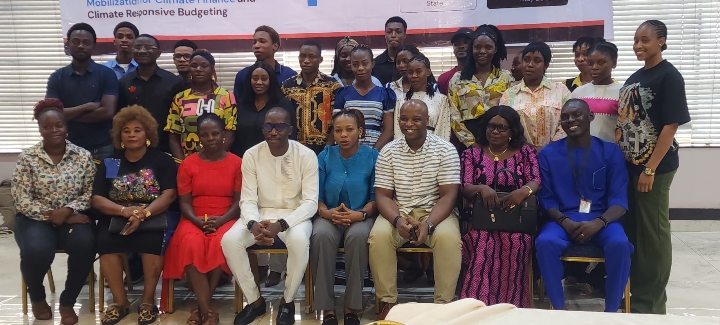
Enugu, SSDO advance domestic resource mobilisation for climate responsive budgeting
-
 Crime4 days ago
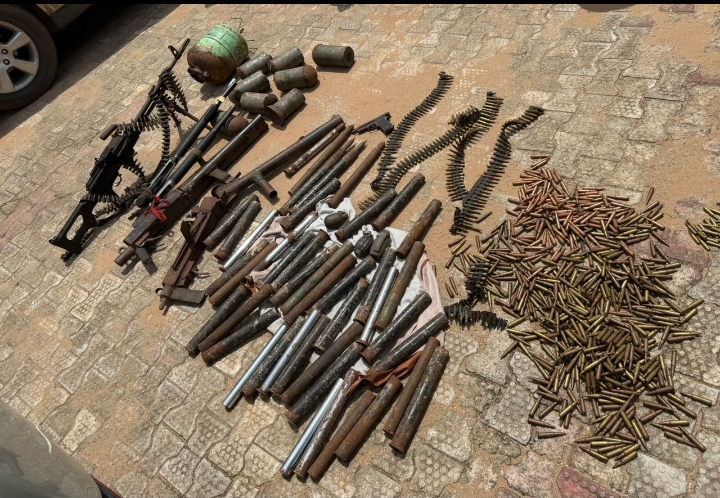
Anambra Police Burst Gunmen Armoury in Orumba
-
 News3 days ago
2027: Anambra ADC Intact Despite Obi, Kwankwaso Departure – Guber Candidate
-

 Tech1 day ago
How Chatgpt Detector Tools Are Changing Content Verification
-
 Crime9 hours ago
Fake Pastors Arrested in Anambra as Soludo Begins Crackdown