
Economy
Worries over low revenue as Nigeria’s debt nears N81tn


The figure was arrived at based on the 2022 Debt Sustainability Analysis Report by Debt Management Office.
According to the debt office, the increase in total public debt-to-GDP to 37.1 per cent in 2023 from 23.4 per cent as of September 2022 was due to the inclusion of an estimated N8.8tn 2023 debt, the government’s Ways and Means debt of over N23tn, and an estimated Promissory Notes issuance of N2.87tn in the debt stock.
As of December 2022, Nigeria’s total public debt was N46.25tn, which means they might be an increase of 76.52 per cent this year.
In the report, the DMO warned that the Federal Government’s projected revenue of N10tn for 2023 cannot support fresh borrowings.

According to the office, the projected government’s debt service-to-revenue ratio of 73.5 per cent for 2023 is high and a threat to debt sustainability. It noted that the government’s current revenue profile cannot support higher levels of borrowing.
In a report titled, ‘Report of the Annual National Market Access Country (MAC) Debt Sustainability Analysis (DSA),’ the debt office said, “The projected FGN Debt Service-to-Revenue ratio at 73.5 per cent for 2023 is high and a threat to debt sustainability.
“It means that the revenue profile cannot support higher levels of borrowing. Attaining a sustainable FGN Debt Service-to-Revenue ratio would require an increase of FGN Revenue from N10.49tn projected in the 2023 Budget to about N15.5tn.”
DMO stated that the government must pay attention to revenue generation by implementing far-reaching revenue mobilisation initiatives and reforms including the Strategic Revenue Growth Initiatives and all its pillars with a view to raising the country’s tax revenue to GDP ratio from about 7 percent to that of its peer.
The Federal Government will be unable to borrow a lot as it nears its self-imposed debt limit of 40 per cent, the Debt Management Office has said.
DMO noted that the country’s debt stock is within sustainable limits at 37.1 per cent but is nearing a point where it has little space for borrowing. It said, “The Country’s Debt stock remains sustainable under these criteria, but the borrowing space has been reduced when compared to Nigeria’s self-imposed debt limit of 40 percent set in the MTDS, 2020-2023.”
It recommended that even though the government must be careful with borrowing even though it had a borrowing space of 2.9 per cent (about N14.66tn) due to its self-imposed limit of 40 per cent.
It stressed, “It is recommended that this should not be used as a basis for higher level of borrowing as was the case in the 2023 Budget. This is because the outcome of the Shock Scenario, which is more realistic in the circumstances, exceeded the self-imposed limit.”
To reduce borrowing and budget deficit, DMO stated that the government should encourage the private sector to fund some of the capital projects that are being financed from borrowing through the Public-Private Partnership schemes. It added that the Federal Government can reduce borrowing through the privatisation and/or sale of Government assets.
N3tn promissory notes
The Debt Management Office disclosed this in its 2022 Debt Sustainability Analysis Report.
In its Market Access Country-Debt Sustainability Analysis Framework, the debt office included the amount in forming the baseline for its analysis.
The report read in part, “The 2022 MAC-DSA exercise used the Gross Public Debt, that is, the General Government Debt, comprising the External and Domestic Debts of the FGN, thirty-six States and the Federal Capital Territory.
“Under the Baseline, the FGN Domestic Debt stock includes the FGN Ways and Means Advances at the CBN in the sum of N22.72tn (which has now been approved by the National Assembly) and the additional N1.0tn in 2022 Supplementary Budget, totalling N23.72tn.
“Also, included in the FGN Domestic Debt under the Baseline are contractual arrears and judgement debts of about N2.87tn that are being considered for possible clearance through issuance of Promissory Notes in 2023. The FGN’s contingent liabilities, including Guarantees in the sum of N4.58tn as of December 2021 was considered in the Alternative Scenario.”
According to Investopedia.com, a promissory note is a debt instrument that contains a written promise by one party (the note’s issuer or maker) to pay another party (the note’s payee) a definite sum of money, either on-demand or at a specified future date.
By Francis Onoh
It is the right of every Nigerian to be financially included in the system. Data from the country’s foremost financial institution, the Central Bank of Nigeria (CBN) and the organisation Enhancing Financial Innovation and Access show that approximately 40% of Nigerians adults are financially excluded.
Attaining the 3.4% projected growth in the economy’s GDP will be difficult if not impossible, if the petty traders, the local skill workers and the roadside sellers are excluded from financial services and products that can aid their businesses. Enhancing financial inclusion for economic growth requires that financial literacy be extended and incorporated into the activities of organisations that work at the grassroots, for example, religious institutions.
Although with low levels of literacy, Emeka, Haruna or Bankole as devoted adherents of their various religions, are more likely to understands that their money is secure in the financial sector, that products such as pension plan, health insurance schemes and access to credit are available for citizens who are financially included, if and only if leaders of their religion introduce financial literacy to them. Combining their obligation to teach articles of their faith with introducing their members to financial literacy is one way to go if our country has to remedy the financial exclusion created by poverty and limited access to formal education.From the Global Multidimensional Poverty Index, the dimensions of poverty are Health, Education and Standard of Living.
Access to financial services can encourage people to enrol in a health insurance scheme to ensure good health within a manageable expenditure. A financially included person will have formal or informal education by association, which will invariably improve the living standard.
A financially included person is more likely to increase their business share if they access credit facilities in the financial sector and stand a better chance to benefit from government poverty alleviation programmes or even access funds from international development.
Making about 40% of Nigerian adults, which is about 35 million people, financially included will enhance capital formation assets, improve citizens’ disposable income, grow the nation’s financial sector and in extension catalyse industrialisation, which the country direly needs at this time. Financial inclusion for all is a necessary good that should be pursued by the Nigerian government at all levels, and stakeholders, such as religious leaders, must be made aware of their obligation in this space.
The time to do this is now.
Francis Onoh writes from Enugu
The Bank gave this warning on Monday during the public presentation of its latest Nigeria Development Update report titled ‘Building Momentum for Inclusive Growth’ in Abuja.
President Bola Tinubu signed the 2025 Appropriation Act into law, approving a record budget of N54.99tn, the highest in Nigeria’s history.
The budget was raised from the initial proposal of N49.7tn submitted to the National Assembly.
The fiscal plan makes provisions for N13.64tn in recurrent expenditure, N23.96tn for capital projects, N14.32tn for debt servicing, and N3.65tn for statutory transfers, while projecting a deficit of N13.08tn, to be financed through domestic and external borrowing.
The budget assumptions include a crude oil benchmark of $75 per barrel, oil production at 2.06 million barrels per day, an average exchange rate of N1,400/$, and an inflation target of 15 per cent.
Speaking at the event, the World Bank’s Lead Economist for Nigeria, Mr Alex Sienaert, said that despite strong revenue gains recorded in 2024, Nigeria’s 2025 budget assumptions remain optimistic and may prove difficult to meet.
He said, “It’s a very ambitious budget. Even with the very positive revenue sort of tailwind that we have… even considering that, it looks like it’s going to be pretty hard to meet some of the ambitious revenue targets that are in there.”
According to him, key assumptions such as average daily crude oil production of 2.1 million barrels per day and a benchmark oil price of $75 per barrel are unlikely to hold, noting that current production figures are closer to 1.6 million barrels per day.
He also cited uncertainty over how much revenue would flow from the removal of the petrol subsidy and the planned windfall tax on foreign exchange gains, saying these could weaken the Federal Government’s revenue position.
“This is important because if it does turn out that the revenue targets are not met, then that could mean that the financing requirements are more than budgeted. And if the financing requirements exceed what’s budgeted, then that’s either going to create arrears pressures… or it could renew risks of recourse to things like deficit monetisation under large-scale Ways and Means,” he said.
Sienaert warned that although Nigerian authorities had pledged not to resort to the CBN’s overdraft facility, doing so again could derail the country’s fragile macroeconomic recovery.
“The authorities have been very clear that they will by no means be going back to large-scale use of Ways and Means, but were that to happen, it would be just extremely disruptive to the whole rebuilding of confidence in fiscal sustainability and in the naira ultimately,” he noted.
On broader fiscal matters, the World Bank called on the Federal Government to eliminate the electricity subsidy, which it described as a “wasteful, regressive subsidy.”
Sienaert said key fiscal reforms such as the removal of the petrol subsidy and the adoption of a market-reflective exchange rate had helped improve the government’s fiscal position, but further reforms were needed.
“There’s still a range of fiscal policy and fiscal management issues where more can be done to safeguard the gains that have already been achieved… just to name, there is still one kind of wasteful regressive subsidy, which is the electricity subsidy. So work to address that,” he said.
He also advocated for improved oil revenue transparency and a reduction in the cost of governance, saying efforts to increase non-oil revenue must continue.
Sienaert noted that although the Nigerian National Petroleum Company Limited began applying official exchange rates for fiscal transactions in October 2023, only half of the revenue gains from the subsidy removal had been remitted to the Federation Account by January 2025.
“It’s just going to be important in the coming months to keep tracking this, and ultimately that the full revenue gains from the difficult job of eliminating the subsidy do flow to the Federation so that that can support a continued healthy fiscal picture and, in turn, spending on development priorities,” he said.
On inflation, the World Bank economist said monetary policy reforms had helped reduce inflationary pressures but noted that consumer prices remained high.
“We do need to acknowledge that price pressures remain elevated,” he said. “The battle against inflation continues, and to extend the military analogy a little bit, there’s a kind of fog of war… quite dense just at the moment.”
He added that recent changes to the Consumer Price Index by the National Bureau of Statistics had made it difficult to determine the current trend in inflation, noting, however, that continued coordination between fiscal and monetary authorities would be critical to restoring confidence.
The World Bank further urged the government to ramp up implementation of its targeted cash transfer programme aimed at cushioning the cost of reforms on poor households. The programme currently offers N25,000 monthly for three months to 15 million recipients.
“The implementation has just been quite slow. So only about a third of those recipients have received transfers so far. The good news is that this is being scaled up… and just important that that effort really continues so that as many people as possible get help,” Sienaert said.
Looking ahead, he called for a new growth strategy based on a “private-led, public-facilitated” model.
The World Bank also stressed the need to reduce costs of governance, including cutting “wasteful expenditures that are not essential, such as purchase of vehicles, external training, etc.” and reducing “the cost of collection of GOEs (FIRS, NCS, NMDPRA, NUPRC, etc.).”
He emphasised the need for increased investment in education and health, noting that Nigeria’s combined spending in these sectors remained among the lowest globally.
“In 2022, Nigeria was only spending 1.2 per cent of GDP on education and 1.8 per cent on health, or $23 per Nigerian per year on education, $15 per Nigerian per year on health,” he said.
He said private sector growth must also be supported by improving the competitive landscape and reviewing trade policies that restrict access to essential production inputs.
“Competition is like the sort of secret sauce that drives innovation and economic transformation. And in Nigeria, there’s some evidence… that actually there are elements of competition policy, and there are conditions that are needed for good competition that actually even compared to some of Nigeria’s immediate peers… the Nigerian competitive landscape lags some of those,” he said.
The Bank believes that following through with these reforms will position Nigeria to achieve its goal of becoming a $1tn economy by 2030.
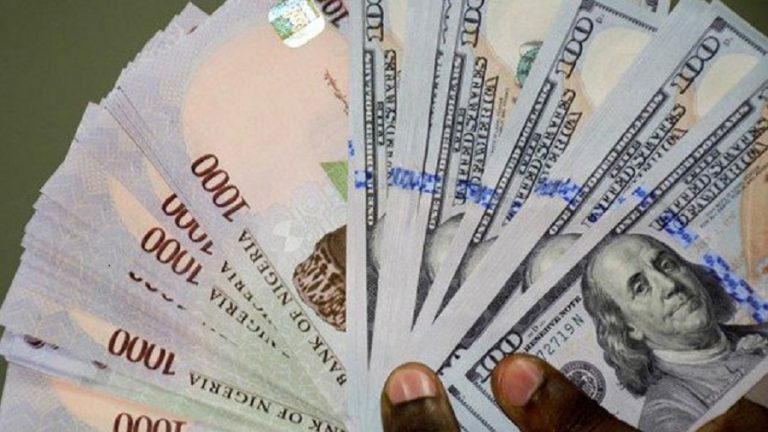
The Naira depreciated to N1,600 per dollar in the Nigerian Foreign Exchange Market (NFEM) today after three months of being on the N1,500 per dollar threshold.
Data published by the Central Bank of Nigeria, CBN, showed that the indicative exchange rate for the naira rose to N1,600 per dollar from N1,569 per dollar on Thursday, indicating N31 depreciation for the naira.
Likewise, the naira depreciated to N1,565 per dollar in the parallel market from N1,555 per dollar on Thursday.
Consequently, the margin between the parallel market and NFEM rate widened to N35 per dollar from N14 per dollar on Thursday.
Vanguard News
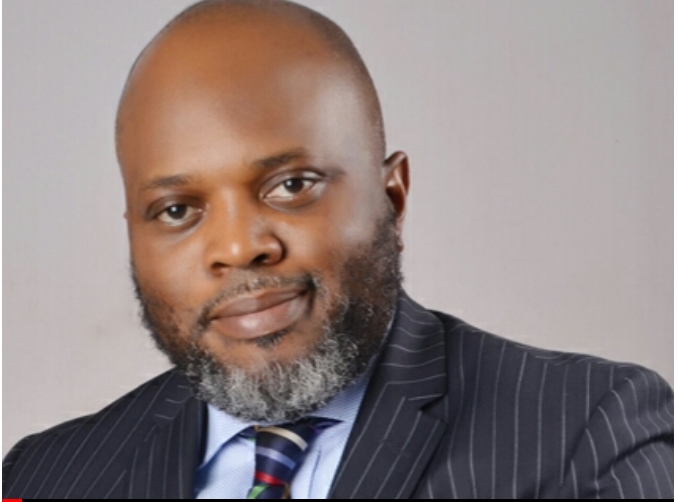
Fasua, who spoke on the Mic On Podcast hosted by Seun Okinbaloye on Saturday, also addressed how poverty is measured globally, saying many Nigerians misunderstand what is termed “multi-dimensional poverty.”
He said, “Some people don’t understand the meaning of multi-dimensional poverty.
“They think multi-dimensional poverty is worse than food poverty. What multi-dimensional means is that maybe the school your children attend is too far from you, or the hospital, and they categorise you as multi-dimensional.”
“$1 is N1,500 – it’s a lot of money for many people in Nigeria. $10 won’t buy you lunch anywhere in the US, sometimes you need at least $20, that is N30,000 in Nigeria,” Fasua stated.
Offering examples from everyday life, Fasua added, “I will tell you what you can do with $5 – that is N7,500 – if you are not going to eat in some highbrow places. In Gwarinpa, there are some people that sell Boli and fish and you will eat for N1,500. If you know where you are coming from.

Experts at investment house Afrinvest have asserted that Nigeria’s debt profile requires immediate action to forestall further deterioration.
This was stated in their latest macroeconomic update titled ‘Nigeria’s Debt Statistics… High Risk or Not?’ which dwelt on the outcome of the recent country visit of IMF’s First Deputy Managing Director, Gita Gopinath.
During the visit, Gopinath described Nigeria’s debt level as moderate rather than high risk, offering a somewhat optimistic assessment of the country’s fiscal position.
On Nigeria’s debt sustainability, Gopinath said, “We (IMF) assess debt sustainability for countries every year, and we did this for Nigeria in our report for 2024. Our assessment was that the risk of sovereign stress for Nigeria is moderate and not high risk.”
She, however, warned that the IMF’s verdict was not a license for the country to take on more debt, saying, “No, I will not go that path. The point is that you want to stay moderate, and you don’t want to move into a high-risk debt level. I just want to highlight the fact that while the country’s sovereign debt is said to be moderate, we are living in a world with a lot of shocks and a large amount of uncertainty.
“And if you look at the interest payment as a share of revenues, 75 per cent of revenues go into interest payment. That means there is hardly any money for social support or development spending. Therefore, to make sure that debt stays at a manageable level, it is also important to do more domestic revenue mobilisation.”
Gopinath also emphasised that savings from fuel subsidy removal should be redirected into government reserves rather than spent inefficiently.
Overall, the IMF Deputy Director stressed the need for Nigeria to optimise its revenue streams by strengthening tax collection, curbing leakages, and ensuring fiscal discipline.
“Specifically, domestic debt rose 3.3 per cent quarter-on-quarter to N73.4tn, marking a 24.2 per cent increase as of 9M:2024. The local debt accounted for 51.6 per cent of total public debt—within the DMO’s 70.0 per cent domestic debt mix cap. Meanwhile, external debt jumped 9.2 per cent q/q to N68.9tn, reflecting an 80.2 per cent increase, largely due to the continued depreciation of the naira, which fell 11.9 per cent in Q3 to average N1,579.22/$,” the investment house stated,.
The analysts pointed out that the total public debt-to-GDP ratio reached 52.8 per cent (based on 9M debt and FY nominal GDP), exceeding the 40.0 per cent limit set in the 2020–2023 Medium-Term Debt Management Strategy and nearing the 55 per cent risk threshold for developing countries.
Speaking on the high debt servicing allocation in the 2025 budget and deficit, the Minister of Budget and Economic Planning, Atiku Bagudu, revealed that a sustained positive economic condition may reduce it.
Bagudu said this on Monday at the KPMG budget 2025 day aired on Arise TV. He said, “On the deficit of N14tn, given what we saw is the innovative approaches to financing, first, because you don’t have recourse to the Central Bank of Nigeria at all. So, under no circumstance would the Central Bank be going above the legal limit of five per cent. So, we are going to market, and we are going to market in different ways. Innovative financing and innovative approaches: local bonds have been issued where governments have raised money. This, of course, represents a statement of intention, just to ensure that those whom we have borrowed from will be confident that we will have enough to meet our debt service obligation. But if, as we anticipate, economic conditions will continue to improve, we may not need to spend up to that in debt service.”
Meanwhile, Jimi Ogbobine, head of Agusto Consulting, a subsidiary of Agusto & Co., has asserted that the current administration of President Bola Tinubu was a big-spending government, hence heightened concerns about the fiscal deficit.
Speaking at the rating firm’s 2025 Economic Roundtable, Ogbobine said, “For Nigeria, we have about 10 key uncertainties, the first being our debt sustainability. Nigeria’s debt sustainability is a key worry point for us, so we have to pay attention to it. Many of us say that our political parties do not have ideologies, but that is not absolutely true. They may not have it in theory, but they have it in practice. This current party is a big government party, and that is why debt sustainability is a key concern. Nigeria’s Fiscal Responsibility Act says that fiscal deficit should be three per cent of the GDP. It is not a law; it is guidance even though it is written in a law.”
-
 News24 hours ago
“Go and Verify”: How Sunday Umeha Is Redefining Representation in Ezeagu/Udi
-
 Politics4 days ago
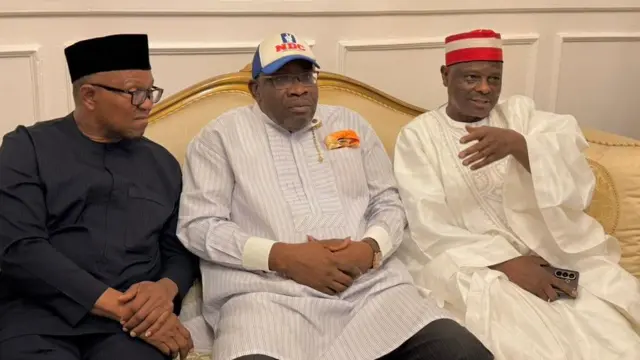
Mass exodus: Obi, Kwankwaso exit rocks ADC, 18 lawmakers join NDC
-
News1 day ago
Chief Sir Paul Chukwuma Lays His Beloved Sister to Rest
-
 Politics2 days ago
Anambra Communities Boil As Group Carpets Traditional Rulers Over Zoning
-
 News3 days ago
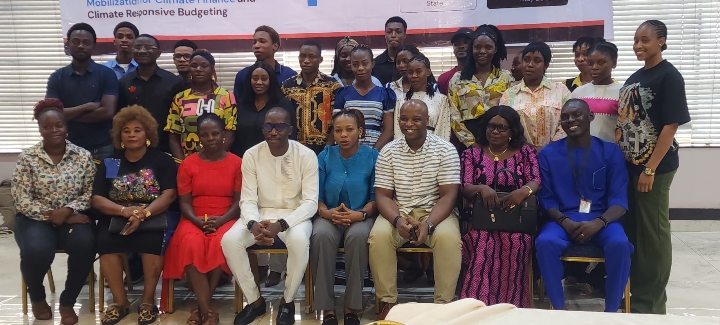
Enugu, SSDO advance domestic resource mobilisation for climate responsive budgeting
-
 News5 days ago
Enugu Govt Disowns Group Accused of Defrauding Traditional Medicine Practitioners
-
 Politics4 days ago
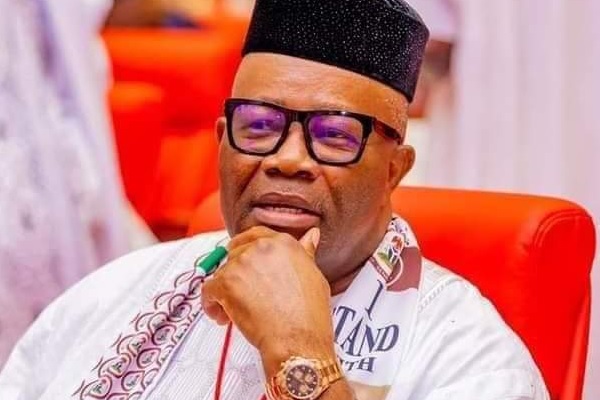
2027: Akpabio Moves to Block Ex-Governors from Contesting for Senate President
-
 Crime3 days ago
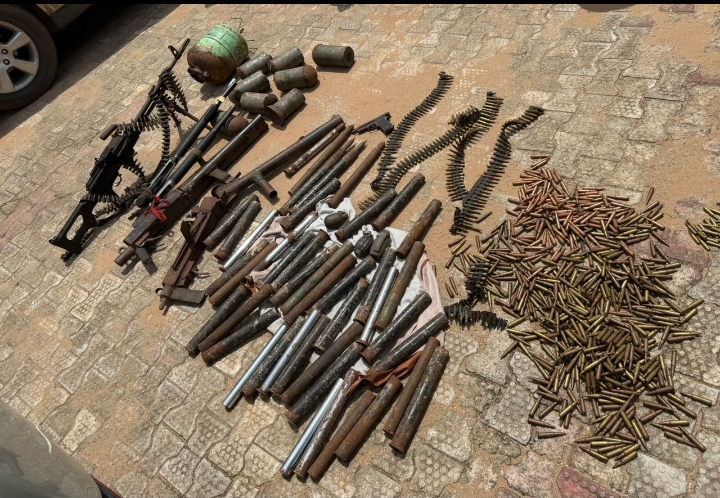
Anambra Police Burst Gunmen Armoury in Orumba