
Business
Nigeria to end fuel imports by June, says Dangote


Africa’s richest man and Chairman of the Dangote Group, Aliko Dangote, has said that following the laid-down plans of the Dangote Refinery, Nigeria will no longer need to import gasoline starting next month.
Dangote also stated that his refinery can meet West Africa’s petrol and diesel needs, as well as the continent’s aviation fuel demand.
He spoke at the Africa CEO Forum Annual Summit in Kigali on Friday, expressing optimism about transforming Africa’s energy landscape.
“Right now, Nigeria has no cause to import anything apart from gasoline and by sometime in June, within the next four or five weeks, Nigeria shouldn’t import anything like gasoline; not one drop of a litre,” he declared.
He also outlined progress made by the oil company to ensure that Africa as a continent becomes self-sufficient when it comes to the energy sector.

He said, “We have enough gasoline to give to at least the entire West Africa, diesel to give to West Africa and Central Africa. We have enough aviation fuel to give to the entire continent and also export some to Brazil and Mexico.
“Today, our polypropylene and our polyethene will meet the entire demand of Africa and we are doing base oil, which is like engine oil, we are doing linear benzyl, which is raw material to produce detergent. We have 1.4 billion people in the population, nobody is producing that in Africa.
“So, all the raw materials for our detergents are imported. We are producing that raw material to make Africa self-sufficient.
“As I said, give us three or a maximum of four years and Africa will not, I repeat, not import any more fertilizer from anywhere. We will make Africa self-sufficient in potash, phosphate, and urea, we are at three million tonnes and in the next twenty months, we will be at six million tonnes of urea which is the entire capacity of Egypt. We are getting there.”
Dangote also went further to outline the achievements of the company since the commissioning of the refinery in February.
“For some of us, despite the boom of the capital market of the US, you know, Google, Microsoft and the rest, we didn’t participate, we took all our money and invested in Africa.
He added, “So, we need to change and make sure that we don’t just go and produce raw materials, we should also produce finished products and create jobs.
“One of the things we also need to know as Africans is that we produce raw materials and export them when you export raw materials and somebody now keeps importing things into your continent and dumping goods. what you are importing is poverty and exporting jobs. So, we have to change that narrative.”
“We just commissioned in February and now we are producing jet fuel, we are producing diesel and by next month, we will be producing gasoline. What that would do is that we would be taking most of the African crude that is being produced and also be able to supply not only Nigeria, because our capacity is too big for Nigeria, but it would also supply West Africa, Central Africa and also South Africa. We have 650,000 barrels per day, 1 million tonnes of polypropylene, we have 590,000 carbon black, that is the raw materials ink, dyes and co. We are expanding more. This is the first phase and we are going out to the next phase which will start early next year,” he said.
The richest man in Africa also acknowledged the challenges faced in building the refinery, particularly by those accustomed to the status quo.
He said there was pushback but failure was not an option, even though many people did not believe he would succeed.
“The pushback was very impactful because there are people who have been used to just making money trading without refinery and you know, to get people who are committed to Africa has to be people that believe in investing in Africa because the companies that are operating today are not investing, and some of the issues of stopping that investment is going to impact us, not today but in the future, which means our oil production will continue to go down because in oil unless you keep investing, the production is going to go down.
“So, that is the issue. The major burden on us was that there is no room for failure because we were the EPC contractors and ninety per cent of people never believed that we were going to deliver but we have been able to deliver now,” he added.
Despite these achievements, Dangote identified policy inconsistency as a major challenge for African entrepreneurs and called for a review and support from the leaders to ensure proper ease of trading in the continent.

Findings by our correspondent showed that some filling stations now sell petrol below N860 per litre, while Dangote partners, such as MRS, Heyden, and others, sell at N865 or N875 in Lagos and Ogun States.
A filling station named SGR in Ogun State reduced its price to N847 per litre as of Tuesday. Marketers confirmed to The PUNCH that most importers have reduced their ex-depot petrol prices below that of the Dangote refinery.
As of Tuesday, it was learnt that Dangote refinery was selling petrol at N820 per litre while some depots sold the product at N815 per litre. According to Petroleumprice.ng, Aiteo, Menj and others put their prices at N815/litre as of Tuesday.
Our correspondent learnt that the importers were making efforts to remain in business through competitive pricing. Many had previously complained of recording losses when the 650,000-barrels-per-day capacity Dangote refinery began implementing constant price cuts earlier this year.
The National Publicity Secretary of the Independent Petroleum Marketers Association of Nigeria, Chinedu Ukadike, confirmed the ongoing downward price review by the importers.
“Depot owners are dropping their petrol prices. Some of them are selling N815, some are selling N817, while Dangote is selling N820. NNPC is still selling at N825; it has not dropped its prices yet,” Ukadike disclosed.
He described this as the beauty of market liberalisation, saying President Bola Tinubu should not heed calls to ban fuel importation.
“This is the beauty of the liberalisation of the market. That is why we opined that the President should not ban anybody from importing petroleum products. Nobody should be stopped from bringing in petroleum products. That is the beauty of opening up the market. Implementation and local refining will checkmate unfair pricing. As an indigenous country, you must refine to ensure that you have the best price,” Ukadike said.
On claims that toxic and substandard fuels are being imported into the country, the IPMAN spokesman said the Nigerian Midstream and Downstream Petroleum Regulatory Authority is in place to check substandard fuels.
To remain viable, he urged governments across Africa to take deliberate steps as the United States, Canada, and the European Union have done to protect domestic producers from what he called unfair competition.
Dangote did not mince words when he said that the Nigeria First policy announced by Tinubu should apply to the petroleum products sector. “The Nigeria First policy announced by His Excellency, President Bola Tinubu, should apply to the petroleum product sector and all other sectors,” he stated.
This request by Dangote seeks to place a ban on the importation of petrol, diesel, and other products being produced locally. He argued that local refiners were finding it difficult to sell their products because of what he called dumping. The billionaire businessman alleged that importers were dumping toxic fuel that would never be allowed in Europe.
“And to make matters worse, we are now facing increased dumping of cheap, often toxic petroleum products, some of which are blended to substandard levels that would never be allowed in Europe or North America,” he said.
Dangote mentioned that some importers bring subsidised fuel or crude oil from Russia into Nigeria. This, he said, affects local pricing, forcing refiners to lower their prices below production cost.
“Due to the price caps on the Russian petroleum products, discounted petroleum products produced in Russia or with discounted Russian crude find their way to Africa, severely undercutting our local production, which is based on full crude pricing. This has created an unlevel playing field in most African countries. Petrol and diesel are sold for about a dollar net of taxes.
“In Nigeria, due to this unfair competition, this price is just about 60 cents, even cheaper than Saudi Arabia, which produces and refines its own oil. This is due to the fact that we are having too much dumping. To remain viable, we urge the governments across Africa to take deliberate steps as the United States, Canada, and the European Union have done to protect domestic producers from unfair competition,” he stated at a recent event organised by the Nigerian Upstream Petroleum Regulatory Authority in Abuja.
However, marketers disagreed with Dangote, urging the Federal Government not to consider adding petroleum products to the list of items banned from importation under the ‘Nigeria First’ policy.

… Govt set to develop tourist sites
… Work starts on Nnamdi Azikiwe Stadium, Awgu Games Village in earnest
The Enugu Air, CNG Mass Transit Programme, and the ultramodern transport terminals all built from scratch by the Governor Peter Administration are to be launched for operation before the second anniversary of the government.
The government has also approved the development of the state’s tourism industry, while total transformation of the Nnamdi Azikiwe Stadium and Awgu Games Village will start in June to get them ready for the National Sports Festival to be hosted by the state in 2026.
These were made known by the Commissioner for Transportation, Dr. Obi Ozor; Commissioner for Culture and Tourism, Dame Ugochi Madueke; Commissioner for Works and Infrastructure, Engr. Gerald Otiji; and Commissioner for Youth and Sports Development, Barr. Lloyd Ekweremadu after the State Executive Council meeting at the Government House, Enugu, at the weekend.
Briefing Government House Correspondents, Ozor said, “We are starting off with the initial three aircraft and two of the aircraft are already on ground. The third one will be on ground by the end of this month. We are hoping to start the commercial operations before the second year anniversary of this administration.
“You have also seen buses for the mass transit programme across the state. 50 of them are already parked at Okpara Square, and an additional 50 will be joining that fleet in the next few weeks. The 100 of them will be going into commercial operations before the end of this month, which is the second year anniversary.
“Also, the bus terminals, two at Holy Ghost, one each at Gariki, Abakpa and Nsukka, will also be commissioned and go into commercial operations before the 29th of May, this year.”
He added that the government planned to bring in the electric and CNG automotive manufacturing plant into Enugu as well as launch in the next 150 days the Enugu Smart Transport Programme, which would see to the injection of over 2,000 electric vehicles.
Also briefing newsmen, Dame Madueke said funds would be invested in the tourism industry in phases.
“We are going to have it in phases. For the first phase, we are having Awhum Waterfall, Nsude Pyramid where we are going to have the first canopy walkway in the South East. It measures about 600 metres, which will actually be the longest in Nigeria.
“We also have Ngwo Pine Forest where we are having the first zipline in Nigeria. The zipline will measure about 300 metres. In the same Ngwo, we will have a big rotunda and a smaller rotunda. We have the Cross of Hope to be located at Okpatu. The Cross of Hope will be sitting 580 metres above sea level and the cross itself will measure about 50 metres, making it a total of about 630 metres above sea level. The cross will have about 15 floors with a lift.
“At Awhum Waterfalls, we are going to have another canopy walkway and a boardwalk to preserve the ecosystem.
“We equally have the Akwuke/Atakkwu Waterpark and Ovu Lake Golf and Resort at Akpawfu,” she stated.
She explained that all the tourist sites would have experience centres, food courts and renewable energy, adding that tour buses would soon arrive to ensure ease of movement of tourists.
Ahead of the 23rd edition of the National Sports Festival, Enugu 2026, Barr. Ekweremadu said the State Executive Council had equally directed the commencement of work both at the Nnamdi Azikiwe Stadium and Awgu Games Village not later than June.
“We also briefed the council on the progress made in establishing a Lab for Animation for young people in Enugu State, which His Excellency will be commissioning soon. The lab is ready.
“We are similarly working towards empowering over 2,100 young people across the state, who were trained around December last year. This empowerment will be coming up on the 12th of August, being the International Youth Day’” Ekweremadu concluded.

By Sabastine Gabriel
The Enugu State House of Assembly has taken steps to address the issue of dropped calls and customer dissatisfaction with telecom operators in the state.
During a plenary session on Tuesday, member representing Igbo-Eze South Constituency, Hon. Harrison Ogara raised concerns over the impact of poor telecom services, which he believes are financially harming consumers who pay for unreliable services.
Ogara highlighted that with over 219 million Nigerians subscribing to telecom services, the residents of Enugu State have been particularly affected by the erratic performance of these providers, leading to significant financial losses.
He proposed that the telecom operators, MTN, Globacom, Airtel, and 9 Mobile be summoned to provide explanations on how they plan to reimburse customers affected by dropped calls.
In addition to refunds, Ogara requested that the telecom companies present accurate subscriber data and evidence of their tax compliance with the Enugu State Government.
He urged the establishment of a committee that includes state officials to investigate the financial losses incurred by residents due to telecom inefficiencies, making the findings public and ensuring that refunds are issued where due.
“Mr. Speaker, distinguished colleagues, I rise draw your attention to the current epileptic services of the telecoms services providers in Enugu State which has resulted to huge loss of funds by our citizens. Not minding being a late entrant in the global system for mobile (GSM) market, Nigeria has obviously out paced many countries across when we take into consideration the market size and telephone usage.
“It is quite absurd and preposterous that even with the rapid growth of the sector and it’s consequential growth in consumer size, users of telecom services in Enugu State have continued to groan under the scorching pressure of abysmal performance in services,” he lamented.
Other assembly members echoed Ogara’s motion, expressing frustration over the operators’ poor service and high tariffs, comparing the situation to problematic billing practices seen in other utility sectors.
The member representing Nsukka West, Hon. Malachy Onyechi likened the telecome operators to EEDC that give consumers exorbitant estimated billing without rendering commensurate services.
On his part, while supporting the motion, Hon. Clifford One, representing Igbo-Eze North 2, said that the activities of telecom operators are like the banking services where one is debited yet transaction does not go through.
Earlier the House of Assembly passed into law the Enugu State Land Use Charge Second Amendment, House Bill 6, 2025 presented by Hon. Iloabuchi Aniagu, member representing Nkanu West Constituency into law.
To give room for accelerated passage of the bill, the Enugu State House of Assembly suspended Order 14, Rule 102 sub section 1 of the House Standing Order.
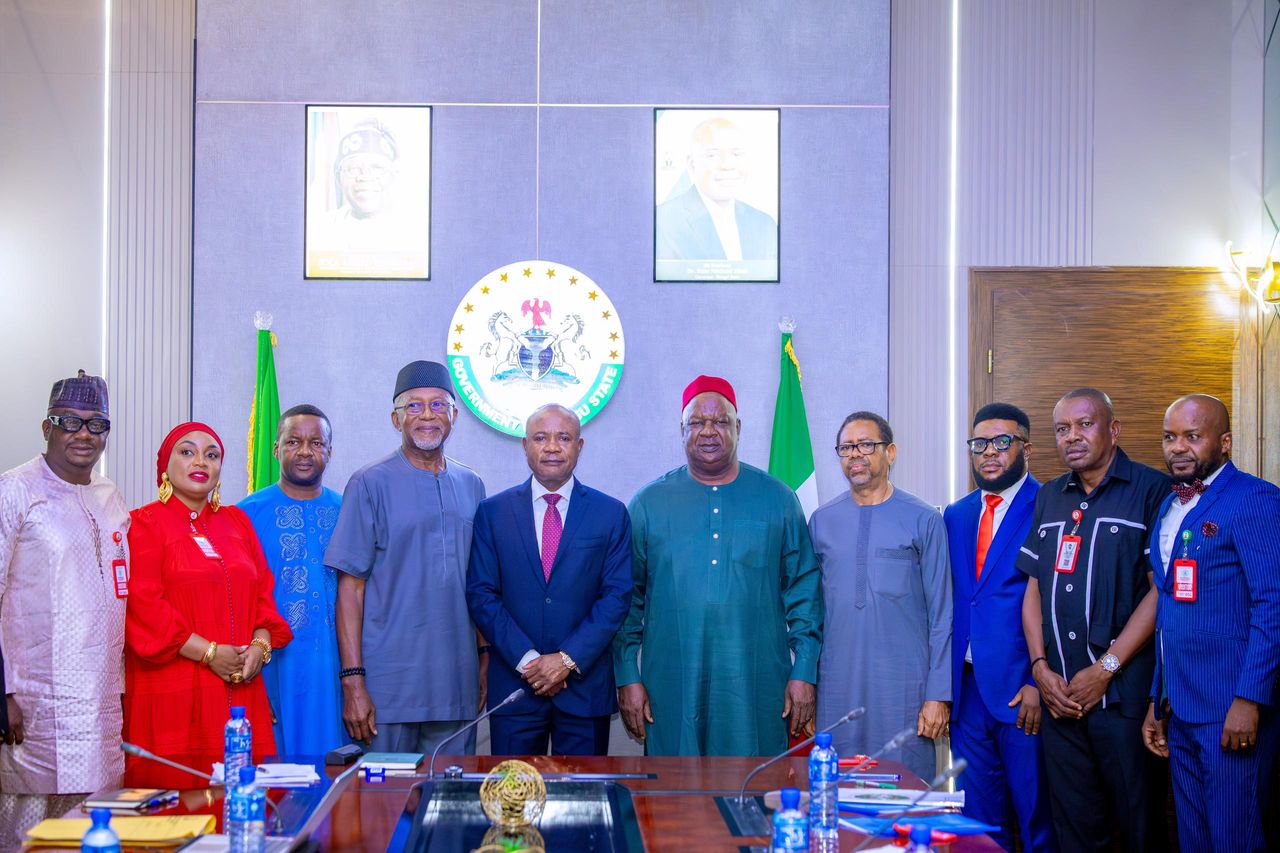
…We guarantee your business, hurry and invest, Mbah urges diasporans
The Enugu State Government and the Lion Business Park Limited have sealed an investment deal with the signing of Novation Memorandum of Understanding (MOU) to develop a world-class industrial and commercial hub within the Enugu Industrial Park Free Trade Zone.
This was even as the state governor, Dr. Peter Mbah, reaffirmed the administration’s commitment to guaranteeing businesses through the provisions of infrastructure and enabling environment for ease of doing business, urging diaspora investors to turn their capital into Enugu State for a high return on investment, RoI.
Signing the MOU alongside top management of Lion Business Park Ltd in Enugu on Tuesday, the firm’s chairman, Dr. Okechukwu Mbonu, commended the governor for his visionary leadership, developmental strides and achievements the administration had recorded within a short period in office.
Highlighting the objective of the deal, Mbonu stressed that the company was poised to develop industrial and commercial hub that would catalyze trade, industry, economic growth and create jobs for the youth population.
“This strategic collaboration aligns with Your Excellency’s visionary economic agenda to grow the GDP of Enugu State from $4.4 billion to $30 billion (US Dollars) for the overall benefit of the people of Enugu State and Nigeria as a whole.
“It is therefore, a watershed moment with this renewed partnership between Lion Business Park and Enugu State Government. It is indeed a case of a promise made and fulfilled and I have no doubt that you will continue to fulfill your promises to the people of Enugu State,” the chairman added.
Mbonu, who expressed optimism about the investment, said the project would leverage on the incentives associated with businesses in a Free Trade Zone to attract foreign direct investments, promote human capital, innovation and technology development to create jobs.
Calling on the business community, private sector leaders and global investors to maximize the perfect opportunities the park presented to them to be part of the economic revolution, Mbonu added that the project had immense benefits that spurred beyond the state, the South East zone to Nigeria at large.
Speaking, Governor Mbah reiterated the administration’s economic blueprint, which is to grow the economy and make the state the number one destination for investors in the country, saying the promise to inspire exponential growth could only be possible with investment deals such as the one executed with the Lion Business Park.
“The Enugu State Government has committed to increase their stake in this going concern by providing all the necessary infrastructure that is required in order for this business park to be fully functional. We see the business park as food that is ready. Because if we are to start the process of building a business park, we know what it will take. Procuring your licenses; getting the free trade license, getting the dry port license because we have an inland port also at the Lion Business Park,” he noted.
While harping that the location of the park was a product of strategy, innovation and due diligence conducted by a team of economic experts in the administration, the governor said, “The business park is strategically located. It is three hours from Onne Sea Port in Rivers State, less than two hours to Asaba in Delta State, and less than 25 minutes to Akanu Ibiam International Airport, Enugu. We couldn’t ask for a business park at a better location”.
He assured that the administration would continue to make the state attractive to investors to set up their industries by providing the right incentives such as electricity, paved roads, and other infrastructure.
While appreciating host communities in the state for their support, the governor enjoined them to continue to cooperate with investors.
Fresh from implementing a ₦15 price reduction in its loading cost for Premium Motor Spirit, also known as petrol, the Dangote Refinery has again slashed its refined product prices to make them cheaper, cutting its ex-depot rate to ₦835 per litre.
The new price represents a ₦30 reduction from ₦865 per litre implemented six days ago, marking a 3.5 per cent decrease, and a ₦45 reduction from the ₦880 per litre sold by the facility last Wednesday.
This price cut marks Dangote’s third downward adjustment in under six weeks.
The refinery informed its customers in a notice sent out on Wednesday morning.
A pro forma invoice was sighted by our correspondent, and checks on petroleumprice.ng also confirmed the development.
It stated that the new price is inclusive of charges by the Nigerian Midstream and Downstream Petroleum Regulatory Authority (NMDPRA).
The document detailing the revised price structure shows that PMS at the gantry will now sell for ₦835 per litre, inclusive of NMDPRA statutory levies, while coastal sales remain on hold. The diesel gantry price is set at $608 plus a $70 surcharge, payable either in naira at ₦1,650/$ or in USD.
Coastal sales are also on hold. Jet fuel will be sold at $664.75 with a $42 gantry surcharge and a $22 coastal surcharge. Prices for cooking gas at both gantry and coastal points are currently on hold.
A possible price cut was envisaged after the landing cost of imported petrol dropped to ₦853 per litre on Tuesday.
This development comes as marketers secured regulatory approval to import 117,000 metric tonnes—equivalent to 156.897 million litres—of petrol within eight days, from 8 to 16 April 2025, to boost fuel supply nationwide.
These figures were revealed in separate documents obtained by our correspondent from the Nigerian Ports Authority and the Major Energies Marketers Association of Nigeria.
Dealers said the ₦853 per litre spot import parity into tanks, which includes expenses such as shipping, import duties, and exchange rates, marks a notable ₦3 reduction from ₦856.75 per litre last Monday and ₦852.02 on Tuesday.
The document showed that on-the-spot sales at the NPSC-NOJ terminal dropped to ₦853.12 per litre, while the 30-day average cost also declined to ₦844.84 per litre.
Within the period, marketers brought in six vessels conveying 117,000 metric tonnes through Tin Can Port in Lagos and Calabar Port in Cross River State.
Importantly, the continued price drop coincides with the restart and full implementation of the Naira-for-Crude agreement with local refiners after an earlier suspension.
The Ministry of Finance disclosed this in a statement published last week on its official X handle, titled: “Update on the Crude and Refined Product Sales in Naira Initiative.”
The statement followed a meeting on Tuesday between the Minister of Finance, Wale Edun, and representatives from Dangote Refinery—a major beneficiary of the agreement — to review progress and address ongoing
implementation issues.
The committee stated that the policy is not a temporary measure but a long-term strategy to reduce Nigeria’s dependence on foreign exchange for petroleum.
It added that the initiative is a key policy directive designed to support sustainable local refining and strengthen energy security.
-
 News1 day ago
“Go and Verify”: How Sunday Umeha Is Redefining Representation in Ezeagu/Udi
-
 Politics5 days ago
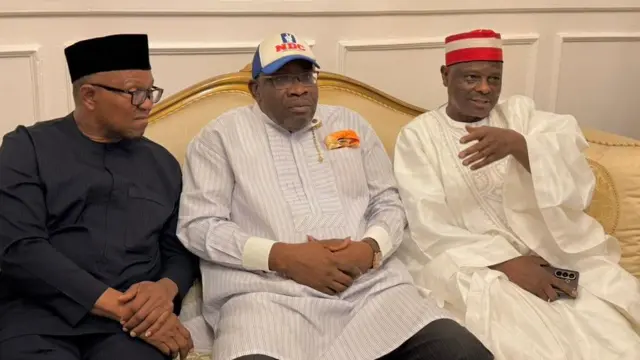
Mass exodus: Obi, Kwankwaso exit rocks ADC, 18 lawmakers join NDC
-
News2 days ago
Chief Sir Paul Chukwuma Lays His Beloved Sister to Rest
-
 Politics2 days ago
Anambra Communities Boil As Group Carpets Traditional Rulers Over Zoning
-
 News3 days ago
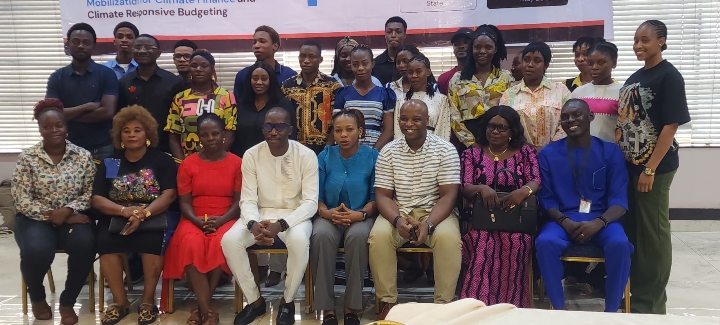
Enugu, SSDO advance domestic resource mobilisation for climate responsive budgeting
-
 Politics5 days ago
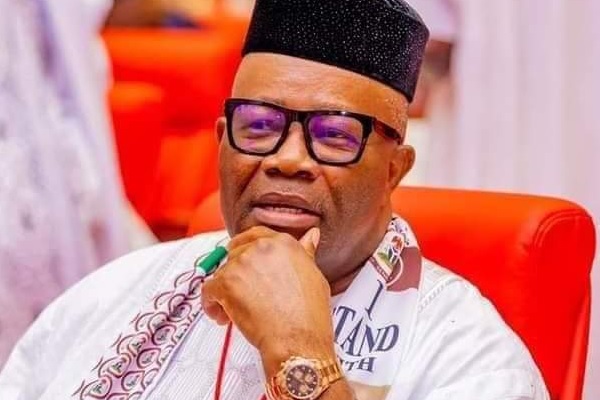
2027: Akpabio Moves to Block Ex-Governors from Contesting for Senate President
-
 Crime3 days ago
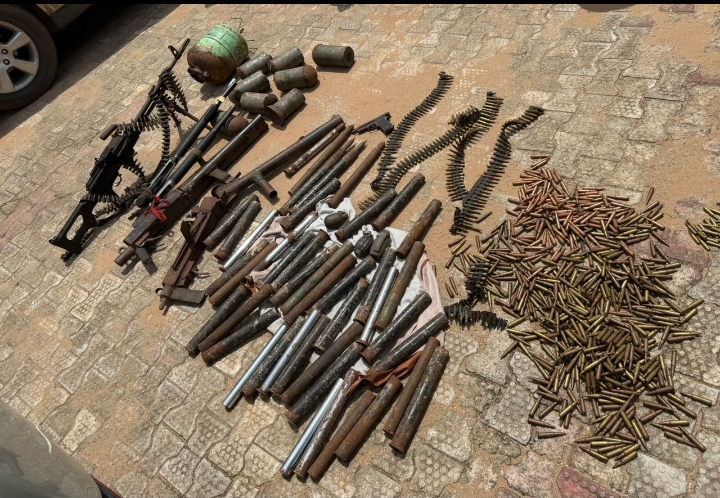
Anambra Police Burst Gunmen Armoury in Orumba
-
 News2 days ago
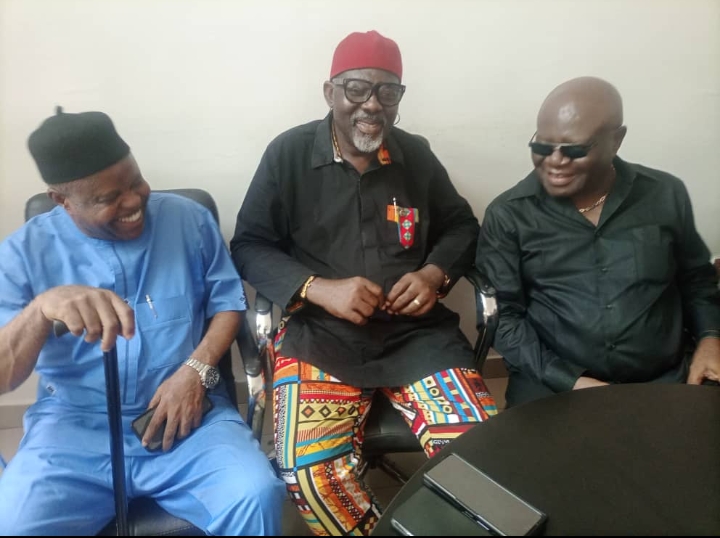
2027: Anambra ADC Intact Despite Obi, Kwankwaso Departure – Guber Candidate